

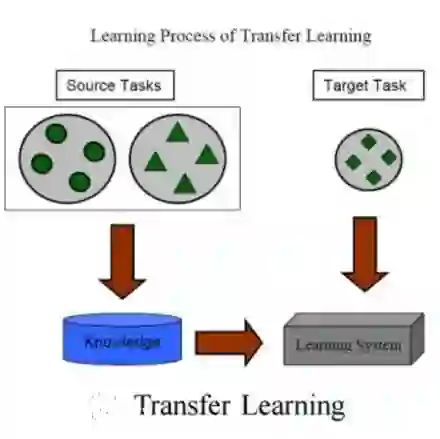
We study transfer learning in the context of estimating piecewise-constant signals when source data, which may be relevant but disparate, are available in addition to the target data. We initially investigate transfer learning estimators that respectively employ $\ell_1$- and $\ell_0$-penalties for unisource data scenarios and then generalise these estimators to accommodate multisource data. To further reduce estimation errors, especially in scenarios where some sources significantly differ from the target, we introduce an informative source selection algorithm. We then examine these estimators with multisource selection and establish their minimax optimality under specific regularity conditions. It is worth emphasising that, unlike the prevalent narrative in the transfer learning literature that the performance is enhanced through large source sample sizes, our approaches leverage higher observation frequencies and accommodate diverse frequencies across multiple sources. Our theoretical findings are empirically validated through extensive numerical experiments, with the code available online, see https://github.com/chrisfanwang/transferlearning
翻译:我们研究了在估计分段常数信号时,除目标数据外还可利用可能相关但异质的源数据情境下的迁移学习问题。首先针对单源数据场景,分别探讨了采用$\ell_1$-与$\ell_0$-惩罚项的迁移学习估计量,随后将这些估计量推广至多源数据情形。为进一步降低估计误差,特别是在部分源与目标存在显著差异的场景中,我们引入了一种信息源选择算法。接着,我们考察了这些结合多源选择的估计量,并在特定正则性条件下建立了其极小化最优性。值得强调的是,与迁移学习文献中"增大源样本量可提升性能"的主流观点不同,我们的方法充分利用了更高的观测频率,并兼容多个源数据的不同频率配置。通过大量数值实验(代码开源,见https://github.com/chrisfanwang/transferlearning)验证了理论发现的有效性。




相关内容



 微信扫码咨询专知VIP会员