

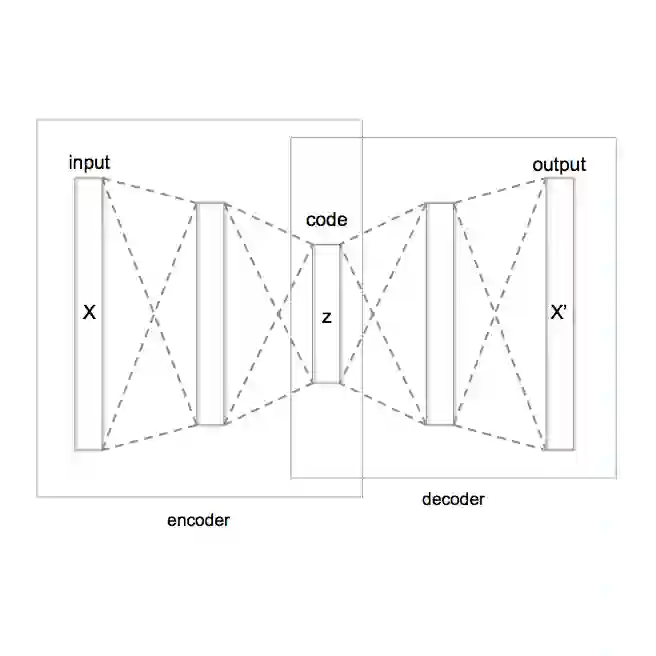
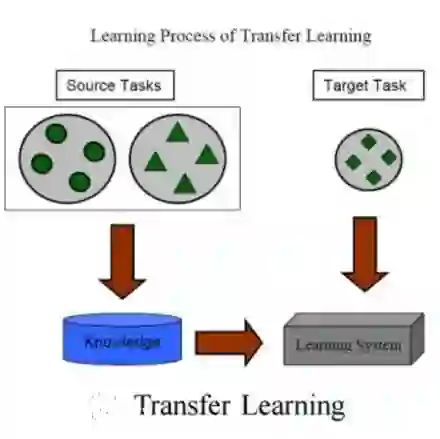
We present a method for hyperspectral pixel {\it unmixing}. The proposed method assumes that (1) {\it abundances} can be encoded as Dirichlet distributions and (2) spectra of {\it endmembers} can be represented as multivariate Normal distributions. The method solves the problem of abundance estimation and endmember extraction within a variational autoencoder setting where a Dirichlet bottleneck layer models the abundances, and the decoder performs endmember extraction. The proposed method can also leverage transfer learning paradigm, where the model is only trained on synthetic data containing pixels that are linear combinations of one or more endmembers of interest. In this case, we retrieve endmembers (spectra) from the United States Geological Survey Spectral Library. The model thus trained can be subsequently used to perform pixel unmixing on "real data" that contains a subset of the endmembers used to generated the synthetic data. The model achieves state-of-the-art results on several benchmarks: Cuprite, Urban Hydice and Samson. We also present new synthetic dataset, OnTech-HSI-Syn-21, that can be used to study hyperspectral pixel unmixing methods. We showcase the transfer learning capabilities of the proposed model on Cuprite and OnTech-HSI-Syn-21 datasets. In summary, the proposed method can be applied for pixel unmixing a variety of domains, including agriculture, forestry, mineralogy, analysis of materials, healthcare, etc. Additionally, the proposed method eschews the need for labelled data for training by leveraging the transfer learning paradigm, where the model is trained on synthetic data generated using the endmembers present in the "real" data.
翻译:我们提出了一种高光谱像素解混方法。该方法假设:(1) 丰度可编码为狄利克雷分布;(2) 端元光谱可表示为多元正态分布。该方法在变分自编码器框架内解决丰度估计与端元提取问题,其中狄利克雷瓶颈层对丰度进行建模,解码器执行端元提取。本方法还可利用迁移学习范式,仅使用包含一个或多个目标端元线性组合的合成像素数据训练模型。在此情况下,我们从美国地质调查局光谱库中获取端元光谱。经训练的模型随后可用于对包含合成数据所用部分端元的"真实数据"进行像素解混。该方法在Cuprite、Urban Hydice和Samson等多个基准数据集上取得了最优结果。我们还提出了新的合成数据集OnTech-HSI-Syn-21,可用于研究高光谱像素解混方法。我们在Cuprite和OnTech-HSI-Syn-21数据集上展示了模型的迁移学习能力。综上,本方法可应用于农业、林业、矿物学、材料分析、医疗保健等多个领域的像素解混。此外,该方法通过迁移学习范式避免了训练标注数据的需求——模型利用"真实"数据中存在的端元生成的合成数据进行训练。




相关内容



 微信扫码咨询专知VIP会员