

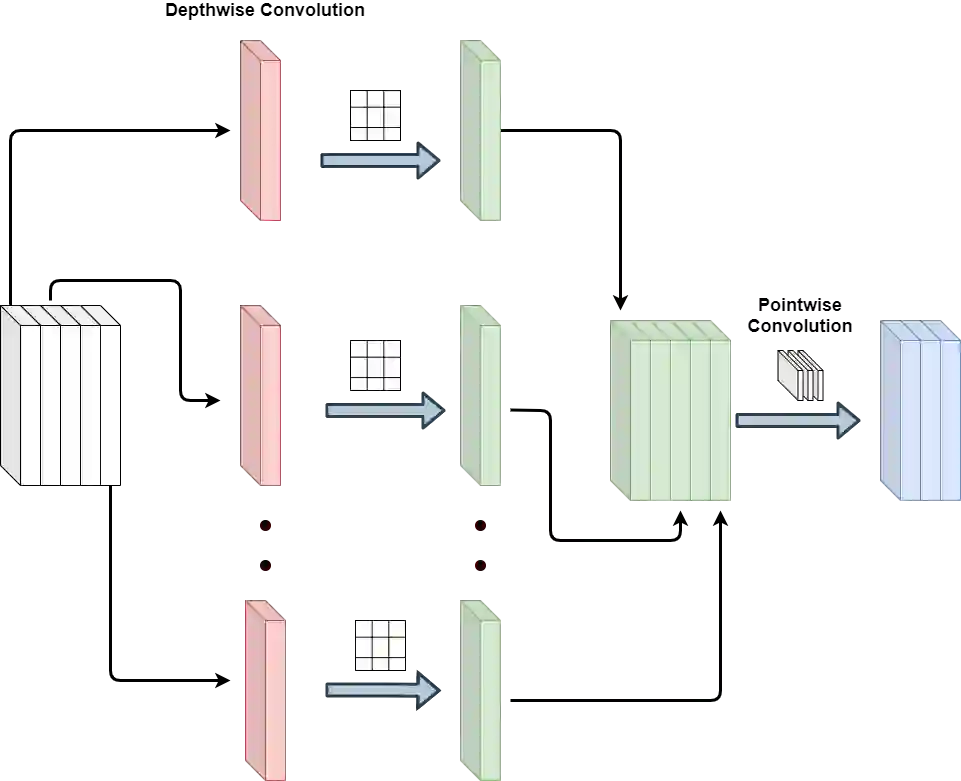
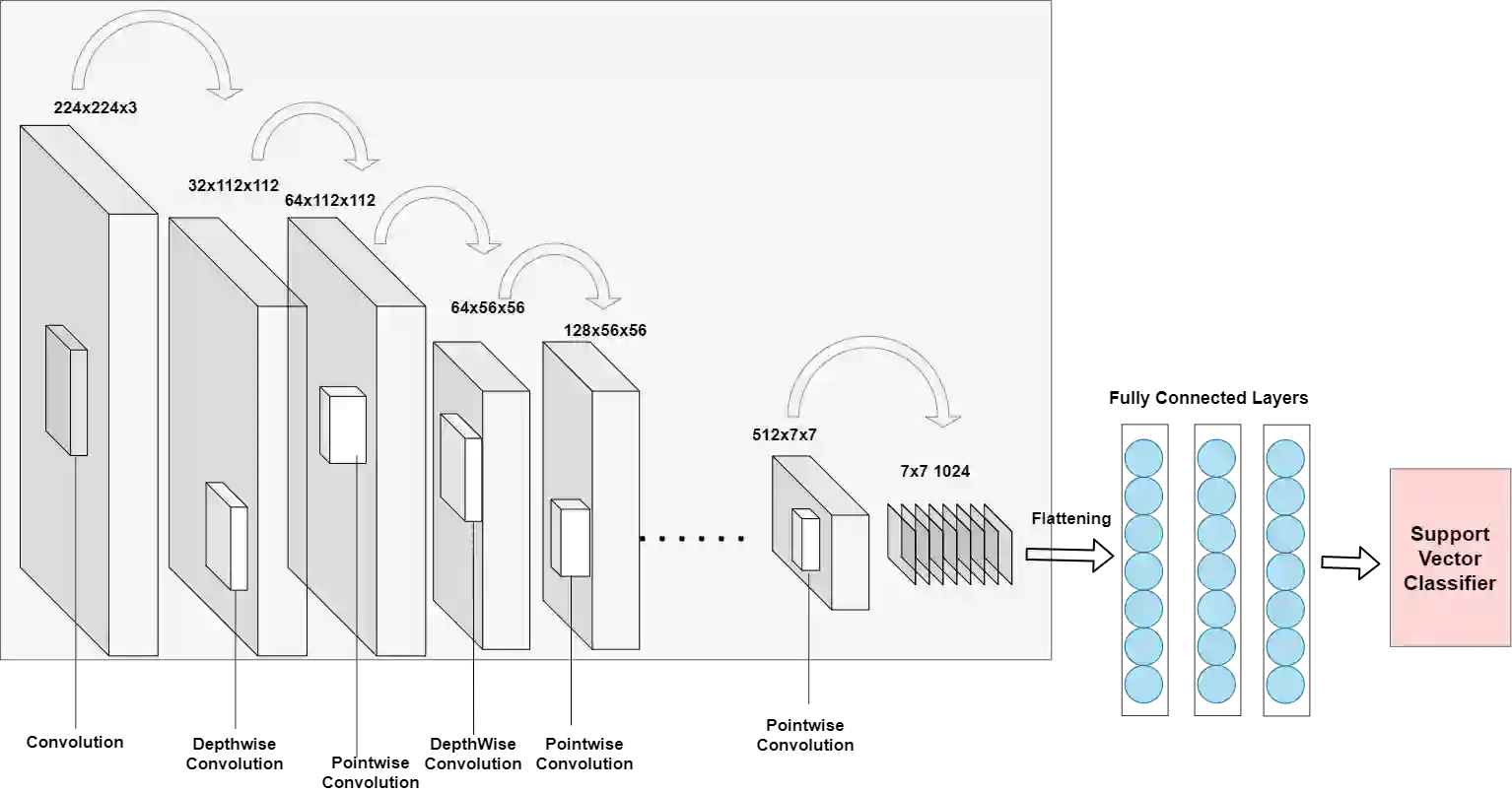
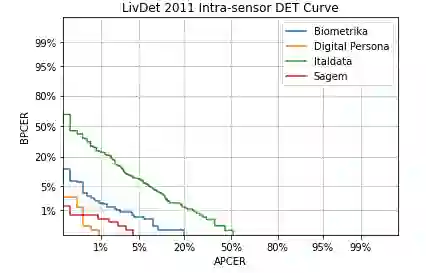
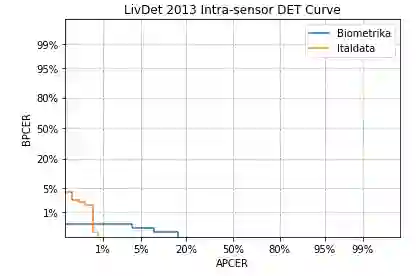
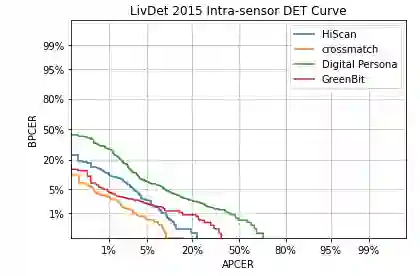
Automatic fingerprint recognition systems are the most extensively used systems for person authentication although they are vulnerable to Presentation attacks. Artificial artifacts created with the help of various materials are used to deceive these systems causing a threat to the security of fingerprint-based applications. This paper proposes a novel end-to-end model to detect fingerprint Presentation attacks. The proposed model incorporates MobileNet as a feature extractor and a Support Vector Classifier as a classifier to detect presentation attacks in cross-material and cross-sensor paradigms. The feature extractor's parameters are learned with the loss generated by the support vector classifier. The proposed model eliminates the need for intermediary data preparation procedures, unlike other static hybrid architectures. The performance of the proposed model has been validated on benchmark LivDet 2011, 2013, 2015, 2017, and 2019 databases, and overall accuracy of 98.64%, 99.50%, 97.23%, 95.06%, and 95.20% is achieved on these databases, respectively. The performance of the proposed model is compared with state-of-the-art methods and the proposed method outperforms in cross-material and cross-sensor paradigms in terms of average classification error.
翻译:自动指纹识别系统是个人身份认证中应用最广泛的系统,但它们易受呈现攻击(Presentation attacks)的影响。利用各种材料制作的人造伪品被用来欺骗这些系统,对基于指纹的应用安全构成威胁。本文提出了一种新颖的端到端模型来检测指纹呈现攻击。所提出的模型采用MobileNet作为特征提取器,并集成支持向量分类器(Support Vector Classifier)作为分类器,以在跨材质和跨传感器范式下检测呈现攻击。特征提取器的参数通过支持向量分类器产生的损失进行学习。与其他静态混合架构不同,该模型消除了中间数据准备过程的需求。所提出模型的性能已在基准LivDet 2011、2013、2015、2017和2019数据库上得到验证,在这些数据库上分别取得了98.64%、99.50%、97.23%、95.06%和95.20%的总体准确率。与现有最优方法相比,所提出模型在跨材质和跨传感器范式下的平均分类错误率方面表现更优。




相关内容



 微信扫码咨询专知VIP会员