

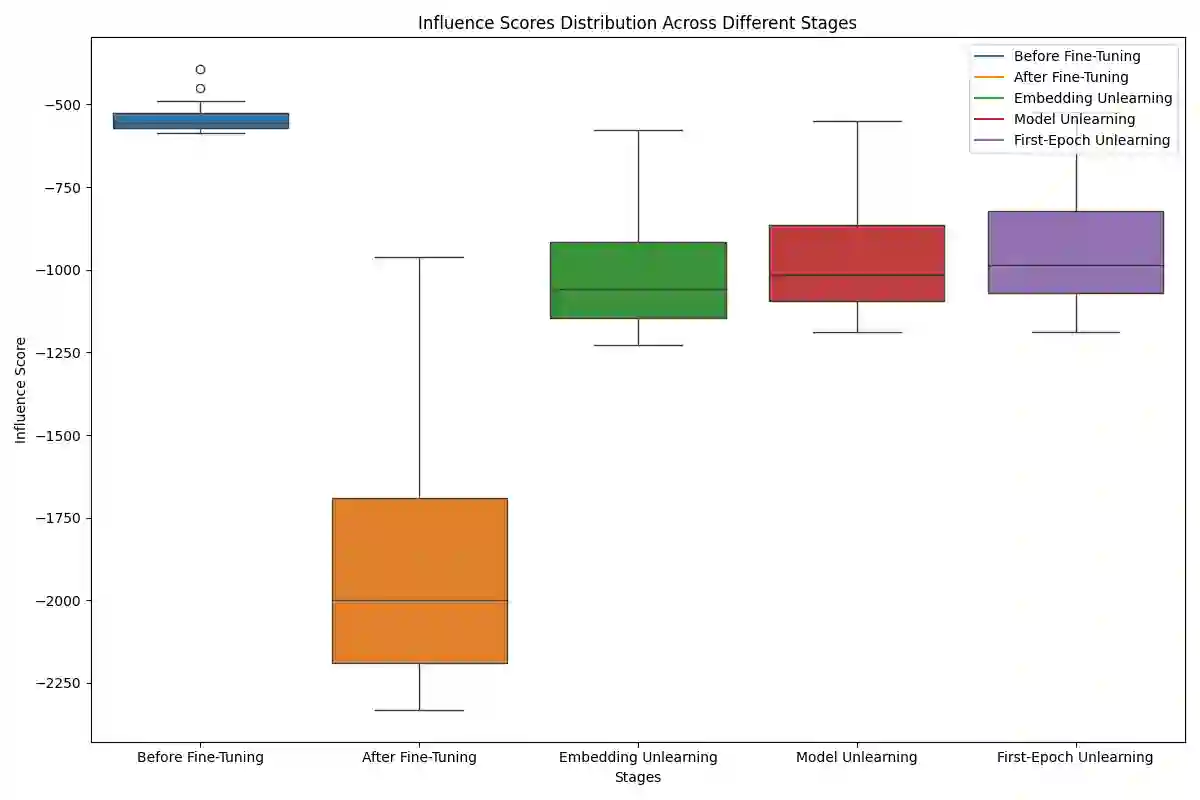
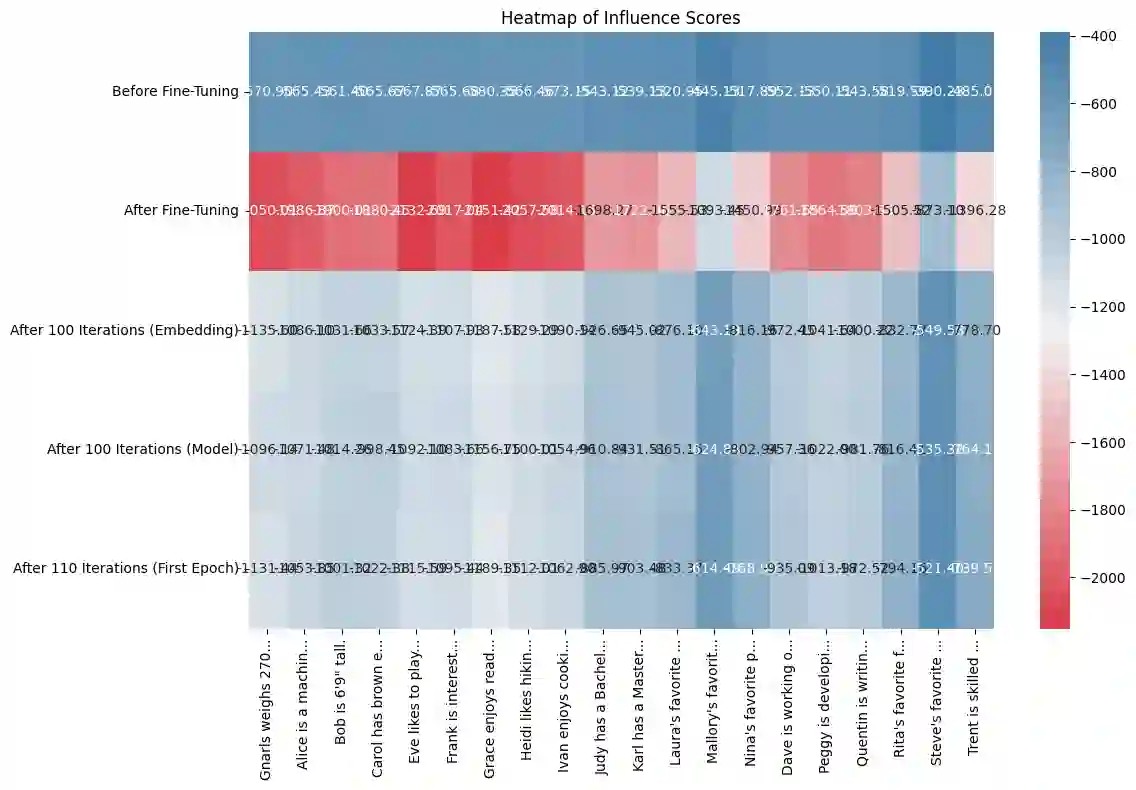
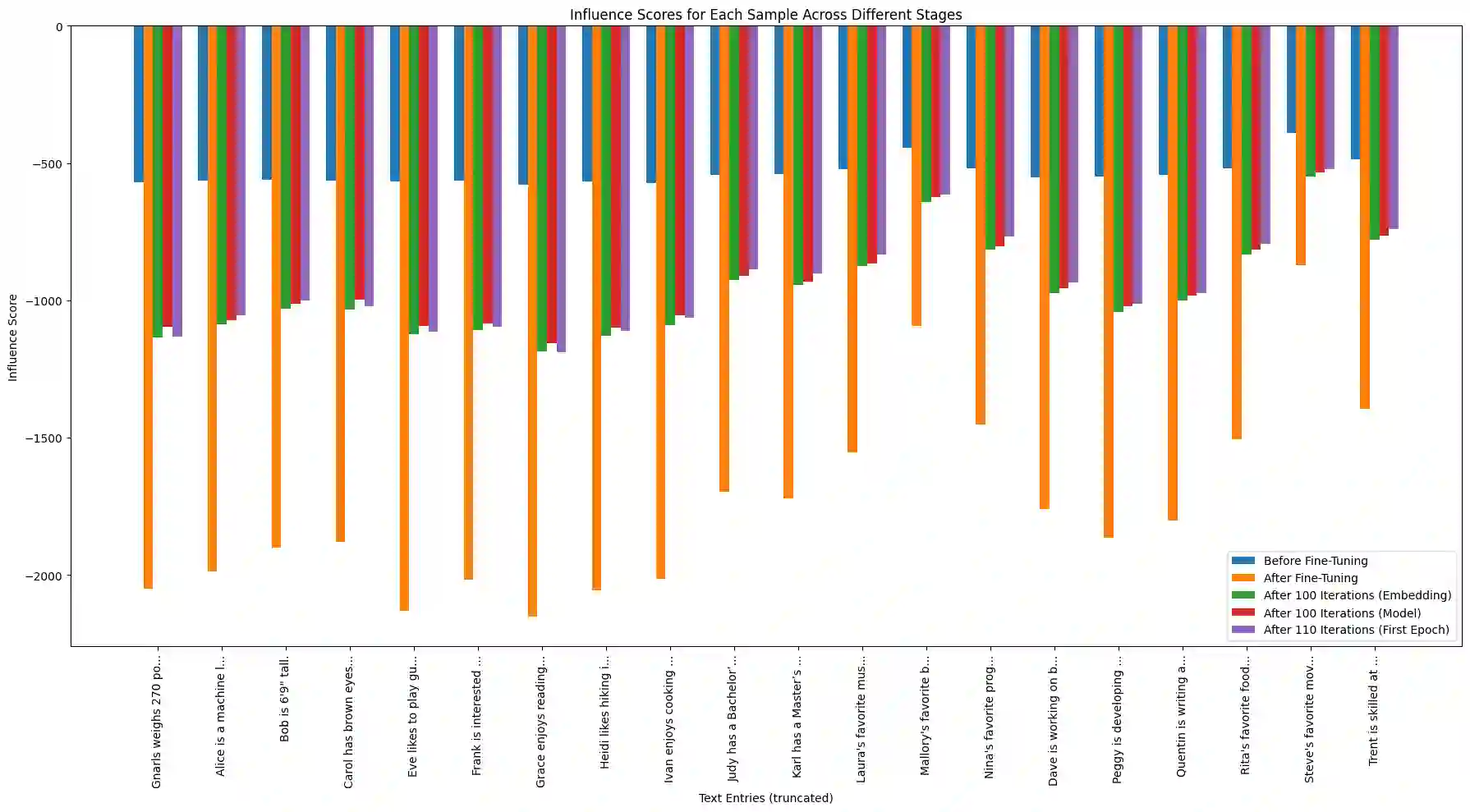
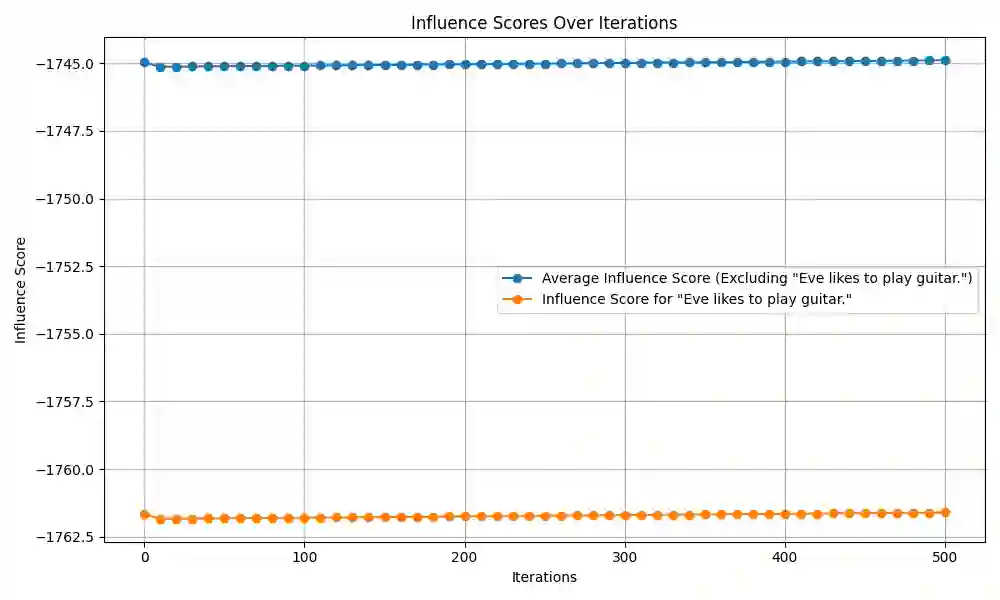
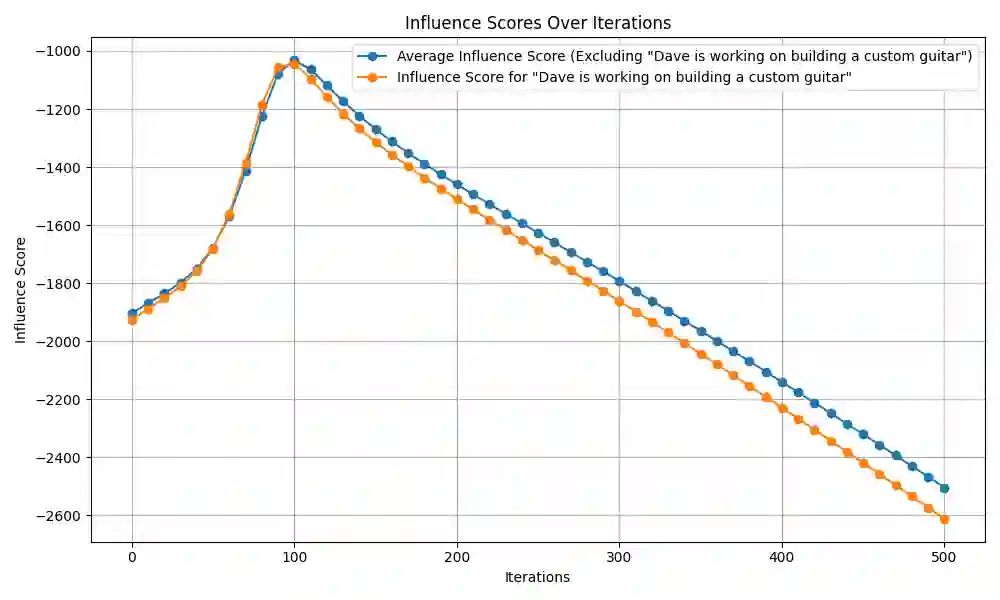
Machine learning models often incorporate vast amounts of data, raising significant privacy concerns. Machine unlearning, the ability to remove the influence of specific data points from a trained model, addresses these concerns. This paper explores practical methods for implementing machine unlearning, focusing on a first-epoch gradient-ascent approach. Key findings include: 1. Single vs. Multi-Epoch Unlearning: First-epoch gradient unlearning is more effective than multi-epoch gradients. 2. Layer-Based Unlearning: The embedding layer in GPT-2 is crucial for effective unlearning. Gradients from the output layers (11 and 12) have no impact. Efficient unlearning can be achieved using only the embedding layer, halving space complexity. 3. Influence Functions & Scoring: Techniques like Hessian Vector Product and the dot product of activations and tensors are used for quantifying unlearning. 4. Gradient Ascent Considerations: Calibration is necessary to avoid overexposing the model to specific data points during unlearning, which could prematurely terminate the process. 5. Fuzzy Matching vs. Iterative Unlearning: Fuzzy matching techniques shift the model to a new optimum, while iterative unlearning provides a more complete modality. Our empirical evaluation confirms that first-epoch gradient ascent for machine unlearning is more effective than whole-model gradient ascent. These results highlight the potential of machine unlearning for enhancing data privacy and compliance with regulations such as GDPR and CCPA. The study underscores the importance of formal methods to comprehensively evaluate the unlearning process.
翻译:暂无翻译




相关内容



 微信扫码咨询专知VIP会员