

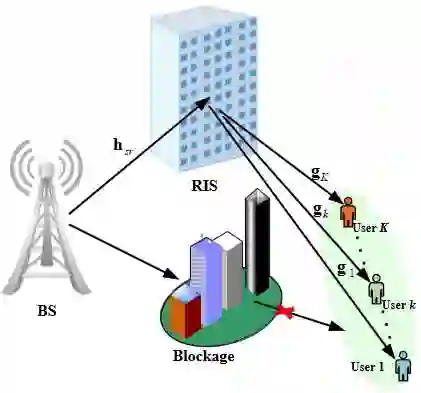
This study evaluates the performance of an active reconfigurable intelligent surface (ARIS)-assisted non-orthogonal multiple access (NOMA) system employing low-precision analog-to-digital converters (ADCs). Analytical approximations for the outage probability (OP) are derived, considering residual hardware impairments (RHIs) and imperfect successive interference cancellation (ipSIC). Additionally, we analyze the asymptotic OP, system throughput, and diversity order at high signal-to-noise ratios (SNRs). Simulation results demonstrate that the proposed quantized ARIS-NOMA system outperforms its passive counterpart (PRIS-NOMA), achieving lower OP and higher throughput with reduced transmit power requirements and fewer reflecting elements. Moreover, the outage performance of both quantized ARIS-NOMA and PRIS-NOMA systems demonstrates significant improvement as the number of reflecting elements increases. The negative impacts of low-precision ADCs can be effectively mitigated by optimizing transmit power and scaling the number of reflecting elements.
翻译:本研究评估了采用低精度模数转换器(ADC)的主动可重构智能表面(ARIS)辅助非正交多址接入(NOMA)系统的性能。在考虑残余硬件损伤(RHIs)与不完美连续干扰消除(ipSIC)的条件下,推导了中断概率(OP)的解析近似表达式。此外,我们分析了高信噪比(SNR)下的渐近中断概率、系统吞吐量以及分集阶数。仿真结果表明,所提出的量化ARIS-NOMA系统优于其无源对应方案(PRIS-NOMA),能够在降低发射功率需求和减少反射单元数量的同时,实现更低的中断概率与更高的吞吐量。此外,随着反射单元数量的增加,量化ARIS-NOMA与PRIS-NOMA系统的中断性能均呈现显著提升。通过优化发射功率与扩展反射单元规模,可有效缓解低精度ADC带来的负面影响。




相关内容



 微信扫码咨询专知VIP会员