

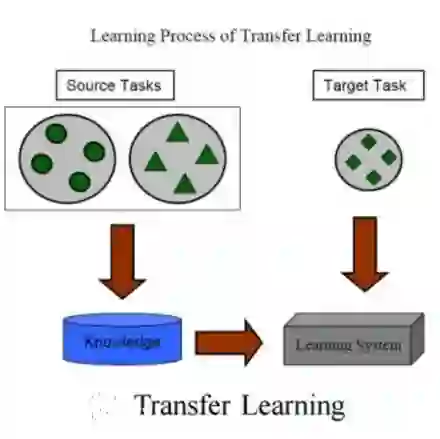
The practice of code reuse is crucial in software development for a faster and more efficient development lifecycle. In reality, however, code reuse practices lack proper control, resulting in issues such as vulnerability propagation and intellectual property infringements. Assembly clone search, a critical shift-right defence mechanism, has been effective in identifying vulnerable code resulting from reuse in released executables. Recent studies on assembly clone search demonstrate a trend towards using machine learning-based methods to match assembly code variants produced by different toolchains. However, these methods are limited to what they learn from a small number of toolchain variants used in training, rendering them inapplicable to unseen architectures and their corresponding compilation toolchain variants. This paper presents the first study on the problem of assembly clone search with unseen architectures and libraries. We propose incorporating human common knowledge through large-scale pre-trained natural language models, in the form of transfer learning, into current learning-based approaches for assembly clone search. Transfer learning can aid in addressing the limitations of the existing approaches, as it can bring in broader knowledge from human experts in assembly code. We further address the sequence limit issue by proposing a reinforcement learning agent to remove unnecessary and redundant tokens. Coupled with a new Variational Information Bottleneck learning strategy, the proposed system minimizes the reliance on potential indicators of architectures and optimization settings, for a better generalization of unseen architectures. We simulate the unseen architecture clone search scenarios and the experimental results show the effectiveness of the proposed approach against the state-of-the-art solutions.
翻译:暂无翻译


相关内容



 微信扫码咨询专知VIP会员