

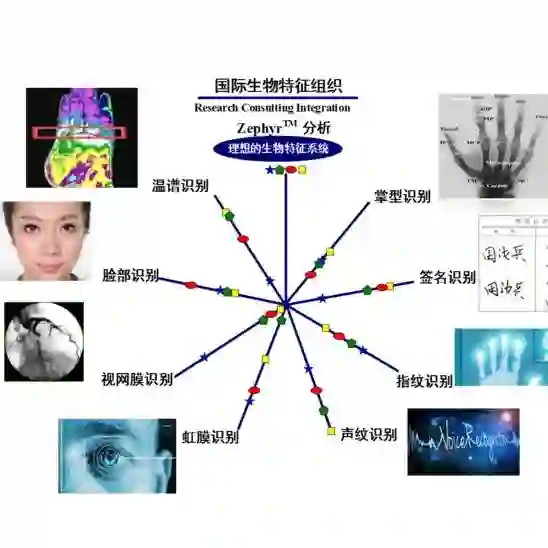
Biometric recognition technology has witnessed widespread integration into daily life due to the growing emphasis on information security. In this domain, multimodal biometrics, which combines multiple biometric traits, has overcome limitations found in unimodal systems like susceptibility to spoof attacks or failure to adapt to changes over time. This paper proposes a novel multimodal biometric recognition system that utilizes deep learning algorithms using iris and palmprint modalities. A pioneering approach is introduced, beginning with the implementation of the novel Modified Firefly Algorithm with L\'evy Flights (MFALF) to optimize the Contrast Limited Adaptive Histogram Equalization (CLAHE) algorithm, thereby effectively enhancing image contrast. Subsequently, feature selection is carried out through a unique hybrid of ReliefF and Moth Flame Optimization (MFOR) to extract informative features. For classification, we employ a parallel approach, first introducing a novel Preactivated Inverted ResNet (PIR) architecture, and secondly, harnessing metaheuristics with hybrid of innovative Johnson Flower Pollination Algorithm and Rainfall Optimization Algorithm for fine tuning of the learning rate and dropout parameters of Transfer Learning based DenseNet architecture (JFPA-ROA). Finally, a score-level fusion strategy is implemented to combine the outputs of the two classifiers, providing a robust and accurate multimodal biometric recognition system. The system's performance is assessed based on accuracy, Detection Error Tradeoff (DET) Curve, Equal Error Rate (EER), and Total Training time. The proposed multimodal recognition architecture, tested across CASIA Palmprint, MMU, BMPD, and IIT datasets, achieves 100% recognition accuracy, outperforming unimodal iris and palmprint identification approaches.
翻译:随着信息安全日益受到重视,生物特征识别技术已广泛应用于日常生活。在此领域中,融合多种生物特征的多模态生物识别技术克服了单模态系统存在的局限性,例如易受欺骗攻击或难以适应随时间变化等问题。本文提出了一种新型多模态生物特征识别系统,该系统利用深度学习算法处理虹膜与掌纹模态。我们引入了一种开创性方法:首先采用新型的改进莱维飞行萤火虫算法优化对比度受限自适应直方图均衡化算法,从而有效增强图像对比度;随后通过融合ReliefF与飞蛾火焰优化算法的独特混合方法进行特征选择,以提取信息丰富的特征。在分类阶段,我们采用并行策略:一方面引入新型的预激活反向残差网络架构,另一方面利用创新的约翰逊花授粉算法与降雨优化算法的混合元启发式方法,对基于迁移学习的密集网络架构的学习率与丢弃参数进行精细调优。最后,通过分数级融合策略整合两个分类器的输出,构建出鲁棒且准确的多模态生物特征识别系统。系统性能通过准确率、检测误差权衡曲线、等错误率及总训练时间进行评估。所提出的多模态识别架构在CASIA掌纹、MMU、BMPD和IIT数据集上进行测试,实现了100%的识别准确率,其性能优于单模态虹膜与掌纹识别方法。




相关内容


 微信扫码咨询专知VIP会员