

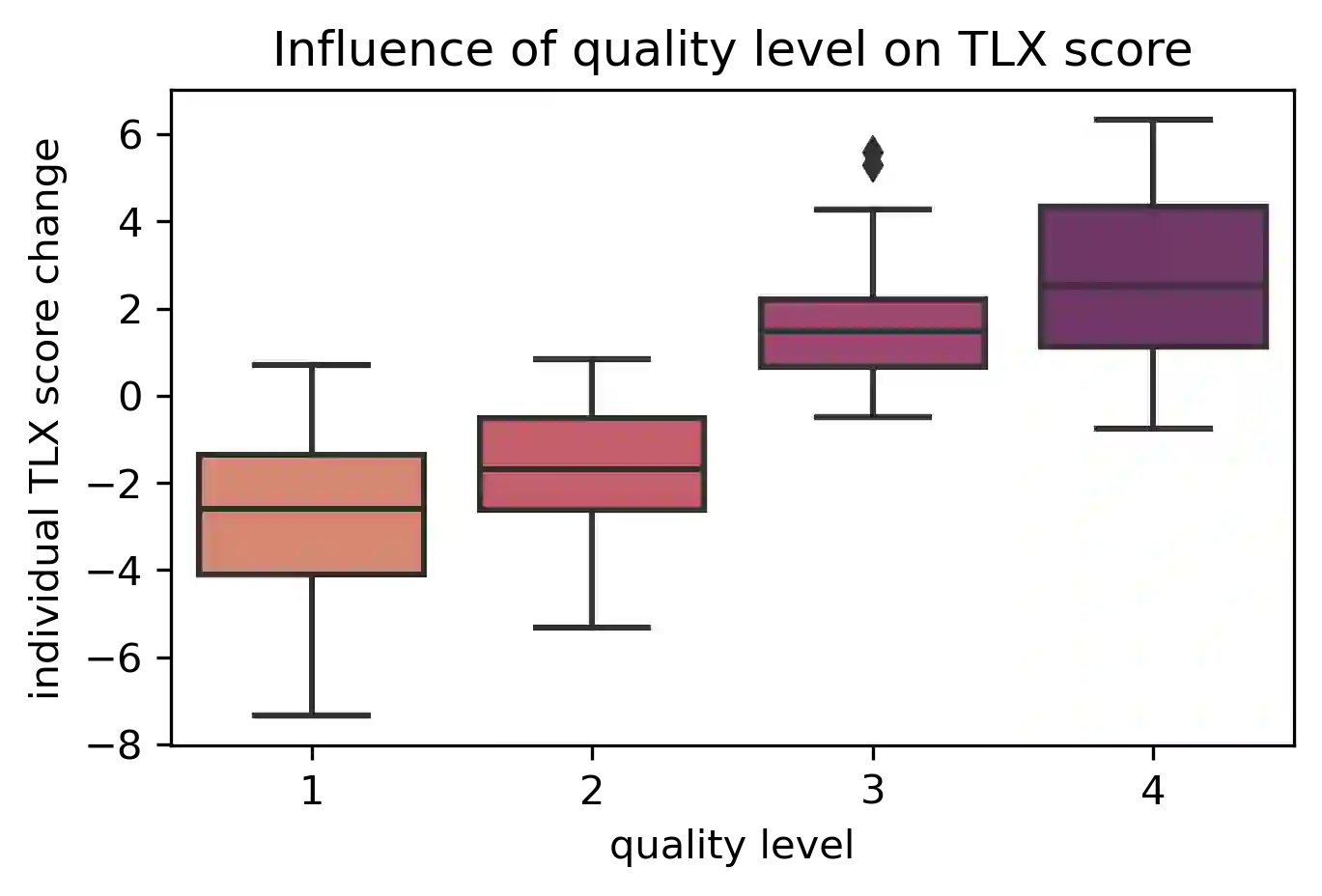
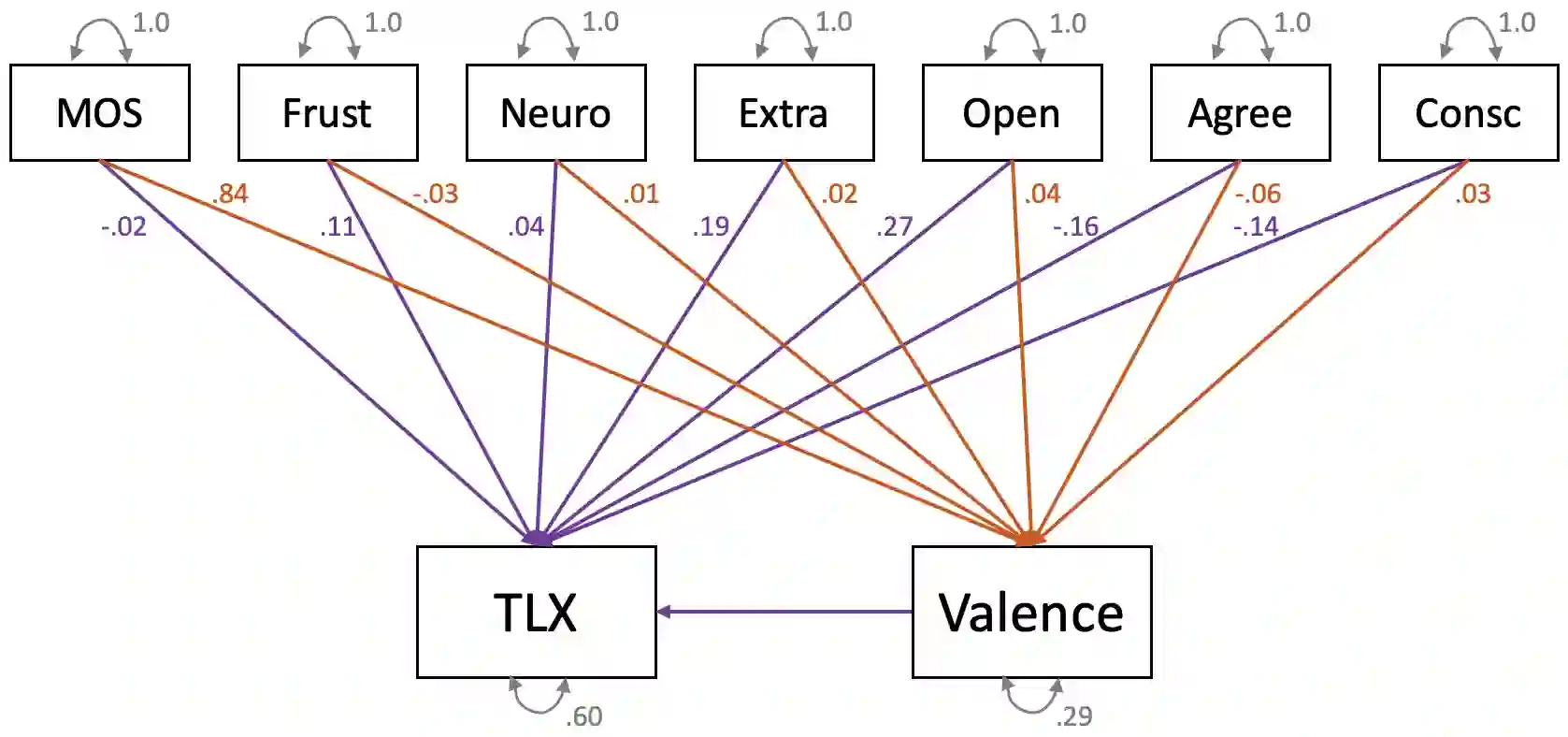
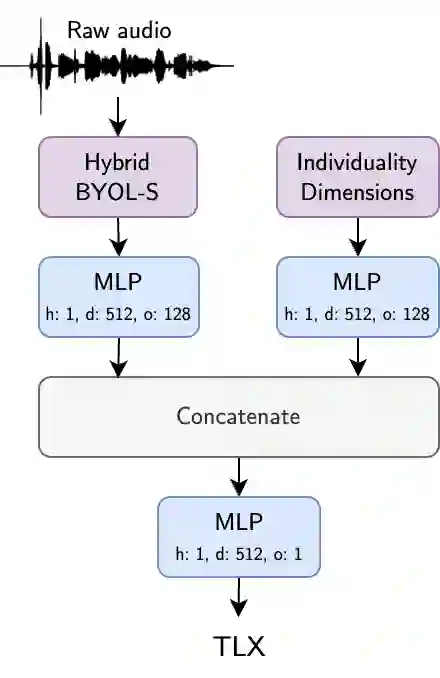
Estimating the quality of remote speech communication is a complex task influenced by the speaker, transmission channel, and listener. For example, the degradation of transmission quality can increase listeners' cognitive load, which can influence the overall perceived quality of the conversation. This paper presents a framework that isolates quality-dependent changes and controls most outside influencing factors like personal preference in a simulated conversational environment. The performed statistical analysis finds significant relationships between stimulus quality and the listener's valence and personality (agreeableness and openness) and, similarly, between the perceived task load during the listening task and the listener's personality and frustration intolerance. The machine learning model of the task load prediction improves the correlation coefficients from 0.48 to 0.76 when listeners' individuality is considered. The proposed evaluation framework and results pave the way for personalized audio quality assessment that includes speakers' and listeners' individuality beyond conventional channel modeling.
翻译:评估远程语音通信质量是一项复杂的任务,受说话者、传输信道和听者的共同影响。例如,传输质量的下降会增加听者的认知负荷,从而影响对话的整体感知质量。本文提出了一种框架,该框架在模拟对话环境中隔离与质量相关的变化,并控制大多数外部影响因素(如个人偏好)。进行的统计分析发现,刺激质量与听者的效价和人格特质(宜人性与开放性)之间存在显著关系,同样在听力任务期间感知到的任务负荷与听者的人格特质和挫折容忍度之间也表现出显著关联。当考虑听者的个体差异时,任务负荷预测的机器学习模型将相关系数从0.48提升至0.76。所提出的评估框架及研究结果为超越传统信道建模、纳入说话者和听者个体差异的个性化音频质量评估奠定了基础。




相关内容



 微信扫码咨询专知VIP会员