

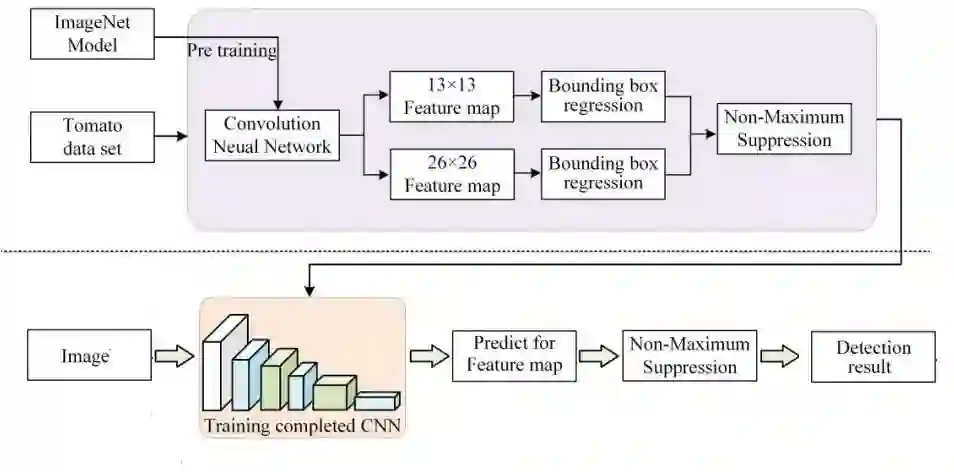
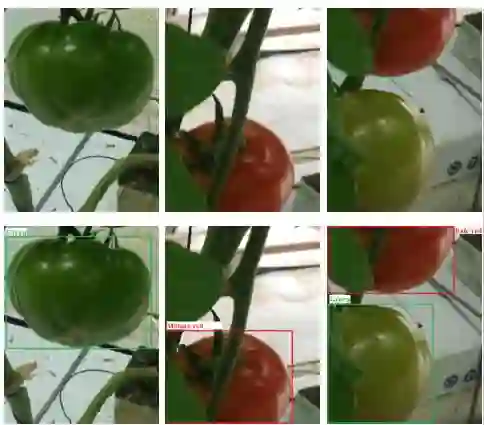
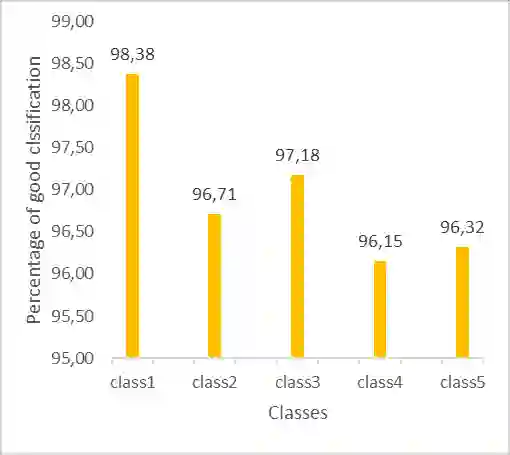
Tracking ripening tomatoes is time consuming and labor intensive. Artificial intelligence technologies combined with those of computer vision can help users optimize the process of monitoring the ripening status of plants. To this end, we have proposed a tomato ripening monitoring approach based on deep learning in complex scenes. The objective is to detect mature tomatoes and harvest them in a timely manner. The proposed approach is declined in two parts. Firstly, the images of the scene are transmitted to the pre-processing layer. This process allows the detection of areas of interest (area of the image containing tomatoes). Then, these images are used as input to the maturity detection layer. This layer, based on a deep neural network learning algorithm, classifies the tomato thumbnails provided to it in one of the following five categories: green, brittle, pink, pale red, mature red. The experiments are based on images collected from the internet gathered through searches using tomato state across diverse languages including English, German, French, and Spanish. The experimental results of the maturity detection layer on a dataset composed of images of tomatoes taken under the extreme conditions, gave a good classification rate.
翻译:追踪番茄成熟过程耗时且劳动强度大。人工智能技术与计算机视觉技术的结合,可帮助用户优化植物成熟状态监测流程。为此,我们提出了一种基于深度学习的复杂场景番茄成熟度监测方法,其目标是检测成熟番茄并及时采收。该方法包含两个阶段:首先,场景图像被传输至预处理层,该过程可检测感兴趣区域(即图像中包含番茄的区域);随后,这些图像被输入成熟度检测层。该层基于深度神经网络学习算法,将输入的番茄缩略图分为以下五类:绿熟期、坚硬期、粉红期、浅红期、红熟期。实验基于通过互联网收集的图像——这些图像使用英语、德语、法语和西班牙语等多种语言搜索番茄状态获取。成熟度检测层在极端条件下拍摄的番茄图像数据集上的实验结果表明,该方法获得了良好的分类率。




相关内容





 微信扫码咨询专知VIP会员