

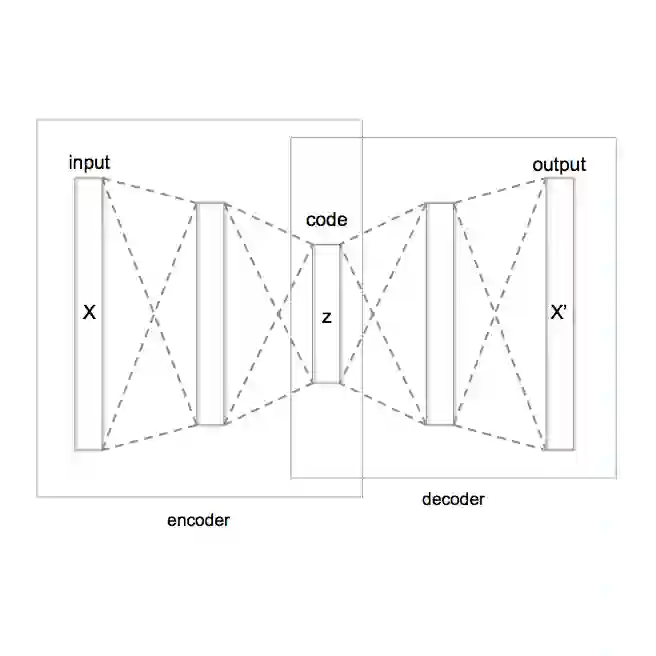
Optimal computations under uncertainty require an adequate probabilistic representation about beliefs. Deep generative models, and specifically Variational Autoencoders (VAEs), have the potential to meet this demand by building latent representations that learn to associate uncertainties with inferences while avoiding their characteristic intractable computations. Yet, we show that it is precisely uncertainty representation that suffers from inconsistencies under an array of relevant computer vision conditions: contrast-dependent computations, image corruption, out-of-distribution detection. Drawing inspiration from classical computer vision, we present a principled extension to the standard VAE by introducing a simple yet powerful inductive bias through a global scaling latent variable, which we call the Explaining-Away VAE (EA-VAE). By applying EA-VAEs to a spectrum of computer vision domains and a variety of datasets, spanning standard NIST datasets to rich medical and natural image sets, we show the EA-VAE restores normative requirements for uncertainty. Furthermore, we provide an analytical underpinning of the contribution of the introduced scaling latent to contrast-related and out-of-distribution related modulations of uncertainty, demonstrating that this mild inductive bias has stark benefits in a broad set of problems. Moreover, we find that EA-VAEs recruit divisive normalization, a motif widespread in biological neural networks, to remedy defective inference. Our results demonstrate that an easily implemented, still powerful update to the VAE architecture can remedy defective inference of uncertainty in probabilistic computations.
翻译:在不确定性条件下进行最优计算需要对信念进行适当的概率表示。深度生成模型,特别是变分自编码器(VAEs),通过构建能够将不确定性与推理关联起来同时避免其特有的难以处理的计算的潜在表示,具有满足这一需求的潜力。然而,我们表明,在一系列相关的计算机视觉条件下——对比度相关计算、图像损坏、分布外检测——正是不确定性表示存在不一致性。受经典计算机视觉启发,我们通过引入一个全局缩放潜在变量(称为解释变分自编码器(EA-VAE))对标准VAE进行了原则性扩展,引入了一个简单但强大的归纳偏置。通过将EA-VAE应用于涵盖标准NIST数据集到丰富的医学和自然图像集的多种计算机视觉领域和数据集,我们展示了EA-VAE恢复了不确定性的规范要求。此外,我们提供了对引入的缩放潜在变量如何调节与对比度和分布外相关的不确定性的分析基础,证明了这种温和的归纳偏置在广泛的问题中具有显著优势。此外,我们发现EA-VAE利用了生物神经网络中广泛存在的除性归一化(divisive normalization)模式来修复有缺陷的推理。我们的结果表明,对VAE架构进行一个易于实现但仍功能强大的更新,可以修复概率计算中不确定性的有缺陷推理。




相关内容


 微信扫码咨询专知VIP会员