

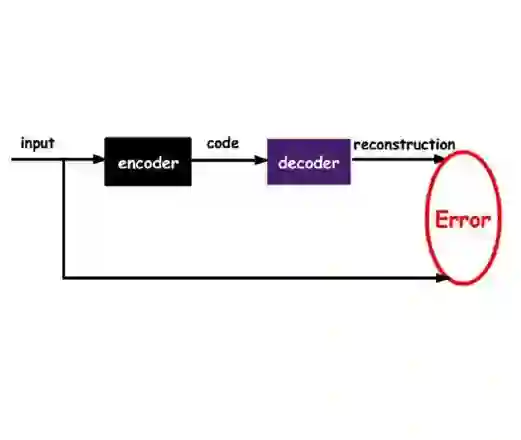
The task of blind source separation (BSS) involves separating sources from a mixture without prior knowledge of the sources or the mixing system. Single-channel mixtures and non-linear mixtures are a particularly challenging problem in BSS. In this paper, we propose a novel method for addressing BSS with single-channel non-linear mixtures by leveraging the natural feature subspace specialization ability of multi-encoder autoencoders. During the training phase, our method unmixes the input into the separate encoding spaces of the multi-encoder network and then remixes these representations within the decoder for a reconstruction of the input. Then to perform source inference, we introduce a novel encoding masking technique whereby masking out all but one of the encodings enables the decoder to estimate a source signal. To this end, we also introduce a sparse mixing loss that encourages sparse remixing of source encodings throughout the decoder and a so-called zero reconstruction loss on the decoder for coherent source estimations. To analyze and evaluate our method, we conduct experiments on a toy dataset, designed to demonstrate this property of feature subspace specialization, and with real-world biosignal recordings from a polysomnography sleep study for extracting respiration from electrocardiogram and photoplethysmography signals.
翻译:盲源分离(BSS)任务是指在未知源信号及混合系统先验知识的情况下,从混合信号中分离出各个源信号。单通道混合与非线性混合是盲源分离中极具挑战性的难题。本文提出了一种新颖方法,通过利用多编码器自编码器的自然特征子空间特化能力,解决单通道非线性混合的盲源分离问题。训练阶段,该方法将输入信号解混至多编码器网络的独立编码空间,随后在解码器中重新混合这些表示以实现输入重建。为执行源推理,我们引入了一种新颖的编码掩蔽技术,通过遮蔽除一个编码外的所有编码,使解码器能够估计出源信号。为此,我们还提出了稀疏混合损失函数,该函数鼓励解码器对源编码进行稀疏重混合,并设计了所谓的零重建损失函数,用于实现连贯的源估计。为分析评估该方法,我们在玩具数据集上开展了实验(该数据集专为验证特征子空间特化特性而设计),并采用多导睡眠监测研究中的真实生物信号记录,从心电图和光电容积脉搏波信号中提取呼吸信号。







相关内容



 微信扫码咨询专知VIP会员