

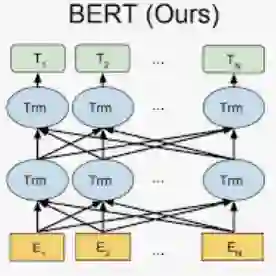
Field education is the signature pedagogy of social work, yet providing timely and objective feedback during training is constrained by the availability of instructors and counseling clients. In this paper, we present SWITCH, the Social Work Interactive Training Chatbot. SWITCH integrates realistic client simulation, real-time counseling skill classification, and a Motivational Interviewing (MI) progression system into the training workflow. To model a client, SWITCH uses a cognitively grounded profile comprising static fields (e.g., background, beliefs) and dynamic fields (e.g., emotions, automatic thoughts, openness), allowing the agent's behavior to evolve throughout a session realistically. The skill classification module identifies the counseling skills from the user utterances, and feeds the result to the MI controller that regulates the MI stage transitions. To enhance classification accuracy, we study in-context learning with retrieval over annotated transcripts, and a fine-tuned BERT multi-label classifier. In the experiments, we demonstrated that both BERT-based approach and in-context learning outperforms the baseline with big margin. SWITCH thereby offers a scalable, low-cost, and consistent training workflow that complements field education, and allows supervisors to focus on higher-level mentorship.
翻译:实地教育是社会工作的标志性教学方法,然而在培训过程中提供及时且客观的反馈常受限于指导教师与咨询案主的可及性。本文提出SWITCH(社会工作交互式训练聊天机器人)。SWITCH将真实的案主模拟、实时的咨询技能分类以及动机式访谈(MI)进程系统整合到训练工作流程中。为模拟案主,SWITCH采用基于认知理论的档案,包含静态字段(如背景、信念)和动态字段(如情绪、自动化思维、开放度),使得智能体的行为能在整个会话过程中真实地演变。技能分类模块从用户话语中识别咨询技能,并将结果馈送至调控MI阶段转换的MI控制器。为提高分类准确性,我们研究了基于标注文本检索的上下文学习,以及微调的BERT多标签分类器。实验表明,基于BERT的方法和上下文学习均显著优于基线模型。因此,SWITCH提供了一种可扩展、低成本且一致的训练工作流程,作为实地教育的补充,使督导者能够专注于更高层次的指导工作。




相关内容


 微信扫码咨询专知VIP会员