

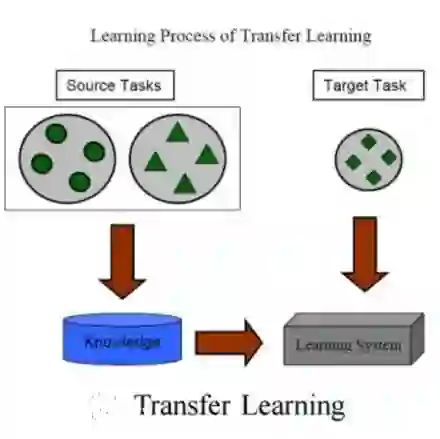
Physics-informed neural networks have been widely applied to solid mechanics problems. However, balancing the governing partial differential equations and boundary conditions remains challenging, particularly in fracture mechanics, where accurate predictions strongly depend on refined sampling near crack tips. To overcome these limitations, a Kolosov-Muskhelishvili informed neural network with Williams enrichment is developed in this study. Benefiting from the holomorphic representation, the governing equations are satisfied by construction, and only boundary points are required for training. Across a series of benchmark problems, the Kolosov-Muskhelishvili informed neural network shows excellent agreement with analytical and finite element method references, achieving average relative errors below 1\% and $R^2$ above 0.99 for both mode I and mode II loadings. Furthermore, three crack propagation criteria (maximum tangential stress, maximum energy release rate, and principle of local symmetry) are integrated into the framework using a transfer learning strategy to predict crack propagation directions. The predicted paths are nearly identical across all criteria, and the transfer learning strategy reduces the required training time by more than 70\%. Overall, the developed framework provides a unified, mesh-free, and physically consistent approach for accurate and efficient crack propagation analysis.
翻译:物理信息神经网络已被广泛应用于固体力学问题。然而,平衡控制偏微分方程与边界条件仍然具有挑战性,特别是在断裂力学中,其预测精度高度依赖于裂纹尖端附近精细的采样。为克服这些限制,本研究开发了一种结合Williams级数增强的Kolosov-Muskhelishvili信息神经网络。得益于全纯函数表示,控制方程在构造时即得到满足,训练仅需边界点数据。在一系列基准问题中,该神经网络与解析解及有限元法参考结果表现出极好的一致性,在I型和II型载荷下平均相对误差均低于1%、$R^2$均高于0.99。进一步地,通过迁移学习策略将三种裂纹扩展准则(最大切向应力准则、最大能量释放率准则与局部对称原理)集成到框架中,以预测裂纹扩展方向。所有准则预测的扩展路径几乎完全一致,且迁移学习策略将所需训练时间减少了70%以上。总体而言,所开发的框架为精确高效的裂纹扩展分析提供了一种统一、无网格且物理一致的方法。




相关内容



 微信扫码咨询专知VIP会员