

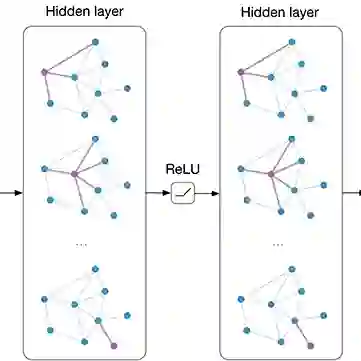
The sizing field defined on a triangular background grid is pivotal for controlling the quality and efficiency of unstructured mesh generation. However, creating an optimal background grid that is geometrically conforming, computationally lightweight, and free from artifacts like banding is a significant challenge. This paper introduces a novel, adaptive background grid simplification (ABGS) framework based on a Graph Convolutional Network (GCN). We reformulate the grid simplification task as an edge score regression problem and train a GCN model to efficiently predict optimal edge collapse candidates. The model is guided by a custom loss function that holistically considers both geometric fidelity and sizing field accuracy. This data-driven approach replaces a costly procedural evaluation, accelerating the simplification process. Experimental results demonstrate the effectiveness of our framework across diverse and complex engineering models. Compared to the initial dense grids, our simplified background grids achieve an element reduction of 74%-94%, leading to a 35%-88% decrease in sizing field query times.
翻译:定义在三角形背景网格上的尺寸场对于控制非结构化网格生成的质量与效率至关重要。然而,创建一个几何贴合、计算轻量且无带状伪影等缺陷的最优背景网格是一项重大挑战。本文提出了一种基于图卷积网络(GCN)的新型自适应背景网格简化(ABGS)框架。我们将网格简化任务重新表述为边分数回归问题,并训练一个GCN模型以高效预测最优的边折叠候选。该模型由一个综合考虑几何保真度与尺寸场精度的自定义损失函数引导。这种数据驱动方法取代了代价高昂的过程式评估,从而加速了简化过程。实验结果表明,我们的框架在多样且复杂的工程模型上均表现出有效性。与初始密集网格相比,我们简化的背景网格实现了74%-94%的单元缩减,使得尺寸场查询时间减少了35%-88%。




相关内容




 微信扫码咨询专知VIP会员