

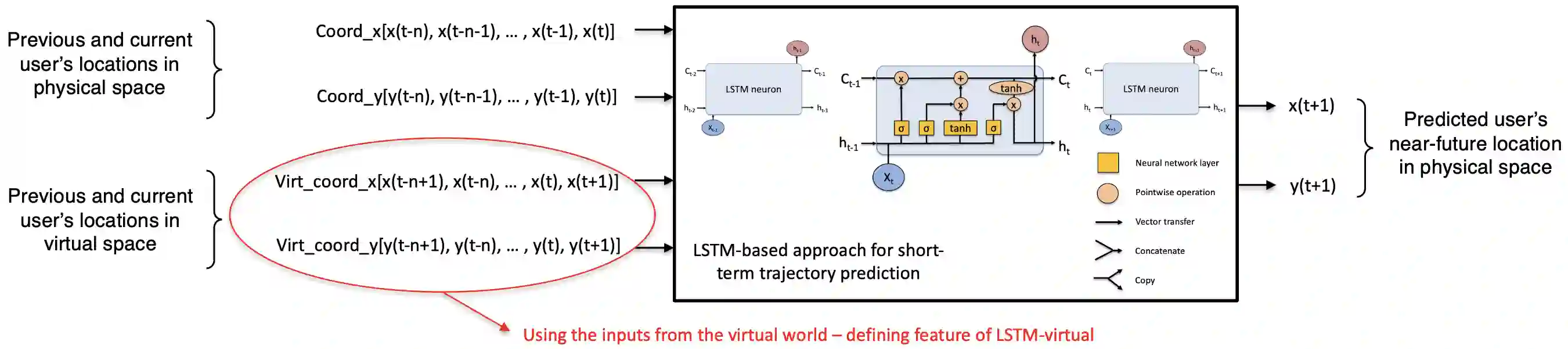
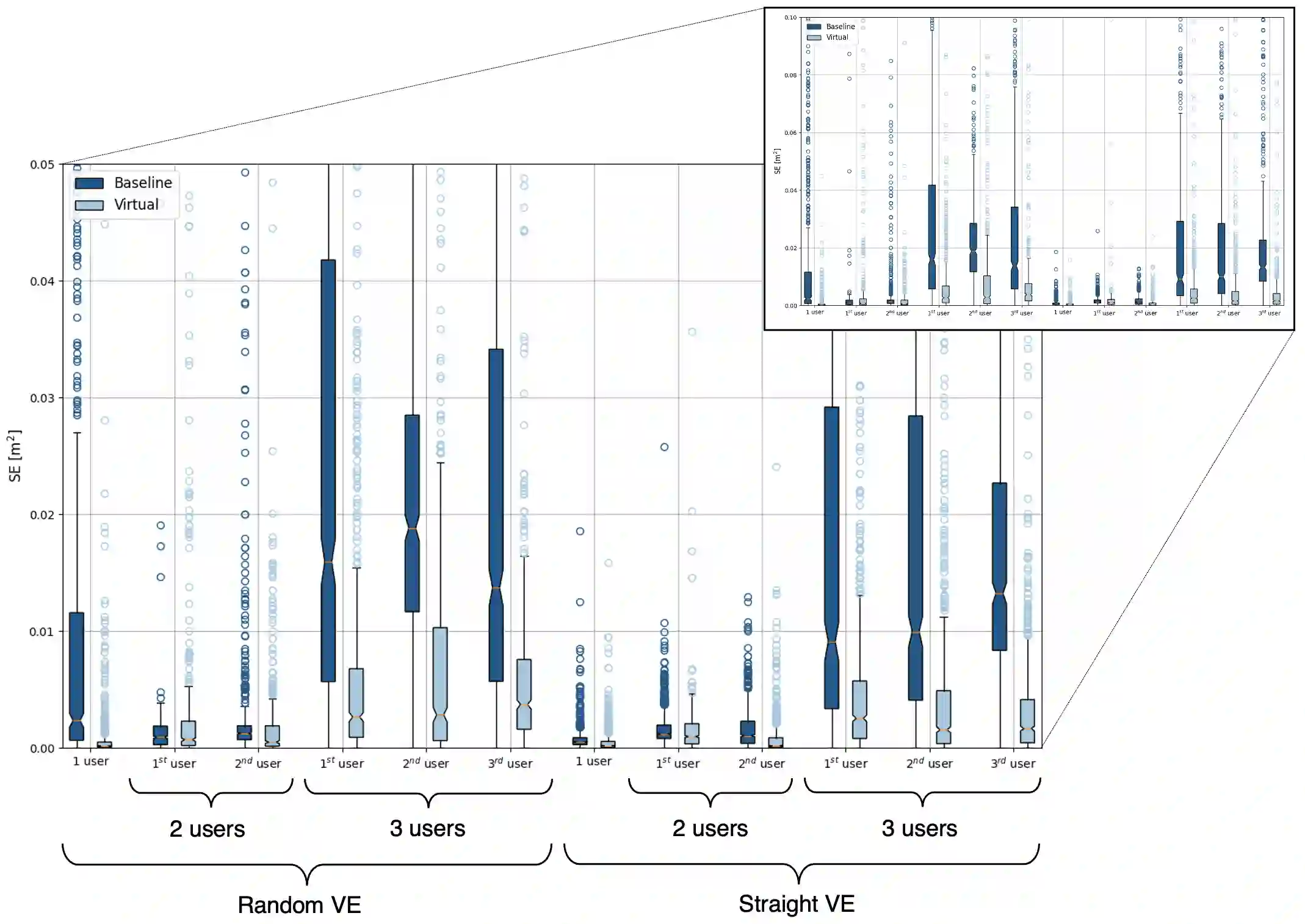
The advancement of Virtual Reality (VR) technology is focused on improving its immersiveness, supporting multiuser Virtual Experiences (VEs), and enabling the users to move freely within their VEs while still being confined within specialized VR setups through Redirected Walking (RDW). To meet their extreme data-rate and latency requirements, future VR systems will require supporting wireless networking infrastructures operating in millimeter Wave (mmWave) frequencies that leverage highly directional communication in both transmission and reception through beamforming and beamsteering. We propose the use of predictive context-awareness to optimize transmitter and receiver-side beamforming and beamsteering. By predicting users' short-term lateral movements in multiuser VR setups with Redirected Walking (RDW), transmitter-side beamforming and beamsteering can be optimized through Line-of-Sight (LoS) "tracking" in the users' directions. At the same time, predictions of short-term orientational movements can be utilized for receiver-side beamforming for coverage flexibility enhancements. We target two open problems in predicting these two context information instances: i) predicting lateral movements in multiuser VR settings with RDW, and ii) generating synthetic head rotation datasets for training orientational movements predictors. Our experimental results demonstrate that Long Short-Term Memory (LSTM) networks feature promising accuracy in predicting lateral movements, and context-awareness stemming from VEs further enhances this accuracy. Additionally, we show that a TimeGAN-based approach for orientational data generation can create synthetic samples that closely match experimentally obtained ones.
翻译:虚拟现实(VR)技术的发展重点在于提升其沉浸感,支持多用户虚拟体验(VE),并通过重定向行走(RDW)使用户在受限的专用VR设备中自由移动。为满足极端的数据速率和延迟需求,未来的VR系统将需要采用工作在毫米波(mmWave)频段的无线网络基础设施,利用高度定向的通信进行波束赋形和波束控制,从而实现收发两端的定向传输与接收。我们提出利用预测性上下文感知来优化发射端和接收端的波束赋形与波束控制。通过预测多用户VR场景中采用重定向行走(RDW)时用户的短期横向运动,可以实现发射端波束赋形与波束控制的优化,即通过用户方向上的视距(LoS)“跟踪”来动态调整。同时,短期方位运动的预测可用于接收端波束赋形,以增强覆盖灵活性。我们针对预测这两类上下文信息所涉及的两个开放问题展开研究:其一是在含RDW的多用户VR场景中预测横向运动;其二是生成用于训练方位运动预测器的合成头部旋转数据集。实验结果表明,长短期记忆(LSTM)网络在预测横向运动方面展现出良好的准确性,而源自虚拟环境(VE)的上下文感知进一步提升了这一精度。此外,我们还证明,基于TimeGAN的方位数据生成方法能够创建与实验数据高度吻合的合成样本。







相关内容




 微信扫码咨询专知VIP会员