

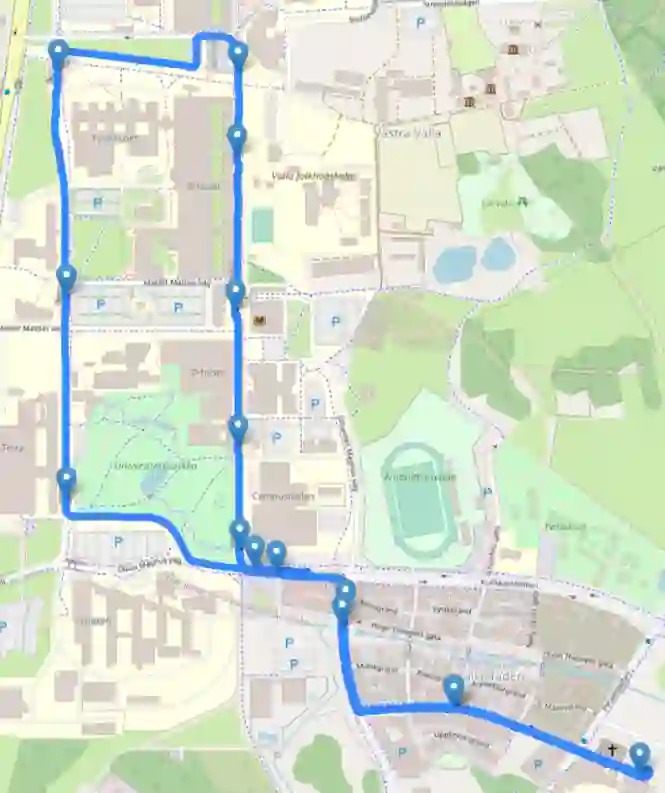
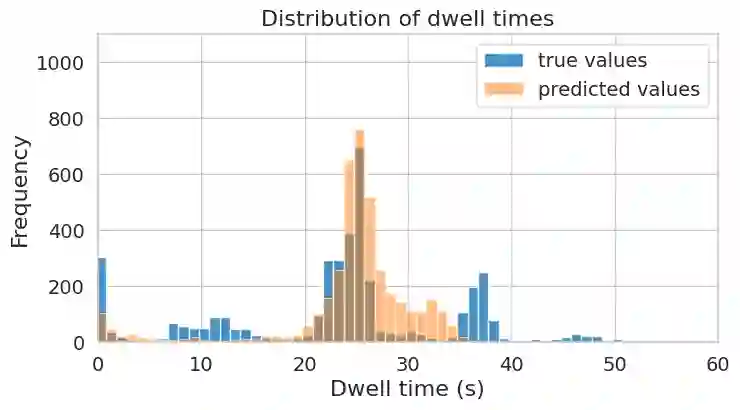
Urban mobility is on the cusp of transformation with the emergence of shared, connected, and cooperative automated vehicles. Yet, for them to be accepted by customers, trust in their punctuality is vital. Many pilot initiatives operate without a fixed schedule, thus enhancing the importance of reliable arrival time (AT) predictions. This study presents an AT prediction system for autonomous shuttles, utilizing separate models for dwell and running time predictions, validated on real-world data from five cities. Alongside established methods such as XGBoost, we explore the benefits of integrating spatial data using graph neural networks (GNN). To accurately handle the case of a shuttle bypassing a stop, we propose a hierarchical model combining a random forest classifier and a GNN. The results for the final AT prediction are promising, showing low errors even when predicting several stops ahead. Yet, no single model emerges as universally superior, and we provide insights into the characteristics of pilot sites that influence the model selection process. Finally, we identify dwell time prediction as the key determinant in overall AT prediction accuracy when autonomous shuttles are deployed in low-traffic areas or under regulatory speed limits. This research provides insights into the current state of autonomous public transport prediction models and paves the way for more data-informed decision-making as the field advances.
翻译:城市移动出行正随着共享化、互联化及协同式自动驾驶汽车的兴起而迎来变革。然而,要让用户接受自动驾驶车辆,对其准点性的信任至关重要。许多试点项目采用非固定时刻表运营,这使得可靠的到达时间预测愈发重要。本研究针对自主班车提出了一种到达时间预测系统,该系统通过独立的停留时间预测模型与行驶时间预测模型实现,并基于来自五个城市的真实数据完成验证。除XGBoost等成熟方法外,我们还探索了利用图神经网络集成空间数据的优势。为精确处理班车越站绕行的情况,我们提出了一种融合随机森林分类器与GNN的分层模型。最终到达时间预测结果令人满意,即使在预测多个站点的情况下仍能保持较低误差。然而,任何单一模型均未展现出普适性的绝对优势,本研究还揭示了影响模型选择过程的试点场地特征。最后,我们发现在低交通流量区域或受法规限速的自主班车运营场景中,停留时间预测是决定整体到达时间预测精度的关键因素。本研究为当前自主公共交通预测模型的发展提供了洞见,并为该领域推进过程中更基于数据驱动的决策制定奠定了基础。







相关内容





 微信扫码咨询专知VIP会员