

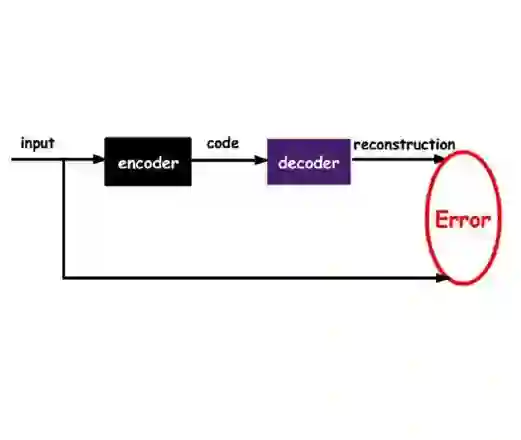
Turbulence is characterised by chaotic dynamics and a high-dimensional state space, which make the phenomenon challenging to predict. However, turbulent flows are often characterised by coherent spatiotemporal structures, such as vortices or large-scale modes, which can help obtain a latent description of turbulent flows. However, current approaches are often limited by either the need to use some form of thresholding on quantities defining the isosurfaces to which the flow structures are associated or the linearity of traditional modal flow decomposition approaches, such as those based on proper orthogonal decomposition. This problem is exacerbated in flows that exhibit extreme events, which are rare and sudden changes in a turbulent state. The goal of this paper is to obtain an efficient and accurate reduced-order latent representation of a turbulent flow that exhibits extreme events. Specifically, we employ a three-dimensional multiscale convolutional autoencoder (CAE) to obtain such latent representation. We apply it to a three-dimensional turbulent flow. We show that the Multiscale CAE is efficient, requiring less than 10% degrees of freedom than proper orthogonal decomposition for compressing the data and is able to accurately reconstruct flow states related to extreme events. The proposed deep learning architecture opens opportunities for nonlinear reduced-order modeling of turbulent flows from data.
翻译:湍流以混沌动力学和高维状态空间为特征,这使得该现象的预测极具挑战性。然而,湍流通常具有相干时空结构(如涡流或大尺度模态),这些结构有助于获得湍流的潜在描述。但现有方法往往存在局限,要么需要对定义流结构等值面的物理量使用某种阈值处理,要么受限于传统模态流分解方法(如基于本征正交分解的方法)的线性本质。在呈现极端事件(即湍流状态罕见且突变)的流动中,这一问题尤为突出。本文旨在获得一种高效准确的降阶潜在表征,用于描述呈现极端事件的湍流。具体而言,我们采用三维多尺度卷积自编码器来获取此类潜在表征,并将其应用于一个三维湍流案例。结果表明,多尺度卷积自编码器具有高效性——数据压缩所需的自由度不足本征正交分解的10%,且能准确重建与极端事件相关的流状态。所提出的深度学习架构为基于数据的湍流非线性降阶建模开辟了新路径。




相关内容



 微信扫码咨询专知VIP会员