

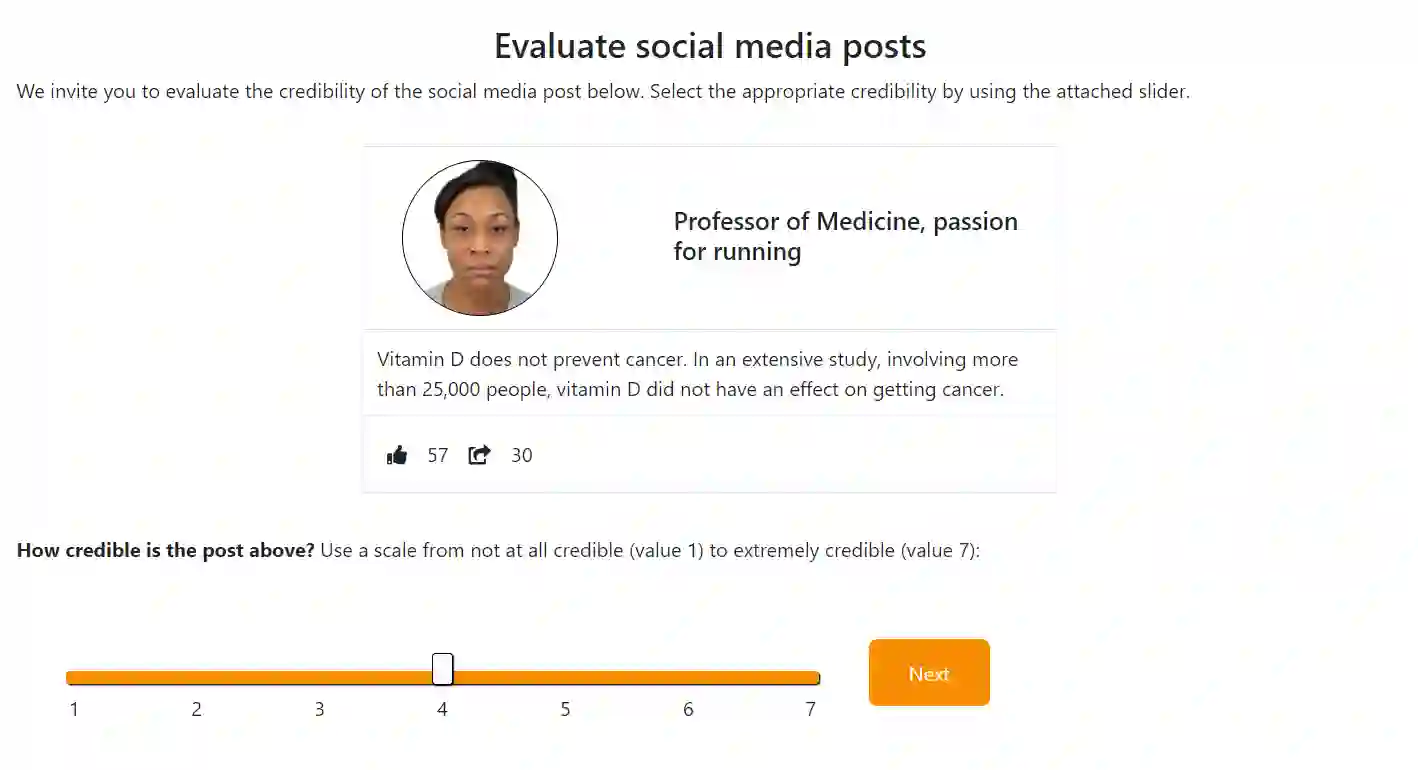
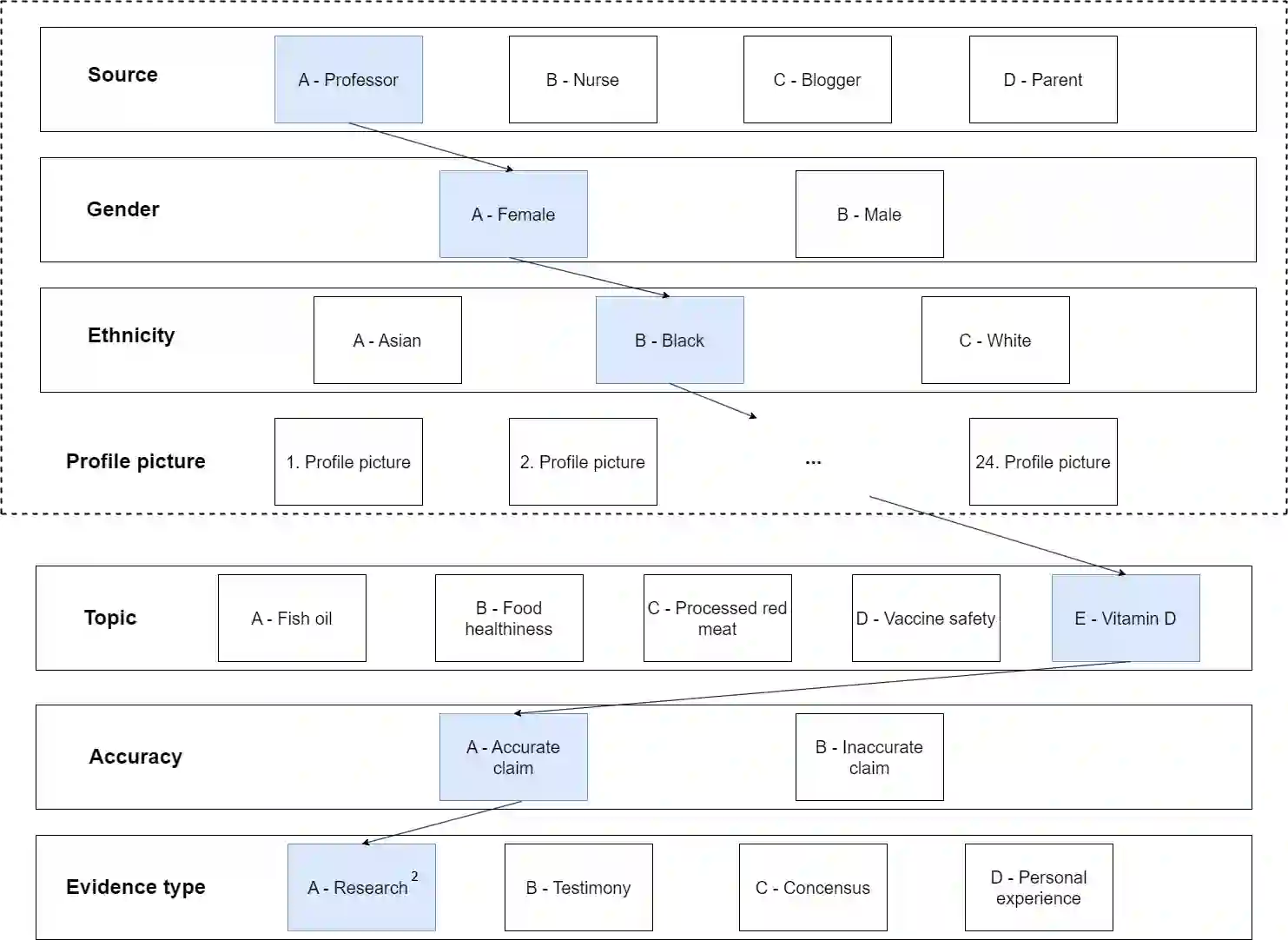
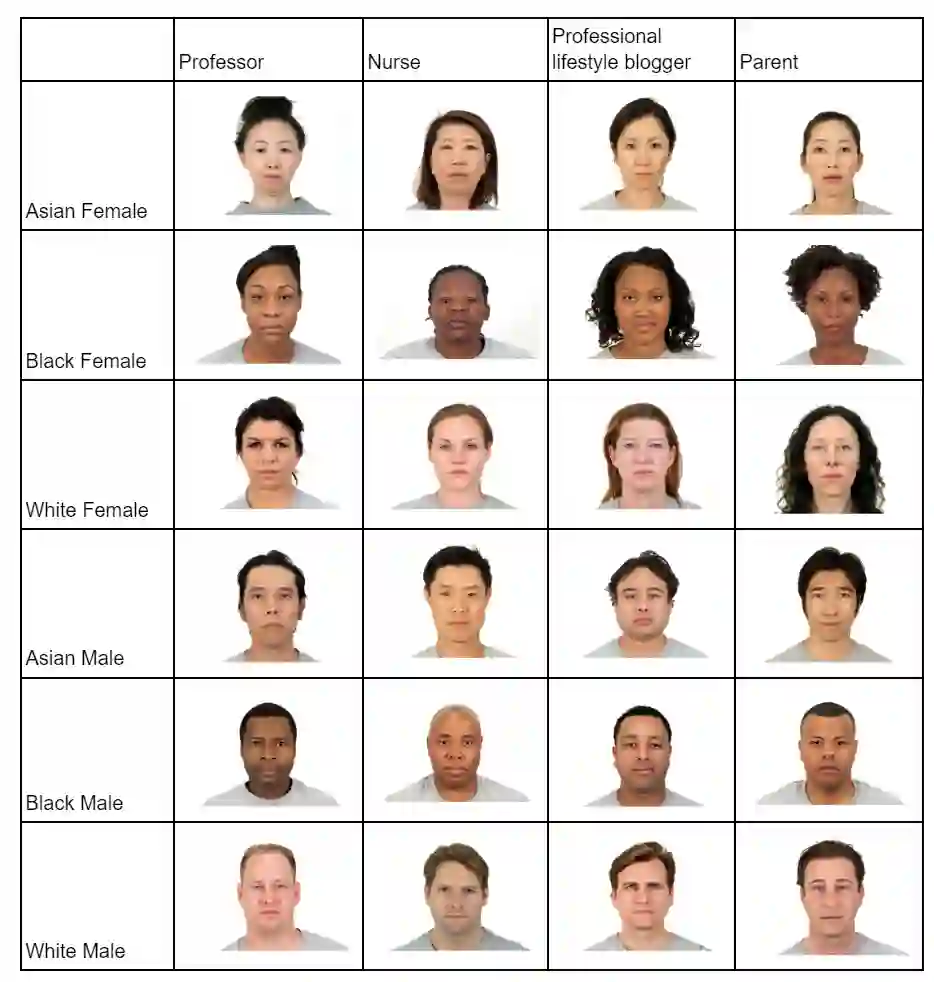
The present study investigates the role of source characteristics, evidence quality, crowdsourcing platform, and prior beliefs of the topic in adult readers' credibility evaluations of short healthrelated social media posts. Researchers designed content for the posts concerning five health topics by manipulating source characteristics (source's expertise, gender, and ethnicity), accuracy of the claims, and evidence quality (research evidence, testimony, consensus, and personal experience) in the posts. Then, accurate and inaccurate posts varying in these other manipulated aspects were computer-generated. Crowdworkers (N = 844) recruited from two platforms were asked to evaluate the credibility of ten social media posts, resulting in 8380 evaluations. Before credibility evaluation, participants' prior beliefs on the topics of the posts were assessed. Results showed that prior belief consistency and source expertise most affected the perceived credibility of accurate and inaccurate social media posts after controlling for the topic of the post. In contrast, the quality of evidence supporting the health claim mattered relatively little. In addition, the data collection platform had a notable impact, such that posts containing inaccurate claims were much more likely to be rated higher on one platform compared to the other. Implications for credibility evaluation theory and research are discussed.
翻译:本研究探讨了信息来源特征、证据质量、众包平台及读者对话题的先前信念在成年读者评估健康相关社交媒体短帖可信度中的作用。研究人员围绕五个健康主题设计帖子内容,通过操纵信息来源特征(来源的专业性、性别和种族)、声称的准确性以及证据质量(研究证据、证言、共识和个人经验)进行控制。随后,计算机生成在这些操纵维度上存在差异的准确与不准确帖子。从两个平台招募的众包工作者(N=844)被要求评估十条社交媒体帖子的可信度,共获得8380次评估。在可信度评估前,参与者对帖子主题的先前信念进行了测量。结果显示,在控制帖子主题后,先前信念一致性与来源专业性对准确和不准确社交媒体帖子的感知可信度影响最大。相比之下,支持健康声称的证据质量所起的作用相对较小。此外,数据收集平台具有显著影响:相比另一平台,包含不准确声称的帖子在一个平台上获得较高评分的可能性显著更高。本文讨论了这些发现对可信度评估理论及研究的启示。




相关内容





 微信扫码咨询专知VIP会员