

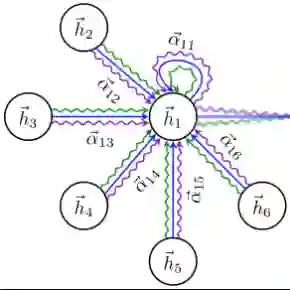
Recent advances in machine learning (ML) have shown promise in aiding and accelerating classical combinatorial optimization algorithms. ML-based speed ups that aim to learn in an end to end manner (i.e., directly output the solution) tend to trade off run time with solution quality. Therefore, solutions that are able to accelerate existing solvers while maintaining their performance guarantees, are of great interest. We consider an APX-hard problem, where an adversary aims to attack shortest paths in a graph by removing the minimum number of edges. We propose the GRASP algorithm: Graph Attention Accelerated Shortest Path Attack, an ML aided optimization algorithm that achieves run times up to 10x faster, while maintaining the quality of solution generated. GRASP uses a graph attention network to identify a smaller subgraph containing the combinatorial solution, thus effectively reducing the input problem size. Additionally, we demonstrate how careful representation of the input graph, including node features that correlate well with the optimization task, can highlight important structure in the optimization solution.
翻译:近期机器学习进展在辅助和加速经典组合优化算法方面展现出潜力。基于机器学习的加速方法若以端到端方式(即直接输出解)进行学习,往往需要在运行时间与解质量之间进行权衡。因此,既能加速现有求解器又能保持其性能保证的解决方案具有重要意义。本文研究一个APX难问题:攻击者试图通过移除最少数量的边来破坏图中的最短路径。我们提出GRASP算法:基于图注意力加速的最短路径攻击方法,这是一种机器学习辅助的优化算法,在保持解质量的同时,可实现高达10倍的运行速度提升。GRASP采用图注意力网络识别包含组合解的小规模子图,从而有效缩小输入问题的规模。此外,我们论证了精心设计输入图表示(包括与优化任务高度相关的节点特征)如何能够突出优化解中的重要结构。






相关内容



 微信扫码咨询专知VIP会员