Anomaly detection in multivariate time series is a central challenge in industrial monitoring, as failures frequently arise from complex temporal dynamics and cross-sensor interactions. While recent deep learning models, including graph neural networks and Transformers, have demonstrated strong empirical performance, most approaches remain primarily correlational and offer limited support for causal interpretation and root-cause localization. This study introduces a causally-constrained probabilistic forecasting framework which is a Causally Guided Transformer (CGT) model for multivariate time-series anomaly detection, integrating an explicit time-lagged causal graph prior with deep sequence modeling. For each target variable, a dedicated forecasting block employs a hard parent mask derived from causal discovery to restrict the main prediction pathway to graph-supported causes, while a latent Gaussian head captures predictive uncertainty. To leverage residual correlational information without compromising the causal representation, a shadow auxiliary path with stop-gradient isolation and a safety-gated blending mechanism is incorporated to suppress non-causal contributions when reliability is low. Anomalies are identified using negative log-likelihood scores with adaptive streaming thresholding, and root-cause variables are determined through per-dimension probabilistic attribution and counterfactual clamping. Experiments on the ASD and SMD benchmarks indicate that the proposed method achieves state-of-the-art detection performance, with F1-scores of 96.19% on ASD and 95.32% on SMD, and enhances variable-level attribution quality. These findings suggest that causal structural priors can improve both robustness and interpretability in detecting deep anomalies in multivariate sensor systems.


翻译:暂无翻译

0
下载
关闭预览

相关内容

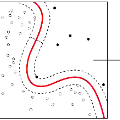
在数据挖掘中,异常检测(英语:anomaly detection)对不符合预期模式或数据集中其他项目的项目、事件或观测值的识别。通常异常项目会转变成银行欺诈、结构缺陷、医疗问题、文本错误等类型的问题。异常也被称为离群值、新奇、噪声、偏差和例外。 特别是在检测滥用与网络入侵时,有趣性对象往往不是罕见对象,但却是超出预料的突发活动。这种模式不遵循通常统计定义中把异常点看作是罕见对象,于是许多异常检测方法(特别是无监督的方法)将对此类数据失效,除非进行了合适的聚集。相反,聚类分析算法可能可以检测出这些模式形成的微聚类。 有三大类异常检测方法。[1] 在假设数据集中大多数实例都是正常的前提下,无监督异常检测方法能通过寻找与其他数据最不匹配的实例来检测出未标记测试数据的异常。监督式异常检测方法需要一个已经被标记“正常”与“异常”的数据集,并涉及到训练分类器(与许多其他的统计分类问题的关键区别是异常检测的内在不均衡性)。半监督式异常检测方法根据一个给定的正常训练数据集创建一个表示正常行为的模型,然后检测由学习模型生成的测试实例的可能性。
索邦大学121页博士论文《时间序列中的无监督异常检测》
专知会员服务
104+阅读 · 2022年7月25日
异常检测(Anomaly Detection)综述
极市平台
20+阅读 · 2020年10月24日
利用动态深度学习预测金融时间序列基于Python
量化投资与机器学习
18+阅读 · 2018年10月30日
Single-Shot Object Detection with Enriched Semantics
统计学习与视觉计算组
14+阅读 · 2018年8月29日
Relation Networks for Object Detection 论文笔记
统计学习与视觉计算组
16+阅读 · 2018年4月18日
Focal Loss for Dense Object Detection
统计学习与视觉计算组
12+阅读 · 2018年3月15日
国家自然科学基金
4+阅读 · 2015年12月31日
国家自然科学基金
0+阅读 · 2015年12月31日
国家自然科学基金
1+阅读 · 2015年12月31日
国家自然科学基金
0+阅读 · 2015年12月31日
国家自然科学基金
0+阅读 · 2015年12月31日
国家自然科学基金
2+阅读 · 2015年12月31日
国家自然科学基金
0+阅读 · 2014年12月31日
国家自然科学基金
0+阅读 · 2014年12月31日
国家自然科学基金
1+阅读 · 2014年12月31日
VIP会员
最新内容
俄罗斯如何拦截乌克兰无人机与巡航导弹
专知会员服务
8+阅读 · 10月15日
《武器-目标分配问题:精确与近似求解算法》
专知会员服务
10+阅读 · 10月15日
综述|谁来改进机器人?迈向物理递归自我改进
专知会员服务
10+阅读 · 10月14日
软件定义无人机蜂群给防空带来全新压力
专知会员服务
10+阅读 · 10月13日
《半自主无人地面战车的互操作性》66页
专知会员服务
14+阅读 · 10月13日
相关VIP内容
索邦大学121页博士论文《时间序列中的无监督异常检测》
专知会员服务
104+阅读 · 2022年7月25日
相关资讯
异常检测(Anomaly Detection)综述
极市平台
20+阅读 · 2020年10月24日
利用动态深度学习预测金融时间序列基于Python
量化投资与机器学习
18+阅读 · 2018年10月30日
Single-Shot Object Detection with Enriched Semantics
统计学习与视觉计算组
14+阅读 · 2018年8月29日
Relation Networks for Object Detection 论文笔记
统计学习与视觉计算组
16+阅读 · 2018年4月18日
Focal Loss for Dense Object Detection
统计学习与视觉计算组
12+阅读 · 2018年3月15日
相关基金
国家自然科学基金
4+阅读 · 2015年12月31日
国家自然科学基金
0+阅读 · 2015年12月31日
国家自然科学基金
1+阅读 · 2015年12月31日
国家自然科学基金
0+阅读 · 2015年12月31日
国家自然科学基金
0+阅读 · 2015年12月31日
国家自然科学基金
2+阅读 · 2015年12月31日
国家自然科学基金
0+阅读 · 2014年12月31日
国家自然科学基金
0+阅读 · 2014年12月31日
国家自然科学基金
1+阅读 · 2014年12月31日
Top
微信扫码咨询专知VIP会员