

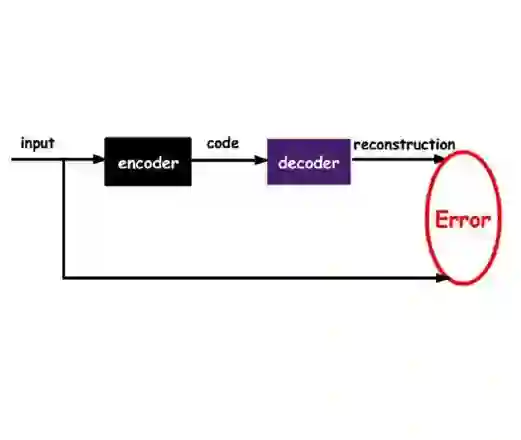
The increasing number of RSOs has raised concerns about the risk of collisions and catastrophic incidents for all direct and indirect users of space. To mitigate this issue, it is essential to have a good understanding of the various RSOs in orbit and their behaviour. A well-established taxonomy defining several classes of RSOs is a critical step in achieving this understanding. This taxonomy helps assign objects to specific categories based on their main characteristics, leading to better tracking services. Furthermore, a well-established taxonomy can facilitate research and analysis processes by providing a common language and framework for better understanding the factors that influence RSO behaviour in space. These factors, in turn, help design more efficient and effective strategies for space traffic management. Our work proposes a new taxonomy for RSOs focusing on the low Earth orbit regime to enhance space traffic management. In addition, we present a deep learning-based model that uses an autoencoder architecture to reduce the features representing the characteristics of the RSOs. The autoencoder generates a lower-dimensional space representation that is then explored using techniques such as Uniform Manifold Approximation and Projection to identify fundamental clusters of RSOs based on their unique characteristics. This approach captures the complex and non-linear relationships between the features and the RSOs' classes identified. Our proposed taxonomy and model offer a significant contribution to the ongoing efforts to mitigate the overall risks posed by the increasing number of RSOs in orbit.
翻译:随着空间目标数量的不断增加,对空间所有直接和间接用户而言,碰撞风险及灾难性事件的可能性已成为严峻问题。为缓解这一挑战,深入理解轨道上各类空间目标及其行为特征至关重要。建立一套稳健的空间目标分类体系是达成此认知的关键步骤——该分类框架可依据目标核心特征将其归入特定类别,从而提升跟踪服务质量。此外,完善的分类体系通过提供通用语言与框架,有助于推动研究分析进程,更深入地理解影响空间目标在轨行为的因素,进而为空间交通管理设计更高效、有效的策略。本研究提出一种聚焦低地球轨道区域的空间目标新分类体系,以增强空间交通管理能力。同时,我们构建了基于深度学习的模型,采用自动编码器架构压缩表征空间目标特征的数据维度。该自动编码器生成低维空间表示后,通过均匀流形逼近与投影等技术进行探索,以识别基于空间目标独特特征的基础聚类。该方法能够捕捉特征与目标类别间复杂的非线性关系。本研究提出的分类体系与模型,为持续缓解在轨空间目标数量激增所引发的整体风险做出了重要贡献。




相关内容



 微信扫码咨询专知VIP会员