

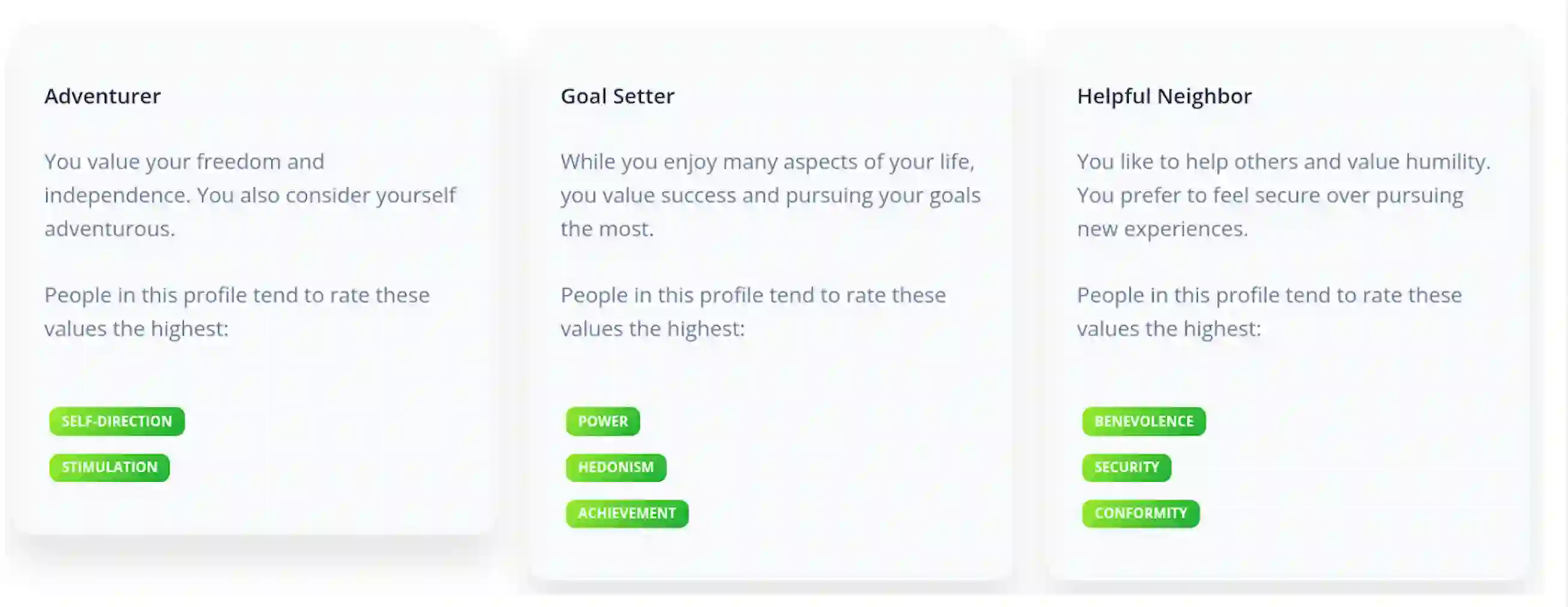
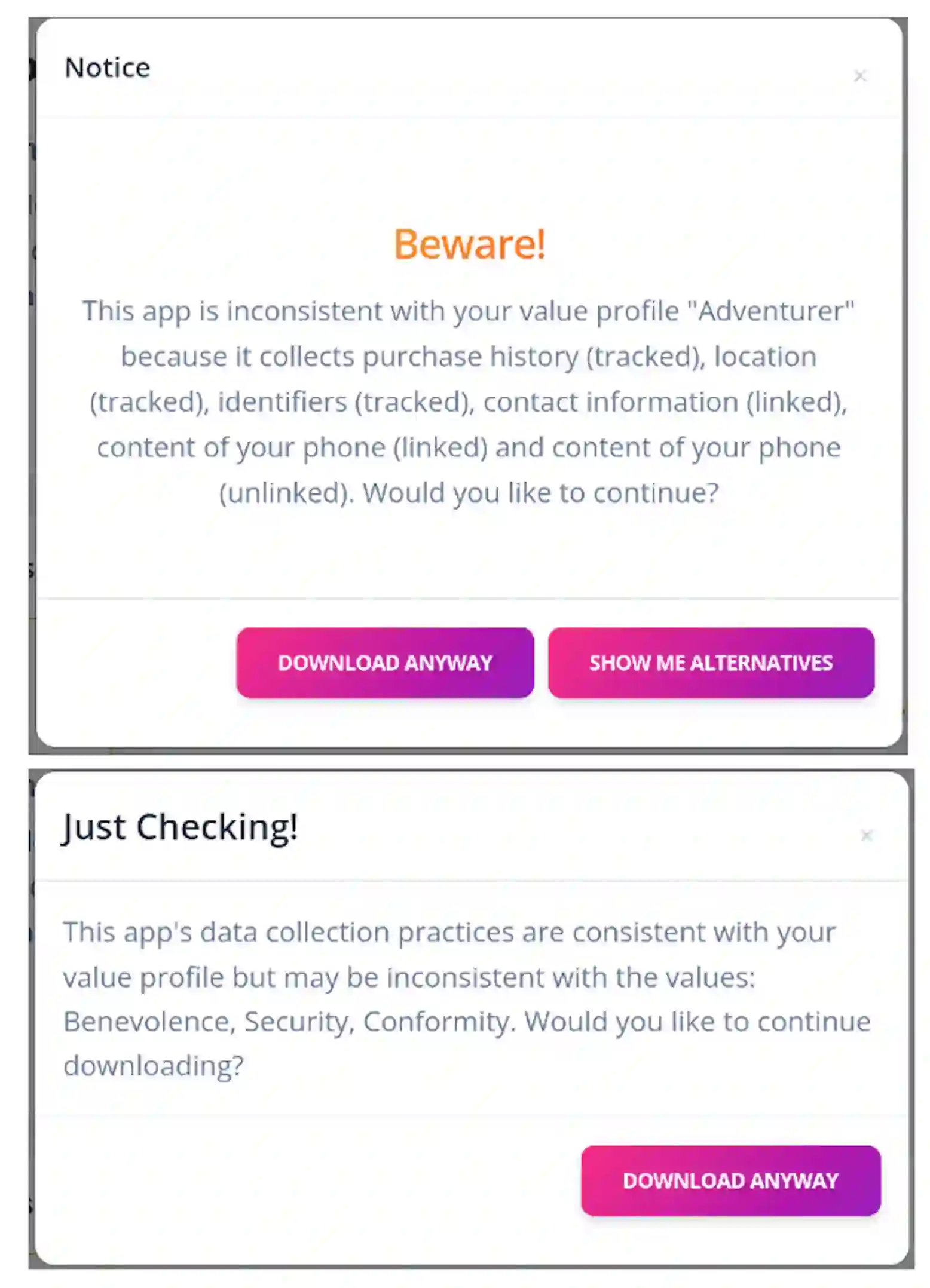
Many users make quick decisions that affect their data privacy without due consideration of their values. One such decision is whether to download a smartphone app to their device. Previous work has suggested a relationship between values, privacy preferences, and app choices, and proposed a value-centered approach to privacy that conceptually unites these relationships. In this work, we translate this theory into practice by constructing a prototype smartphone value-centered privacy assistant (VcPA) - a privacy assistant system that promotes user privacy decisions based on personal values. To do this, we designed and conducted an online survey that captured values and privacy preferences when considering whether to download an app from 273 smartphone users. Using this data, we constructed VcPA user profiles by clustering survey data based on the value rankings and stated privacy preferences. We then tested the VcPA, using selective notices, a "suggest alternatives" feature, and exploratory notices, with 77 users in a synthetic Mock App Store (MAS) setting and conducted follow-up semi-structured interviews. We establish proof-of-concept that a VcPA helps users make more value-centered app choices and identified improvements so that an assistant can be deployed on smartphone app stores.
翻译:许多用户在做影响其数据隐私的快速决策时,未能充分考虑其个人价值观。其中一个典型决策便是是否将智能手机应用程序下载至其设备。先前研究已指出价值观、隐私偏好与应用程序选择之间存在关联,并提出了一种在概念上统一这些关系的以价值为中心的隐私方法。在本研究中,我们将该理论转化为实践,构建了一个原型智能手机以价值为中心的隐私助手(VcPA)——一种基于个人价值观促进用户隐私决策的助手系统。为实现此目标,我们设计并开展了一项在线调查,收集了273名智能手机用户在考虑是否下载应用程序时的价值观与隐私偏好数据。利用这些数据,我们通过基于价值排序和陈述的隐私偏好对调查数据进行聚类,构建了VcPA用户画像。随后,我们在合成模拟应用商店(MAS)环境中,通过选择性提示、“建议替代方案”功能及探索性提示对77名用户测试了VcPA,并进行了后续半结构化访谈。我们验证了VcPA能帮助用户做出更符合价值观的应用程序选择,并提出了改进方案,为在智能手机应用商店部署此类助手奠定了基础。




相关内容




 微信扫码咨询专知VIP会员