

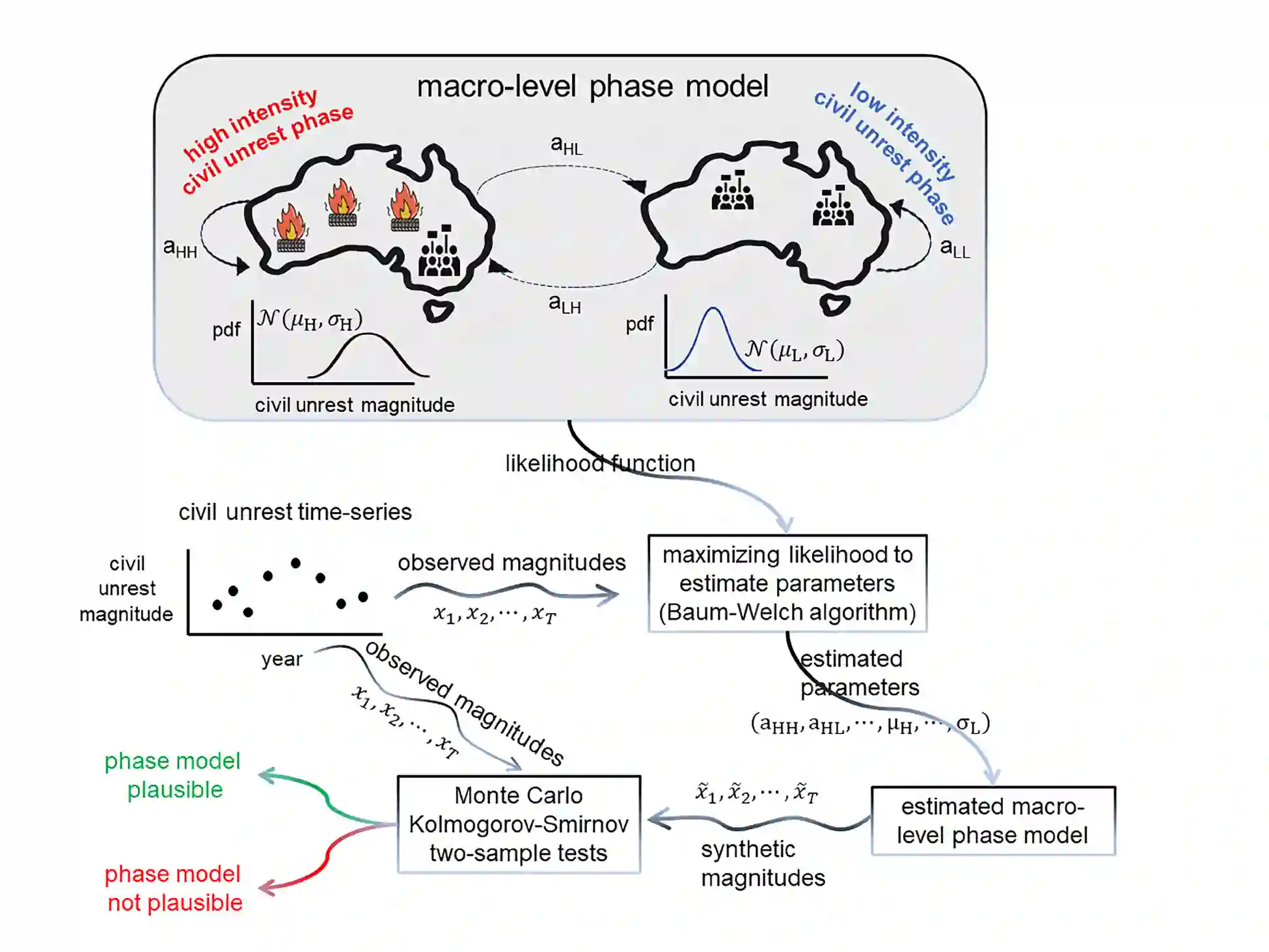
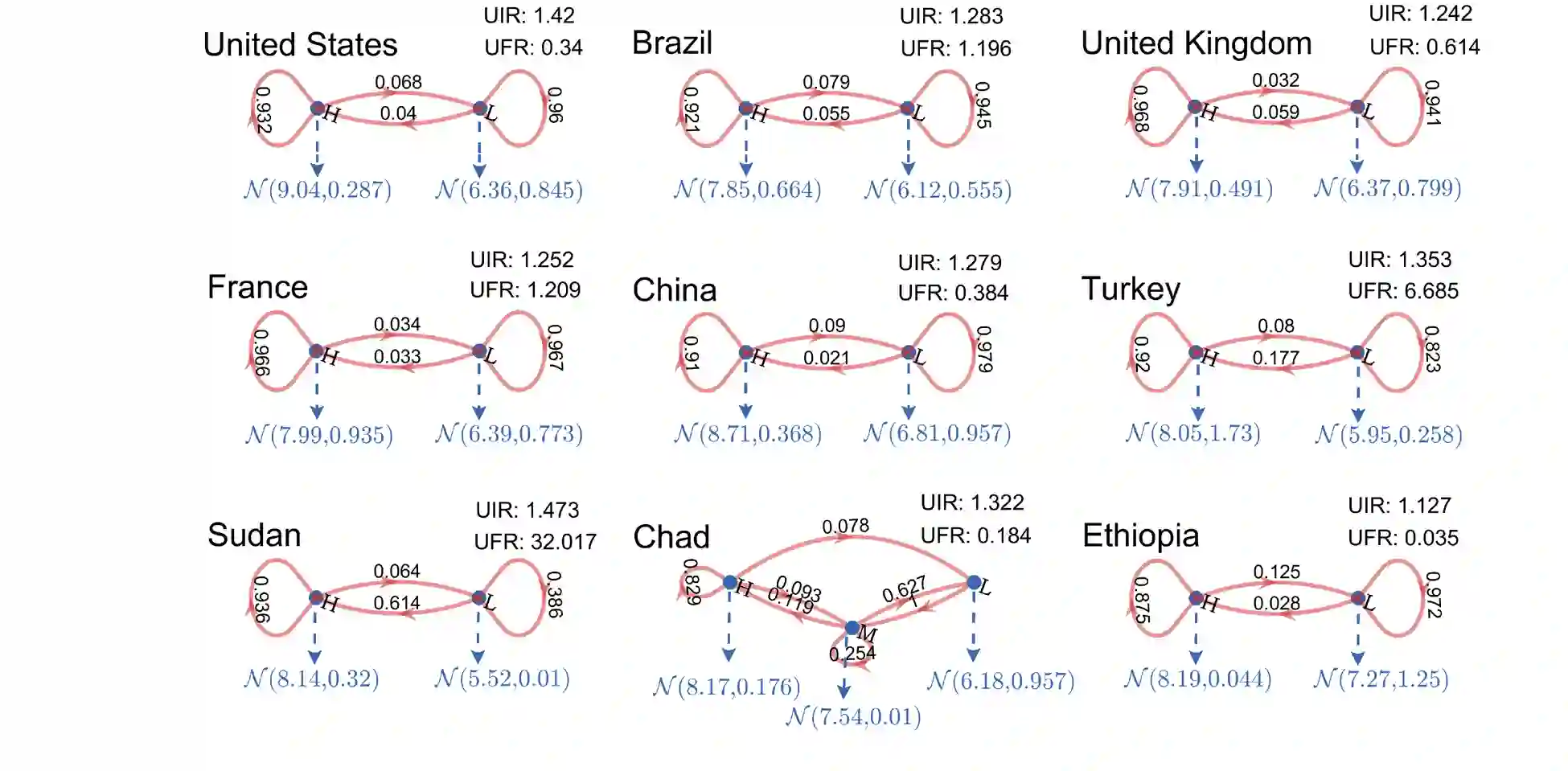
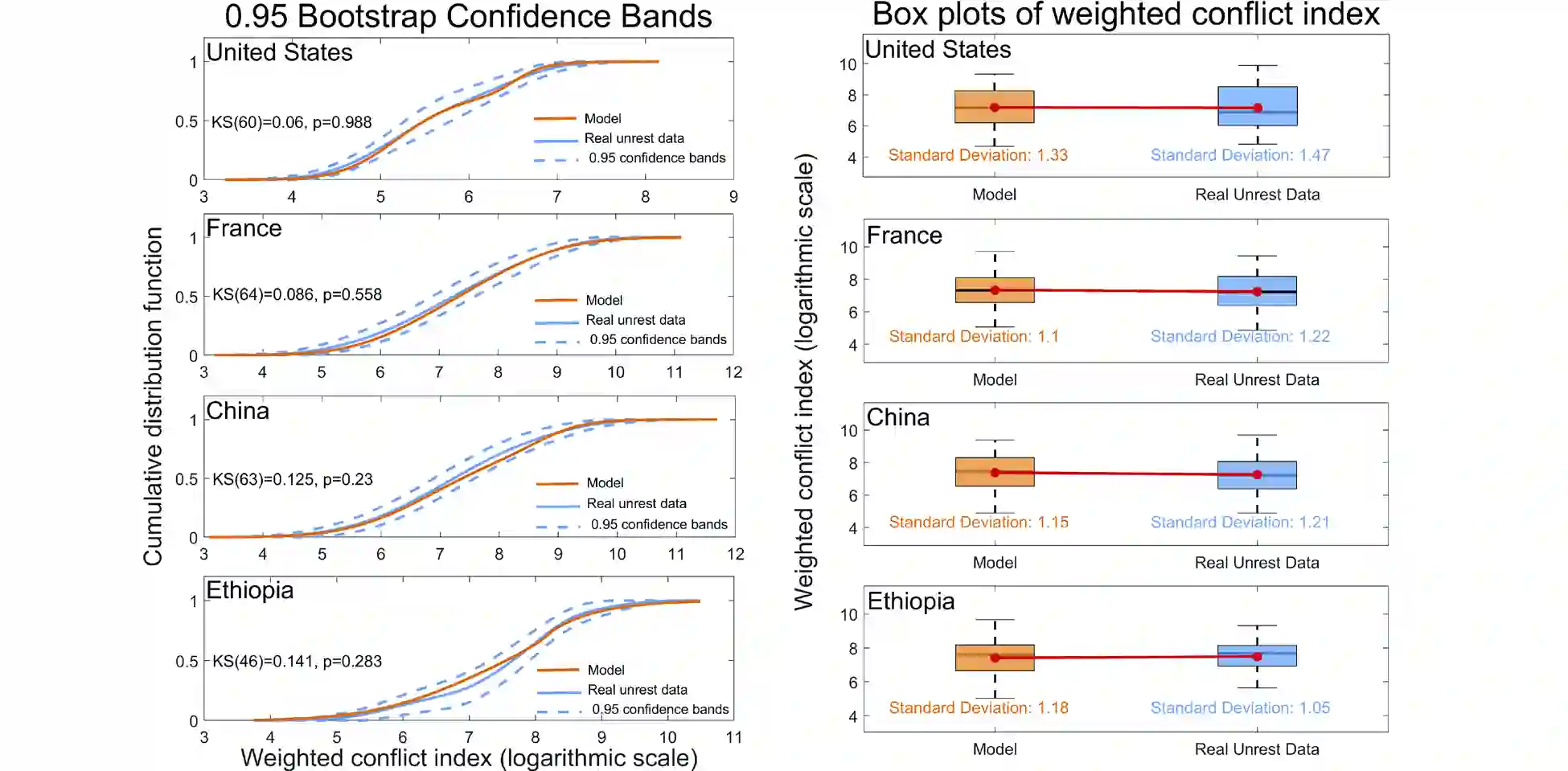
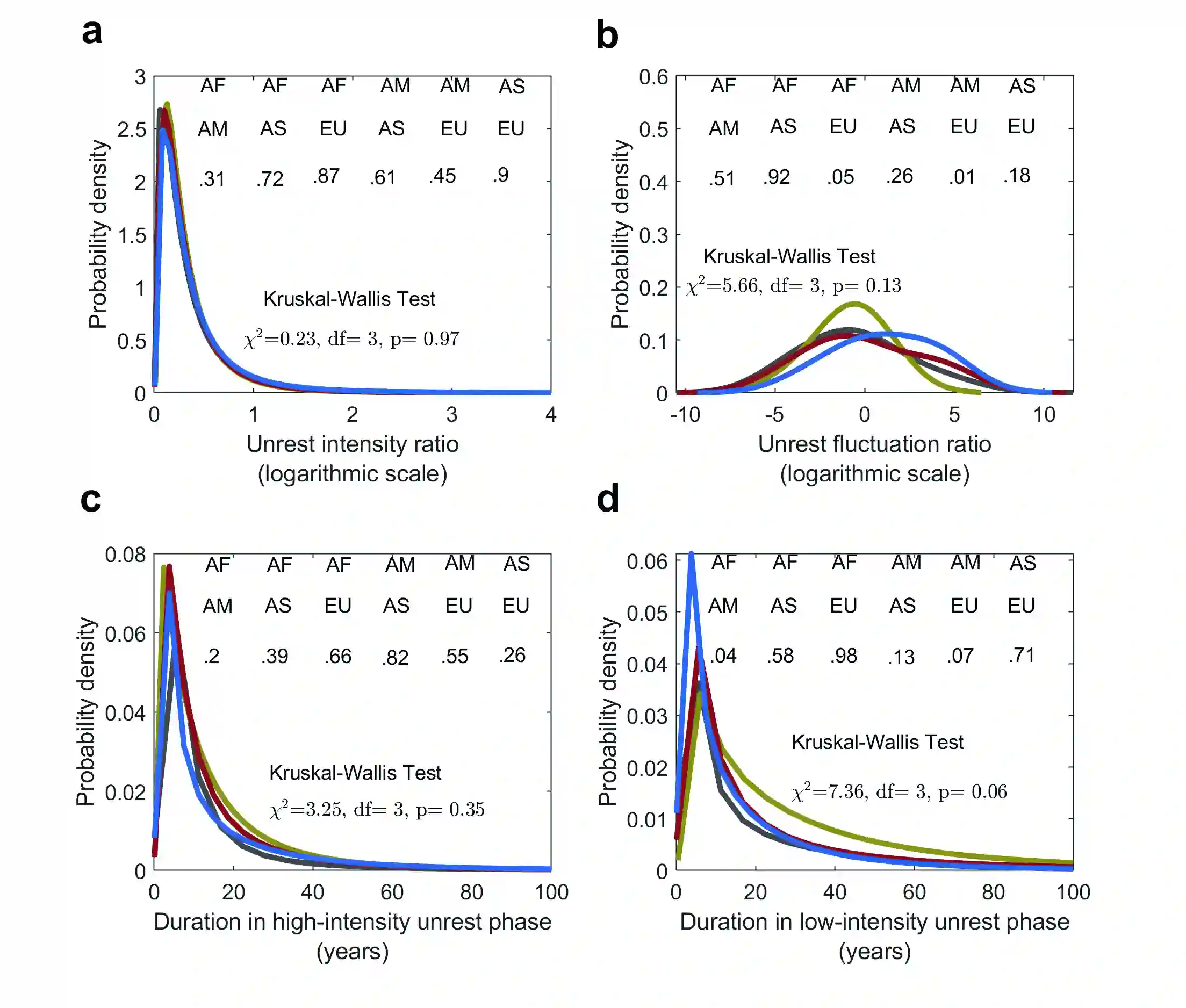
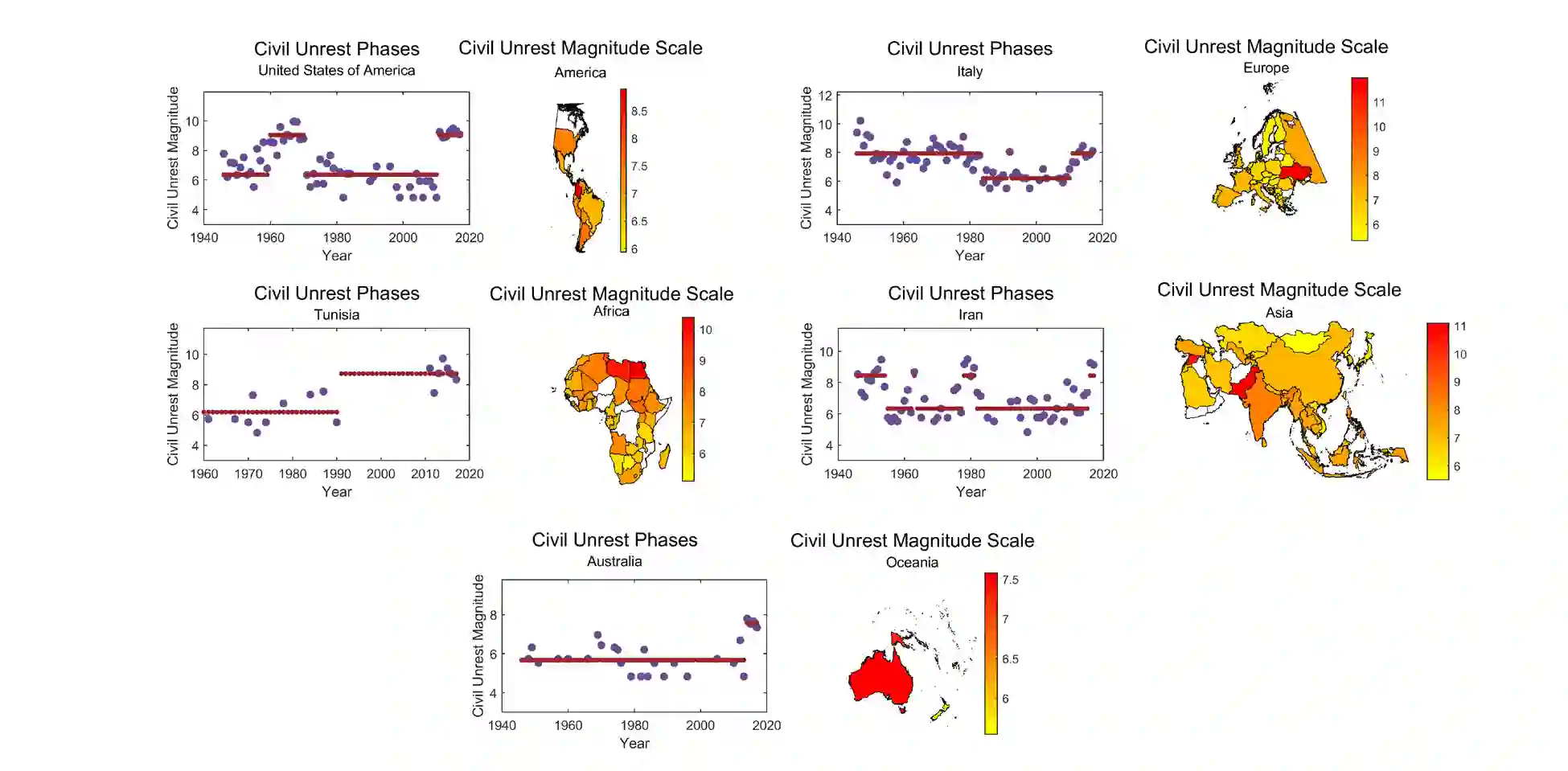
Phase transitions, characterized by abrupt shifts between macroscopic patterns of organization, are ubiquitous in complex systems. Despite considerable research in the physical and natural sciences, the empirical study of this phenomenon in societal systems is relatively underdeveloped. The goal of this study is to explore whether the dynamics of collective civil unrest can be plausibly characterized as a sequence of recurrent phase shifts, with each phase having measurable and identifiable latent characteristics. Building on previous efforts to characterize civil unrest as a self-organized critical system, we introduce a macro-level statistical model of civil unrest and evaluate its plausibility using a comprehensive dataset of civil unrest events in 170 countries from 1946 to 2017. Our findings demonstrate that the macro-level phase model effectively captures the characteristics of civil unrest data from diverse countries globally and that universal mechanisms may underlie certain aspects of the dynamics of civil unrest. We also introduce a scale to quantify a country's long-term unrest per unit of time and show that civil unrest events tend to cluster geographically, with the magnitude of civil unrest concentrated in specific regions. Our approach has the potential to identify and measure phase transitions in various collective human phenomena beyond civil unrest, contributing to a better understanding of complex social systems.
翻译:相变以宏观组织模式间的突变性转换为特征,普遍存在于复杂系统中。尽管物理与自然科学领域对此现象已有广泛研究,但其在社会系统中的实证探索仍相对滞后。本研究旨在探讨集体性公民骚乱动态是否可合理表征为一系列周期性相态转换过程——每个相态均具有可测量且可识别的潜在特征。在先前将公民骚乱表征为自组织临界系统的工作基础上,我们提出一种宏观层面的公民骚乱统计模型,并利用涵盖1946年至2017年170个国家的公民骚乱事件综合数据集评估其合理性。研究结果表明,该宏观相变模型能够有效捕捉全球不同国家公民骚乱数据的特征,且动态过程的某些方面可能存在普适性机制。我们同时引入量化国家长期骚乱单位时间密度的标度,揭示公民骚乱事件呈地理集群分布特征,其规模集中于特定区域。该方法具有识别并测量超越公民骚乱范畴的多种集体人类现象相变的潜力,有助于深化对复杂社会系统的认知。




相关内容



 微信扫码咨询专知VIP会员