

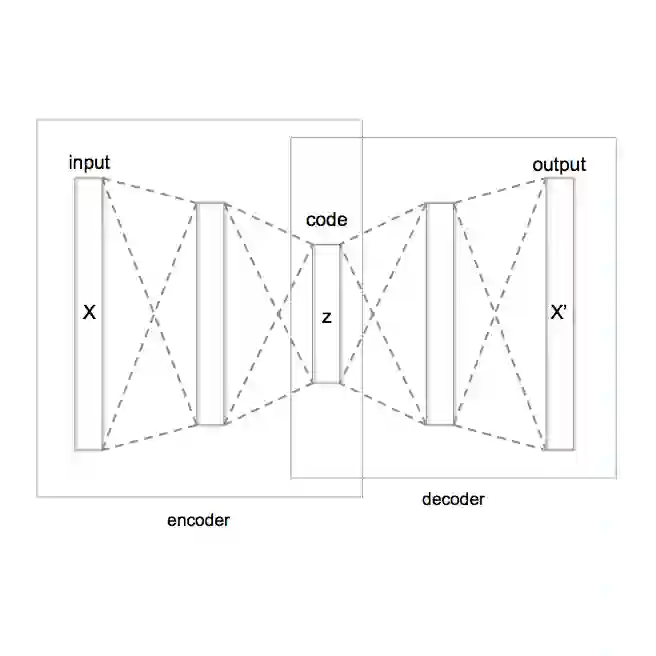
Previous entity disambiguation (ED) methods adopt a discriminative paradigm, where prediction is made based on matching scores between mention context and candidate entities using length-limited encoders. However, these methods often struggle to capture explicit discourse-level dependencies, resulting in incoherent predictions at the abstract level (e.g. topic or category). We propose CoherentED, an ED system equipped with novel designs aimed at enhancing the coherence of entity predictions. Our method first introduces an unsupervised variational autoencoder (VAE) to extract latent topic vectors of context sentences. This approach not only allows the encoder to handle longer documents more effectively, conserves valuable input space, but also keeps a topic-level coherence. Additionally, we incorporate an external category memory, enabling the system to retrieve relevant categories for undecided mentions. By employing step-by-step entity decisions, this design facilitates the modeling of entity-entity interactions, thereby maintaining maximum coherence at the category level. We achieve new state-of-the-art results on popular ED benchmarks, with an average improvement of 1.3 F1 points. Our model demonstrates particularly outstanding performance on challenging long-text scenarios.
翻译:现有实体消歧方法采用判别式范式,通过长度受限编码器计算提及上下文与候选实体间的匹配分数进行预测。然而,这类方法往往难以捕捉显式的语篇级依赖关系,导致在抽象层面(如主题或类别)的预测缺乏连贯性。本文提出CoherentED系统,采用新颖设计以增强实体预测的连贯性。该方法首先引入无监督变分自编码器(VAE)提取上下文句子的潜在主题向量,该方案不仅使编码器能更高效处理较长文档、节约输入空间,同时保持了主题级连贯性。此外,我们整合外部类别记忆模块,使系统能够为待决提及检索相关类别。通过逐步进行实体决策,该设计促进了对实体间交互的建模,从而在类别层面维持最大连贯性。在主流实体消歧基准上,我们取得了新的最优结果,平均F1值提升1.3个百分点。该模型在具有挑战性的长文本场景中展现出尤为突出的性能。




相关内容



 微信扫码咨询专知VIP会员