

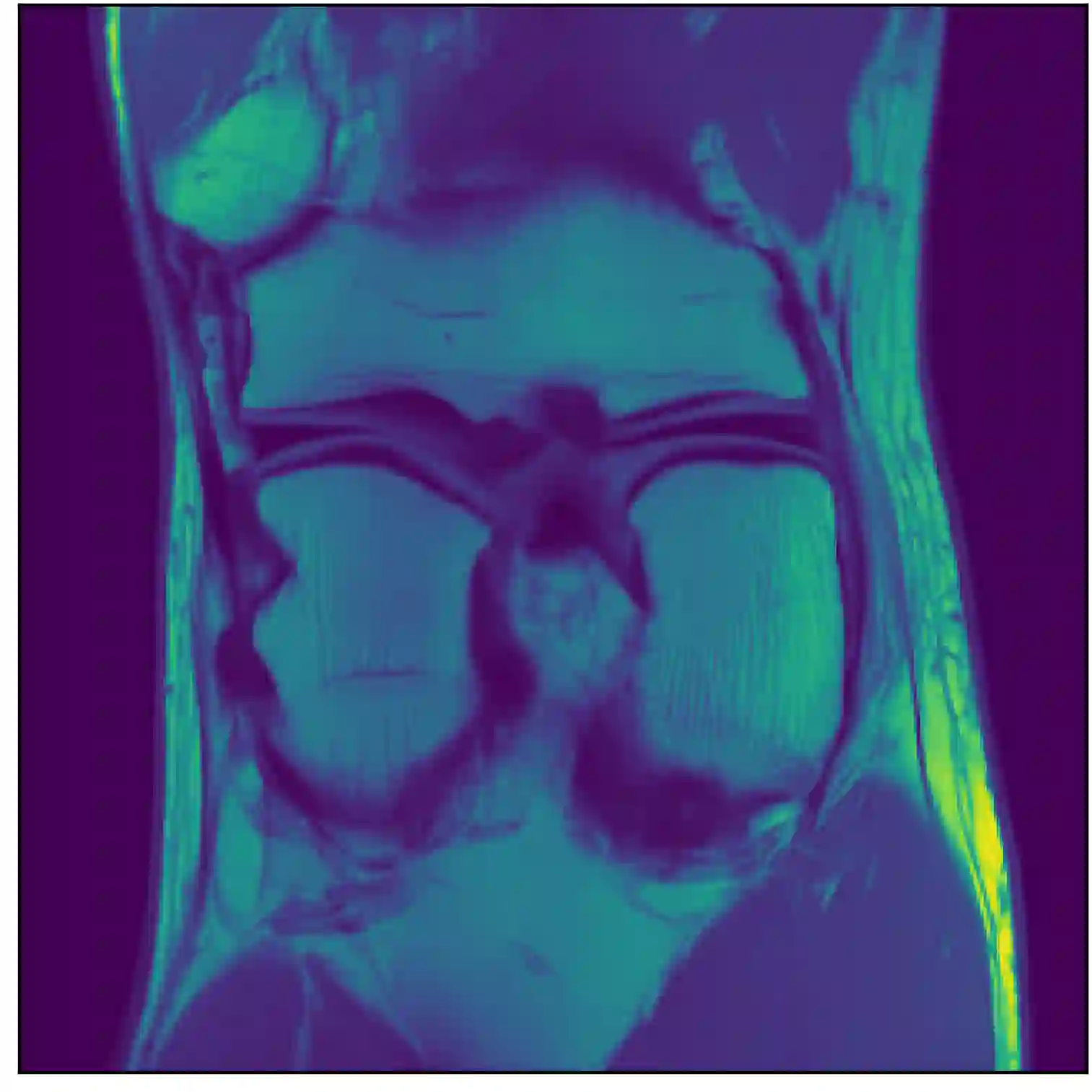
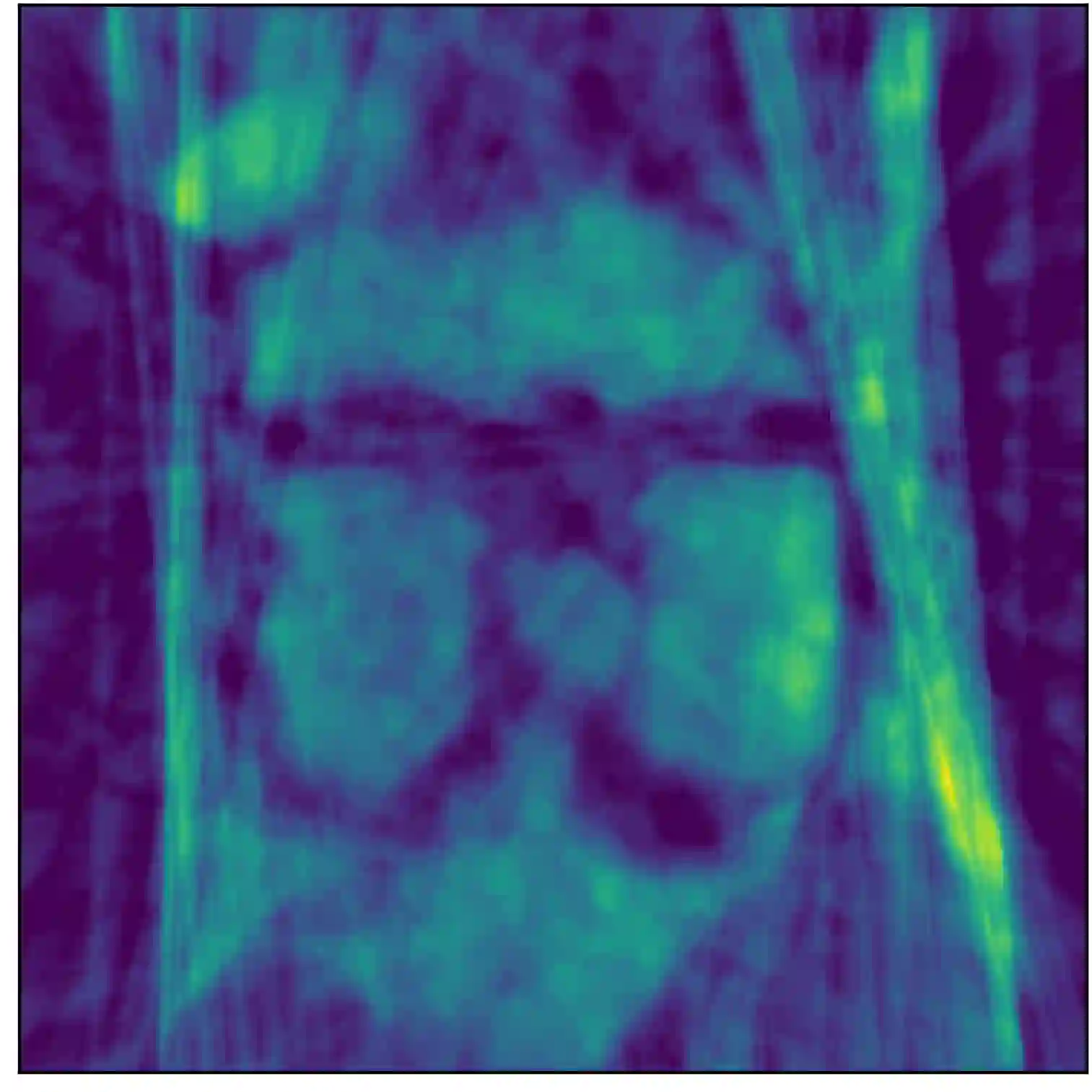
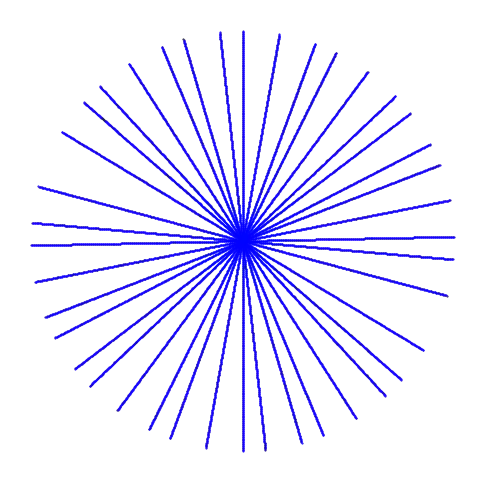
We propose a new approach for non-Cartesian magnetic resonance image reconstruction. While unrolled architectures provide robustness via data-consistency layers, embedding measurement operators in Deep Neural Network (DNN) can become impractical at large scale. Alternative Plug-and-Play (PnP) approaches, where the denoising DNNs are blind to the measurement setting, are not affected by this limitation and have also proven effective, but their highly iterative nature also affects scalability. To address this scalability challenge, we leverage the "Residual-to-Residual DNN series for high-Dynamic range imaging (R2D2)" approach recently introduced in astronomical imaging. R2D2's reconstruction is formed as a series of residual images, iteratively estimated as outputs of DNNs taking the previous iteration's image estimate and associated data residual as inputs. The method can be interpreted as a learned version of the Matching Pursuit algorithm. We demonstrate R2D2 in simulation, considering radial k-space sampling acquisition sequences. Our preliminary results suggest that R2D2 achieves: (i) suboptimal performance compared to its unrolled incarnation R2D2-Net, which is however non-scalable due to the necessary embedding of NUFFT-based data-consistency layers; (ii) superior reconstruction quality to a scalable version of R2D2-Net embedding an FFT-based approximation for data consistency; (iii) superior reconstruction quality to PnP, while only requiring few iterations.
翻译:我们提出了一种用于非笛卡尔磁共振图像重建的新方法。尽管展开式架构通过数据一致性层提供了鲁棒性,但将测量算子嵌入深度神经网络在规模化应用中可能变得不切实际。替代性的即插即用(PnP)方法中,去噪深度神经网络对测量设置不敏感,不受此限制且已被证明有效,但高度迭代的特性同样影响其可扩展性。为应对这一可扩展性挑战,我们借鉴了天文学成像领域最新提出的"残差到残差深度神经网络系列高动态范围成像(R2D2)"方法。R2D2的重建过程由一系列残差图像构成,这些残差图像由深度神经网络迭代估计生成,其中网络以先前迭代的图像估计及关联的数据残差作为输入。该方法可被理解为匹配追踪算法的一种学习型实现。我们通过径向k空间采样采集序列对R2D2进行仿真验证。初步结果表明:(i)相较于其展开式变体R2D2-Net,R2D2虽性能略逊,但后者因需嵌入基于NUFFT的数据一致性层而不可扩展;(ii)相较于嵌入基于FFT近似数据一致性的可扩展版R2D2-Net,R2D2重建质量更优;(iii)相较于PnP方法,R2D2在仅需少量迭代的情况下即可获得更优的重建质量。






相关内容



 微信扫码咨询专知VIP会员