

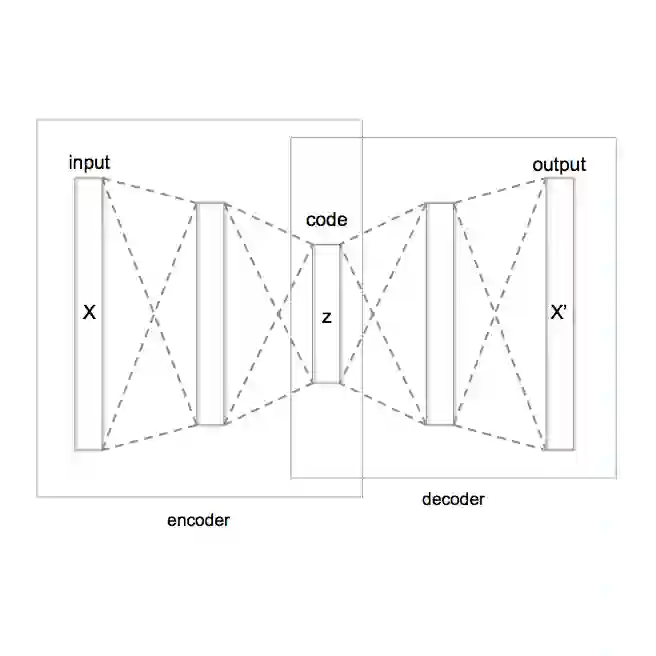
Vitrimer is a new class of sustainable polymers with the ability of self-healing through rearrangement of dynamic covalent adaptive networks. However, a limited choice of constituent molecules restricts their property space, prohibiting full realization of their potential applications. Through a combination of molecular dynamics (MD) simulations and machine learning (ML), particularly a novel graph variational autoencoder (VAE) model, we establish a method for generating novel vitrimers and guide their inverse design based on desired glass transition temperature (Tg). We build the first vitrimer dataset of one million and calculate Tg on 8,424 of them by high-throughput MD simulations calibrated by a Gaussian process model. The proposed VAE employs dual graph encoders and a latent dimension overlapping scheme which allows for individual representation of multi-component vitrimers. By constructing a continuous latent space containing necessary information of vitrimers, we demonstrate high accuracy and efficiency of our framework in discovering novel vitrimers with desirable Tg beyond the training regime. The proposed vitrimers with reasonable synthesizability cover a wide range of Tg and broaden the potential widespread usage of vitrimeric materials.
翻译:玻璃体是一类新型可持续聚合物,能够通过动态共价自适应网络的重排实现自修复。然而,可选择的组成分子有限,限制了其性质空间,阻碍了其潜在应用的全部实现。通过分子动力学模拟与机器学习(特别是新型图变分自编码器模型)的结合,我们建立了一种生成新型玻璃体的方法,并基于所需玻璃化转变温度(Tg)指导其逆向设计。我们构建了首个包含一百万个玻璃体的数据集,并通过高斯过程模型校准的高通量分子动力学模拟计算了其中8,424个玻璃体的Tg。所提出的变分自编码器采用双图编码器和潜维度重叠方案,能够独立表示多组分玻璃体。通过构建包含玻璃体必要信息的连续潜空间,我们证明了该框架在发现训练集之外具有理想Tg的新型玻璃体方面具有高精度和高效率。所提出的具有合理可合成性的玻璃体覆盖了广泛的Tg范围,拓宽了玻璃体材料的潜在广泛应用前景。




相关内容




 微信扫码咨询专知VIP会员