

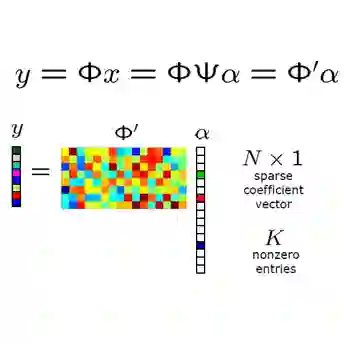
We propose a compressed sensing-based testing approach with a practical measurement design and a tuning-free and noise-robust algorithm for detecting infected persons. Compressed sensing results can be used to provably detect a small number of infected persons among a possibly large number of people. There are several advantages of this method compared to classical group testing. Firstly, it is non-adaptive and thus possibly faster to perform than adaptive methods which is crucial in exponentially growing pandemic phases. Secondly, due to nonnegativity of measurements and an appropriate noise model, the compressed sensing problem can be solved with the non-negative least absolute deviation regression (NNLAD) algorithm. This convex tuning-free program requires the same number of tests as current state of the art group testing methods. Empirically it performs significantly better than theoretically guaranteed, and thus the high-throughput, reducing the number of tests to a fraction compared to other methods. Further, numerical evidence suggests that our method can correct sparsely occurring errors.
翻译:我们提出了一种基于压缩感知的检测方法,该方法采用实用化的测量设计,并配备无需参数调优且具有噪声鲁棒性的算法来识别感染者。压缩感知的结果可用于从(可能)大规模人群中可靠检测出少量感染者。与经典分组检测相比,该方法具有若干优势:首先,它无需自适应调整,因此检测速度可能快于自适应方法,这在疫情指数级传播阶段至关重要;其次,基于测量的非负特性及适当的噪声模型,压缩感知问题可通过非负最小绝对偏差回归(NNLAD)算法求解。这种凸优化无参数调优方案所需的检测次数与当前最先进的分组检测方法相同。实验结果表明,其实际性能显著优于理论保证值,因此可通过将检测次数降至其他方法的几分之一来实现高通量检测。此外,数值实验证据表明,我们的方法能够纠正稀疏发生的错误。




相关内容



 微信扫码咨询专知VIP会员