

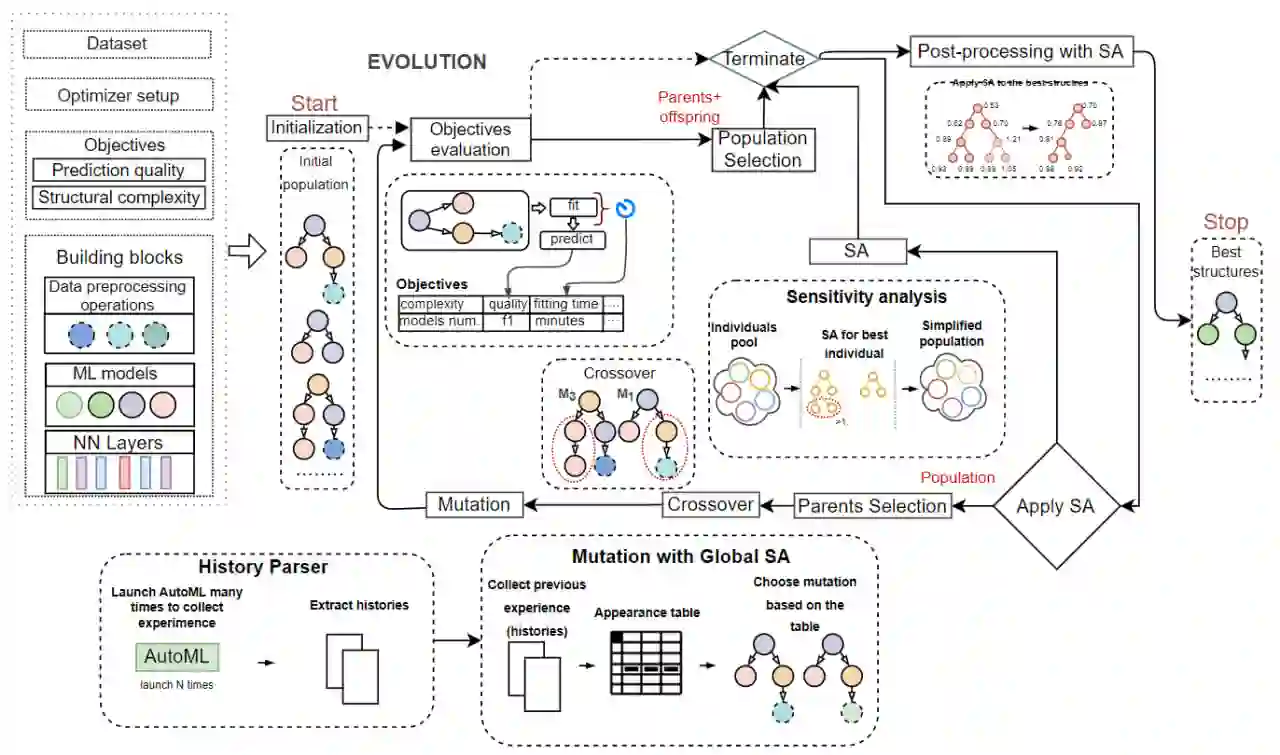
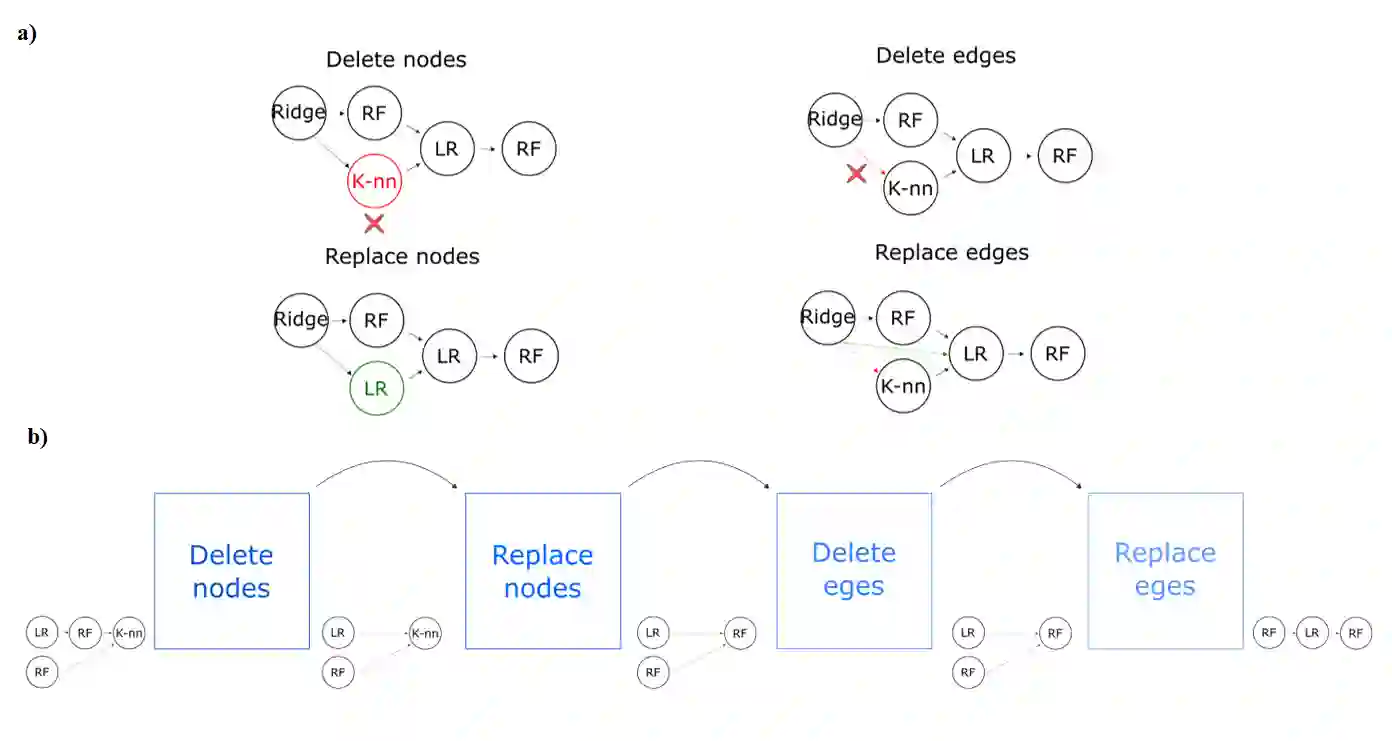
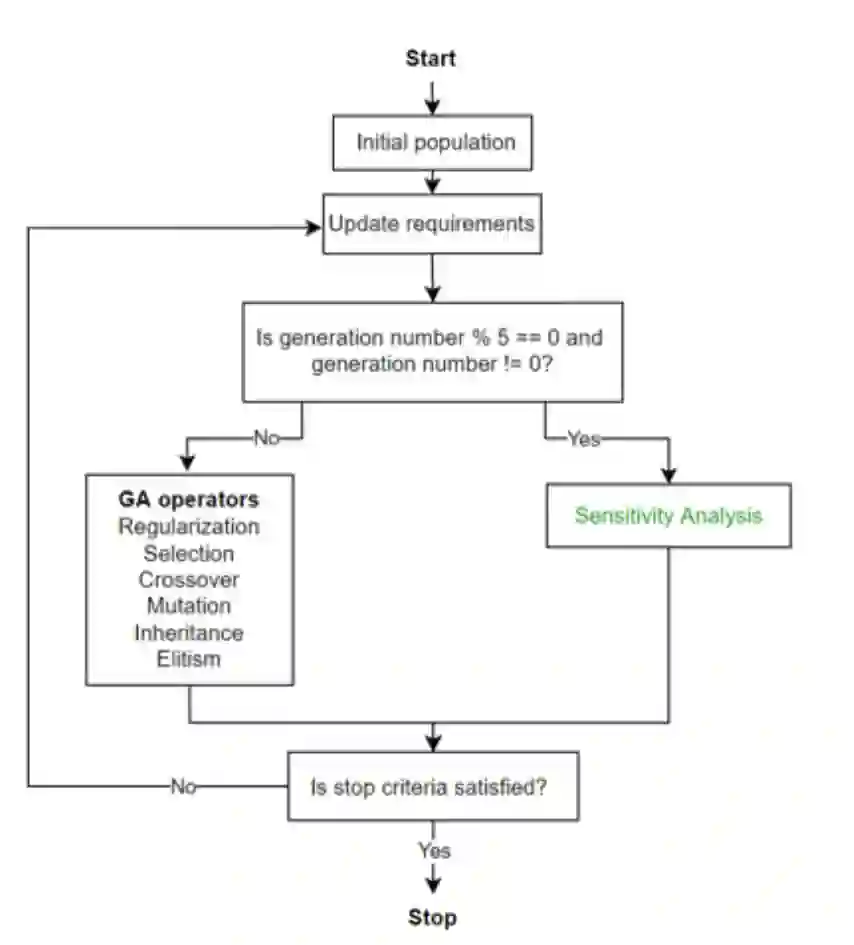
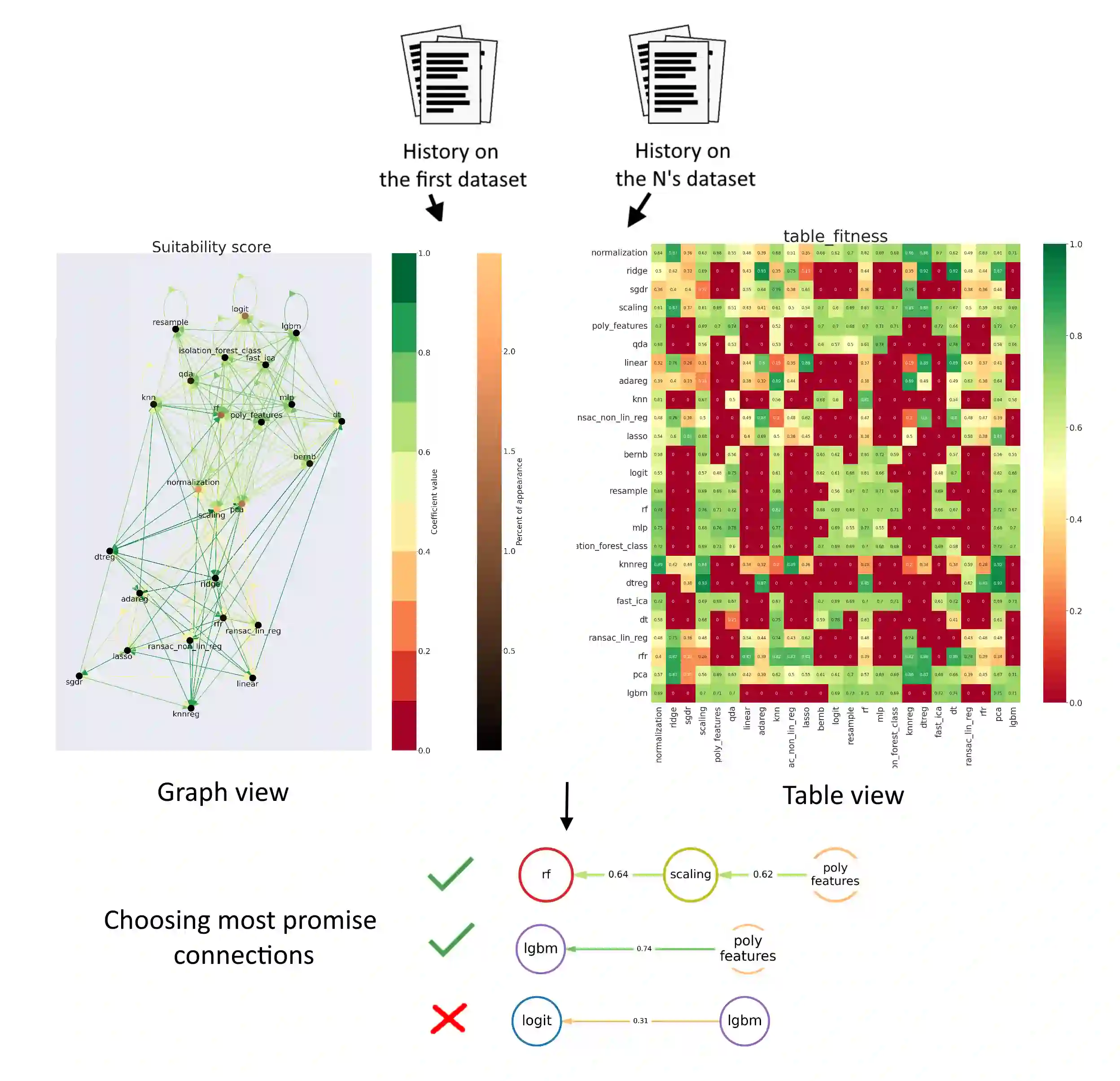
Automated machine learning (AutoML) systems propose an end-to-end solution to a given machine learning problem, creating either fixed or flexible pipelines. Fixed pipelines are task independent constructs: their general composition remains the same, regardless of the data. In contrast, the structure of flexible pipelines varies depending on the input, making them finely tailored to individual tasks. However, flexible pipelines can be structurally overcomplicated and have poor explainability. We propose the EVOSA approach that compensates for the negative points of flexible pipelines by incorporating a sensitivity analysis which increases the robustness and interpretability of the flexible solutions. EVOSA quantitatively estimates positive and negative impact of an edge or a node on a pipeline graph, and feeds this information to the evolutionary AutoML optimizer. The correctness and efficiency of EVOSA was validated in tabular, multimodal and computer vision tasks, suggesting generalizability of the proposed approach across domains.
翻译:自动化机器学习(AutoML)系统针对给定机器学习问题提供端到端的解决方案,构建固定或灵活的数据处理管道。固定管道是与任务无关的构造:无论数据如何变化,其通用组成保持不变。相反,灵活管道的结构随输入数据动态调整,因此能针对特定任务进行精细定制。然而,灵活管道可能存在结构过于复杂且可解释性差的问题。我们提出EVOSA方法,通过融合敏感性分析来弥补灵活管道的不足,从而增强灵活方案的鲁棒性与可解释性。EVOSA量化评估管道图中边或节点的正向/负向影响,并将该信息反馈给进化式AutoML优化器。在表格、多模态及计算机视觉任务上的实验验证了EVOSA的正确性与有效性,表明该方法具有跨领域的泛化能力。




相关内容




 微信扫码咨询专知VIP会员