

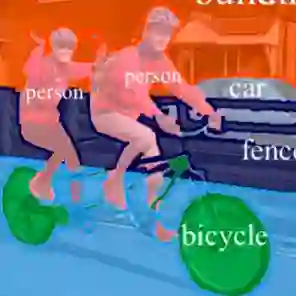
One of the most neglected sources of energy loss is streetlights which generate too much light in areas where it is not required. Energy waste has enormous economic and environmental effects. In addition, due to the conventional manual nature of the operation, streetlights are frequently seen being turned ON during the day and OFF in the evening, which is regrettable even in the twenty-first century. These issues require automated streetlight control in order to be resolved. This study aims to develop a novel streetlight controlling method by combining a smart transport monitoring system powered by computer vision technology with a closed circuit television (CCTV) camera that allows the light-emitting diode (LED) streetlight to automatically light up with the appropriate brightness by detecting the presence of pedestrians or vehicles and dimming the streetlight in their absence using semantic image segmentation from the CCTV video streaming. Consequently, our model distinguishes daylight and nighttime, which made it feasible to automate the process of turning the streetlight 'ON' and 'OFF' to save energy consumption costs. According to the aforementioned approach, geolocation sensor data could be utilized to make more informed streetlight management decisions. To complete the tasks, we consider training the U-net model with ResNet-34 as its backbone. The validity of the models is guaranteed with the use of assessment matrices. The suggested concept is straightforward, economical, energy-efficient, long-lasting, and more resilient than conventional alternatives.
翻译:最被忽视的能源损耗来源之一,是那些在不需要的区域过度照明的路灯。能源浪费会带来巨大的经济与环境影响。此外,由于传统人工操作模式,路灯常被发现在白天亮着、晚上关着,即便在21世纪这仍令人遗憾。要解决这些问题,需要实现自动化的路灯控制。本研究旨在通过将计算机视觉驱动的智能交通监控系统与闭路电视(CCTV)摄像头相结合,提出一种新型路灯控制方法——利用闭路电视视频流中的语义图像分割技术,通过检测行人或车辆的存在,使发光二极管(LED)路灯能够以适当亮度自动点亮,并在无人车经过时自动调暗。因此,我们的模型能够区分白天与夜晚,从而实现了路灯“开启”和“关闭”流程的自动化,以节约能源消耗成本。根据上述方法,地理定位传感器数据可用于做出更明智的路灯管理决策。为完成这些任务,我们考虑训练以ResNet-34为主干的U-net模型。通过评估矩阵确保了模型的有效性。所提出的方案比传统替代方案更简洁、经济、节能、耐用且更具适应性。




相关内容



 微信扫码咨询专知VIP会员