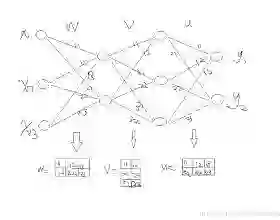
Backpropagation has rapidly become the workhorse credit assignment algorithm for modern deep learning methods. Recently, modified forms of predictive coding (PC), an algorithm with origins in computational neuroscience, have been shown to result in approximately or exactly equal parameter updates to those under backpropagation. Due to this connection, it has been suggested that PC can act as an alternative to backpropagation with desirable properties that may facilitate implementation in neuromorphic systems. Here, we explore these claims using the different contemporary PC variants proposed in the literature. We obtain time complexity bounds for these PC variants which we show are lower-bounded by backpropagation. We also present key properties of these variants that have implications for neurobiological plausibility and their interpretations, particularly from the perspective of standard PC as a variational Bayes algorithm for latent probabilistic models. Our findings shed new light on the connection between the two learning frameworks and suggest that, in its current forms, PC may have more limited potential as a direct replacement of backpropagation than previously envisioned.


翻译:反向传播算法已成为现代深度学习方法中不可或缺的信用分配工作流算法。近年来,源于计算神经科学的预测编码(PC)算法的改良形式被证实在参数更新上与反向传播近似或完全等价。基于此关联,学者提出PC可作为具有理想特性的反向传播替代方案,尤其利于神经形态系统的实现。本文通过系统梳理文献中提出的不同当代PC变体,深入探究上述论断,推导出各变体的时间复杂度界限,并证明其均受限于反向传播的复杂度下限。同时揭示这些变体在神经生物学合理性及其解释上的关键特性,特别从标准PC作为隐概率模型变分贝叶斯算法的视角进行阐释。本研究表明,两种学习框架间的关联性比此前认知更为复杂,在现有形式下,PC作为反向传播直接替代方案的潜力可能比预期更为有限。


0
下载
关闭预览

相关内容

反向传播一词严格来说仅指用于计算梯度的算法,而不是指如何使用梯度。但是该术语通常被宽松地指整个学习算法,包括如何使用梯度,例如通过随机梯度下降。反向传播将增量计算概括为增量规则中的增量规则,该规则是反向传播的单层版本,然后通过自动微分进行广义化,其中反向传播是反向累积(或“反向模式”)的特例。 在机器学习中,反向传播(backprop)是一种广泛用于训练前馈神经网络以进行监督学习的算法。对于其他人工神经网络(ANN)都存在反向传播的一般化–一类算法,通常称为“反向传播”。反向传播算法的工作原理是,通过链规则计算损失函数相对于每个权重的梯度,一次计算一层,从最后一层开始向后迭代,以避免链规则中中间项的冗余计算。
不可错过!《机器学习100讲》课程,UBC Mark Schmidt讲授
专知会员服务
76+阅读 · 2022年6月28日
【2022新书】高效深度学习,Efficient Deep Learning Book
专知会员服务
128+阅读 · 2022年4月21日
专知会员服务
52+阅读 · 2020年12月14日
【干货书】机器学习速查手册,135页pdf
专知会员服务
127+阅读 · 2020年11月20日
《DeepGCNs: Making GCNs Go as Deep as CNNs》
专知会员服务
32+阅读 · 2019年10月17日
开源书:PyTorch深度学习起步
专知会员服务
51+阅读 · 2019年10月11日
强化学习最新教程,17页pdf
专知会员服务
182+阅读 · 2019年10月11日
Distributional Soft Actor-Critic (DSAC)强化学习算法的设计与验证
深度强化学习实验室
20+阅读 · 2020年8月11日
深度自进化聚类:Deep Self-Evolution Clustering
我爱读PAMI
15+阅读 · 2019年4月13日
强化学习的Unsupervised Meta-Learning
CreateAMind
18+阅读 · 2019年1月7日
Unsupervised Learning via Meta-Learning
CreateAMind
44+阅读 · 2019年1月3日
A Technical Overview of AI & ML in 2018 & Trends for 2019
待字闺中
18+阅读 · 2018年12月24日
误差反向传播——RNN
统计学习与视觉计算组
18+阅读 · 2018年9月6日
可解释的CNN
CreateAMind
18+阅读 · 2017年10月5日
强化学习族谱
CreateAMind
26+阅读 · 2017年8月2日
国家自然科学基金
0+阅读 · 2012年12月31日
国家自然科学基金
0+阅读 · 2012年12月31日
国家自然科学基金
0+阅读 · 2012年12月31日
Arxiv
0+阅读 · 2023年5月19日
Arxiv
11+阅读 · 2020年12月2日
VIP会员
最新内容
KDD 2026 | MixRAGRec:面向LLM推荐的混合专家KG-RAG框架
BES:让语言模型通过双向进化搜索自我改进
专知会员服务
4+阅读 · 5月30日
以色列-美国-伊朗战争中的无人机:关键要点
专知会员服务
4+阅读 · 5月30日
《Palantir任务保障性软件安全标准(MA-S2)》
专知会员服务
14+阅读 · 5月30日
基于声学的无人机检测技术综述
专知会员服务
8+阅读 · 5月30日
《当代混合战争分析框架:俄乌战争经验教训》
战略前沿人工智能的再思考(中文)
专知会员服务
8+阅读 · 5月29日
《量化地基防空系统间接效应的博弈论方法》
专知会员服务
7+阅读 · 5月29日
相关VIP内容
不可错过!《机器学习100讲》课程,UBC Mark Schmidt讲授
专知会员服务
76+阅读 · 2022年6月28日
【2022新书】高效深度学习,Efficient Deep Learning Book
专知会员服务
128+阅读 · 2022年4月21日
专知会员服务
52+阅读 · 2020年12月14日
【干货书】机器学习速查手册,135页pdf
专知会员服务
127+阅读 · 2020年11月20日
《DeepGCNs: Making GCNs Go as Deep as CNNs》
专知会员服务
32+阅读 · 2019年10月17日
开源书:PyTorch深度学习起步
专知会员服务
51+阅读 · 2019年10月11日
强化学习最新教程,17页pdf
专知会员服务
182+阅读 · 2019年10月11日
相关资讯
Distributional Soft Actor-Critic (DSAC)强化学习算法的设计与验证
深度强化学习实验室
20+阅读 · 2020年8月11日
深度自进化聚类:Deep Self-Evolution Clustering
我爱读PAMI
15+阅读 · 2019年4月13日
强化学习的Unsupervised Meta-Learning
CreateAMind
18+阅读 · 2019年1月7日
Unsupervised Learning via Meta-Learning
CreateAMind
44+阅读 · 2019年1月3日
A Technical Overview of AI & ML in 2018 & Trends for 2019
待字闺中
18+阅读 · 2018年12月24日
误差反向传播——RNN
统计学习与视觉计算组
18+阅读 · 2018年9月6日
可解释的CNN
CreateAMind
18+阅读 · 2017年10月5日
强化学习族谱
CreateAMind
26+阅读 · 2017年8月2日
Top
微信扫码咨询专知VIP会员