

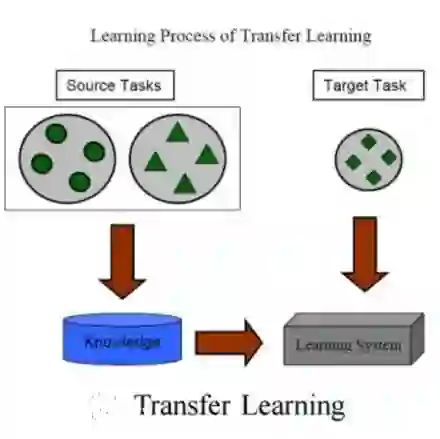
Cognitive load, the amount of mental effort required for task completion, plays an important role in performance and decision-making outcomes, making its classification and analysis essential in various sensitive domains. In this paper, we present a new solution for the classification of cognitive load using electroencephalogram (EEG). Our model uses a transformer architecture employing transfer learning between emotions and cognitive load. We pre-train our model using self-supervised masked autoencoding on emotion-related EEG datasets and use transfer learning with both frozen weights and fine-tuning to perform downstream cognitive load classification. To evaluate our method, we carry out a series of experiments utilizing two publicly available EEG-based emotion datasets, namely SEED and SEED-IV, for pre-training, while we use the CL-Drive dataset for downstream cognitive load classification. The results of our experiments show that our proposed approach achieves strong results and outperforms conventional single-stage fully supervised learning. Moreover, we perform detailed ablation and sensitivity studies to evaluate the impact of different aspects of our proposed solution. This research contributes to the growing body of literature in affective computing with a focus on cognitive load, and opens up new avenues for future research in the field of cross-domain transfer learning using self-supervised pre-training.
翻译:认知负荷是指完成任务所需的心智努力程度,在任务表现和决策结果中起重要作用,因此其分类与分析在多个敏感领域至关重要。本文提出了一种利用脑电图(EEG)进行认知负荷分类的新方案。我们的模型采用Transformer架构,在情绪与认知负荷之间进行迁移学习。我们使用自监督掩码自编码在情绪相关EEG数据集上对模型进行预训练,并通过冻结权重和微调两种方式进行迁移学习,以执行下游认知负荷分类任务。为评估该方法,我们利用两个公开的基于EEG的情绪数据集——SEED和SEED-IV进行预训练,同时使用CL-Drive数据集进行下游认知负荷分类。实验结果表明,我们提出的方法取得了良好效果,并优于传统的单阶段全监督学习。此外,我们进行了详细的消融研究和敏感性分析,以评估所提方案不同方面的影响。本研究为情感计算领域中关于认知负荷的文献库增添了新成果,并为利用自监督预训练进行跨域迁移学习的未来研究开辟了新途径。




相关内容



 微信扫码咨询专知VIP会员