

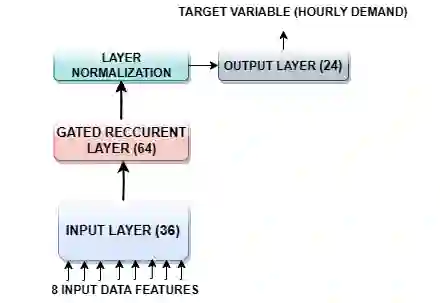
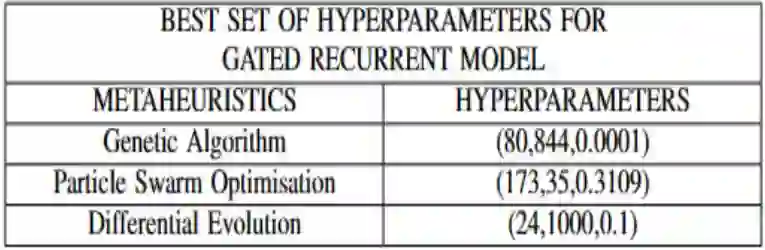
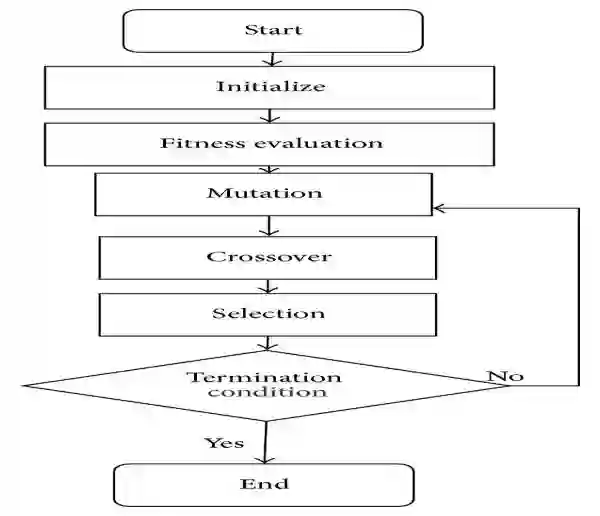
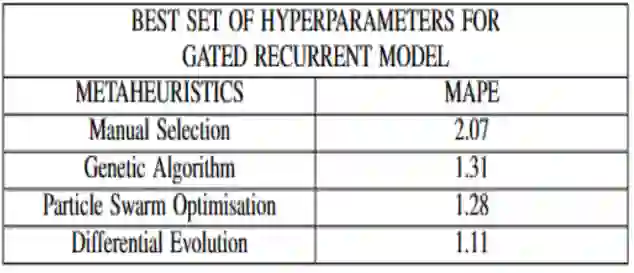
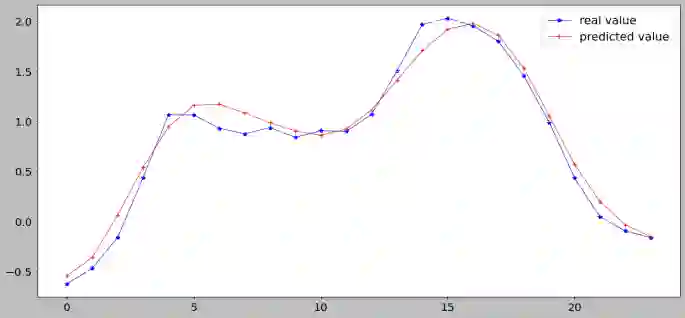
Accurate load forecasting remains a formidable challenge in numerous sectors, given the intricate dynamics of dynamic power systems, which often defy conventional statistical models. As a response, time-series methodologies like ARIMA and sophisticated deep learning techniques such as Artificial Neural Networks (ANN) and Long Short-Term Memory (LSTM) networks have demonstrated their mettle by achieving enhanced predictive performance. In our investigation, we delve into the efficacy of the relatively recent Gated Recurrent Network (GRU) model within the context of load forecasting. GRU models are garnering attention due to their inherent capacity to adeptly capture and model temporal dependencies within data streams. Our methodology entails harnessing the power of Differential Evolution, a versatile optimization technique renowned for its prowess in delivering scalable, robust, and globally optimal solutions, especially in scenarios involving non-differentiable, multi-objective, or constrained optimization challenges. Through rigorous analysis, we undertake a comparative assessment of the proposed Gated Recurrent Network model, collaboratively fused with various metaheuristic algorithms, evaluating their performance by leveraging established numerical benchmarks such as Mean Squared Error (MSE) and Mean Absolute Percentage Error (MAPE). Our empirical investigations are conducted using power load data originating from the Ontario province, Canada. Our research findings cast a spotlight on the remarkable potential of metaheuristic-augmented Gated Recurrent Network models in substantially augmenting load forecasting precision, offering tailored, optimal hyperparameter configurations uniquely suited to each model's performance characteristics.
翻译:准确负荷预测在众多领域仍是一项严峻挑战,这是因为动态电力系统具有复杂特性,往往超越传统统计模型的适用范畴。针对此问题,ARIMA等时间序列方法以及人工神经网络(ANN)和长短期记忆(LSTM)网络等先进深度学习技术已展现出卓越性能,实现了更高的预测精度。本研究深入探讨了相对较新的门控循环网络(GRU)模型在负荷预测中的有效性。GRU模型因其能巧妙捕获并建模数据流中时间依赖性的内在能力而备受关注。我们的方法采用差分进化这一通用优化技术,以其在解决不可微、多目标或约束优化问题时提供可扩展、鲁棒且全局最优解的能力而著称。通过严谨分析,我们对所提出的结合多种元启发式算法的门控循环网络模型进行了比较评估,利用均方误差(MSE)和平均绝对百分比误差(MAPE)等公认数值基准衡量其性能。实证研究基于加拿大安大略省的电力负荷数据展开。研究结果揭示了元启发式增强型门控循环网络模型在显著提升负荷预测精度方面的巨大潜力,并为每种模型性能特征提供了定制化的最优超参数配置。




相关内容




 微信扫码咨询专知VIP会员