

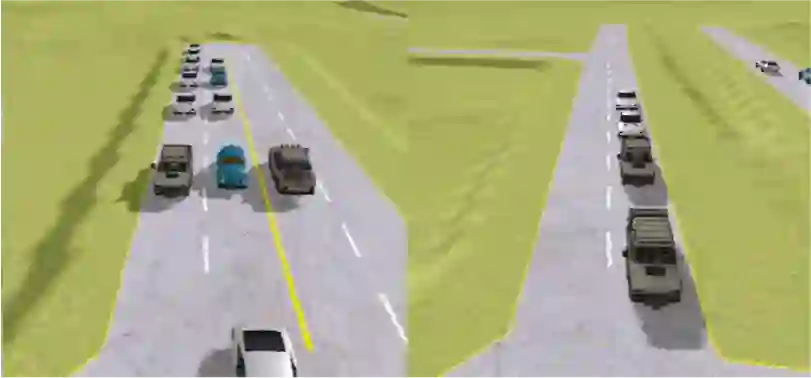
Traffic signal control (TSC) is crucial for reducing traffic congestion that leads to smoother traffic flow, reduced idling time, and mitigated CO2 emissions. In this study, we explore the computer vision approach for TSC that modulates on-road traffic flows through visual observation. Unlike traditional feature-based approaches, vision-based methods depend much less on heuristics and predefined features, bringing promising potentials for end-to-end learning and optimization of traffic signals. Thus, we introduce a holistic traffic simulation framework called TrafficDojo towards vision-based TSC and its benchmarking by integrating the microscopic traffic flow provided in SUMO into the driving simulator MetaDrive. This proposed framework offers a versatile traffic environment for in-depth analysis and comprehensive evaluation of traffic signal controllers across diverse traffic conditions and scenarios. We establish and compare baseline algorithms including both traditional and Reinforecment Learning (RL) approaches. This work sheds insights into the design and development of vision-based TSC approaches and open up new research opportunities. All the code and baselines will be made publicly available.
翻译:交通信号控制(TSC)对于减少交通拥堵至关重要,它有助于实现更顺畅的交通流、减少怠速时间以及降低二氧化碳排放。在本研究中,我们探索了基于计算机视觉的TSC方法,通过视觉观测来调节道路上的交通流。与传统的基于特征的方法不同,基于视觉的方法较少依赖启发式规则和预定义特征,为交通信号的端到端学习和优化带来了有前景的潜力。因此,我们引入了一个名为TrafficDojo的整体交通仿真框架,该框架通过将SUMO中提供的微观交通流集成到驾驶模拟器MetaDrive中,用于基于视觉的TSC及其基准测试。所提出的框架提供了一个多样化的交通环境,用于在多种交通条件和场景下对交通信号控制器进行深入分析和全面评估。我们建立并比较了包括传统方法和强化学习(RL)方法在内的基线算法。这项研究为基于视觉的TSC方法的设计和开发提供了见解,并开辟了新的研究机会。所有代码和基线将公开发布。








相关内容




 微信扫码咨询专知VIP会员