

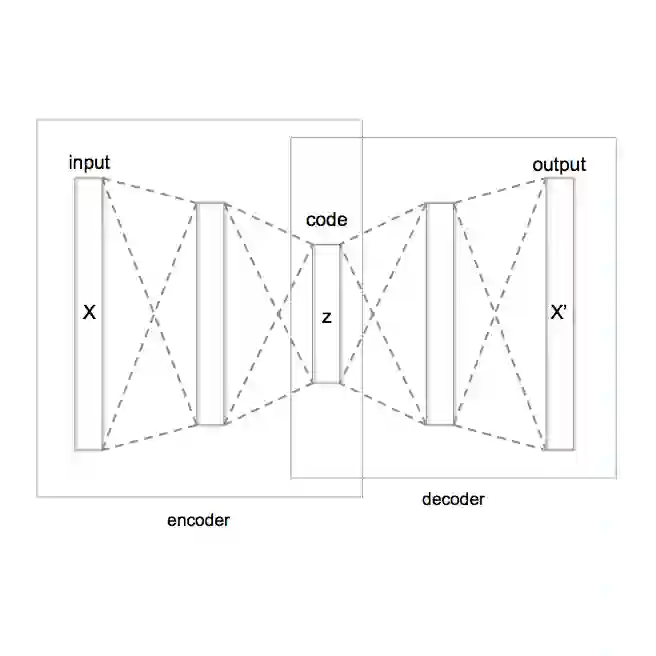
Variational autoencoder (VAE) architectures have the potential to develop reduced-order models (ROMs) for chaotic fluid flows. We propose a method for learning compact and near-orthogonal ROMs using a combination of a $\beta$-VAE and a transformer, tested on numerical data from a two-dimensional viscous flow in both periodic and chaotic regimes. The $\beta$-VAE is trained to learn a compact latent representation of the flow velocity, and the transformer is trained to predict the temporal dynamics in latent space. Using the $\beta$-VAE to learn disentangled representations in latent-space, we obtain a more interpretable flow model with features that resemble those observed in the proper orthogonal decomposition, but with a more efficient representation. Using Poincar\'e maps, the results show that our method can capture the underlying dynamics of the flow outperforming other prediction models. The proposed method has potential applications in other fields such as weather forecasting, structural dynamics or biomedical engineering.
翻译:变分自编码器(VAE)架构具备发展混沌流体流动降阶模型(ROM)的潜力。我们提出一种结合$β$-VAE与Transformer的方法,用于学习紧凑且近似正交的降阶模型,并在周期及混沌状态下的二维黏性流数值数据上进行测试。其中$β$-VAE被训练用于学习流场速度的紧凑潜在表示,而Transformer则被训练用于预测潜在空间中的时间动力学。通过$β$-VAE学习潜在空间中的解缠表示,我们获得更具可解释性的流场模型,其特征类似于本征正交分解(POD)所观察到的结果,但具有更高效的表示形式。基于庞加莱映射的结果表明,我们的方法能够捕捉流场的潜在动力学特性,性能优于其他预测模型。所提方法在天气预报、结构动力学及生物医学工程等其他领域具有潜在应用价值。




相关内容



 微信扫码咨询专知VIP会员