

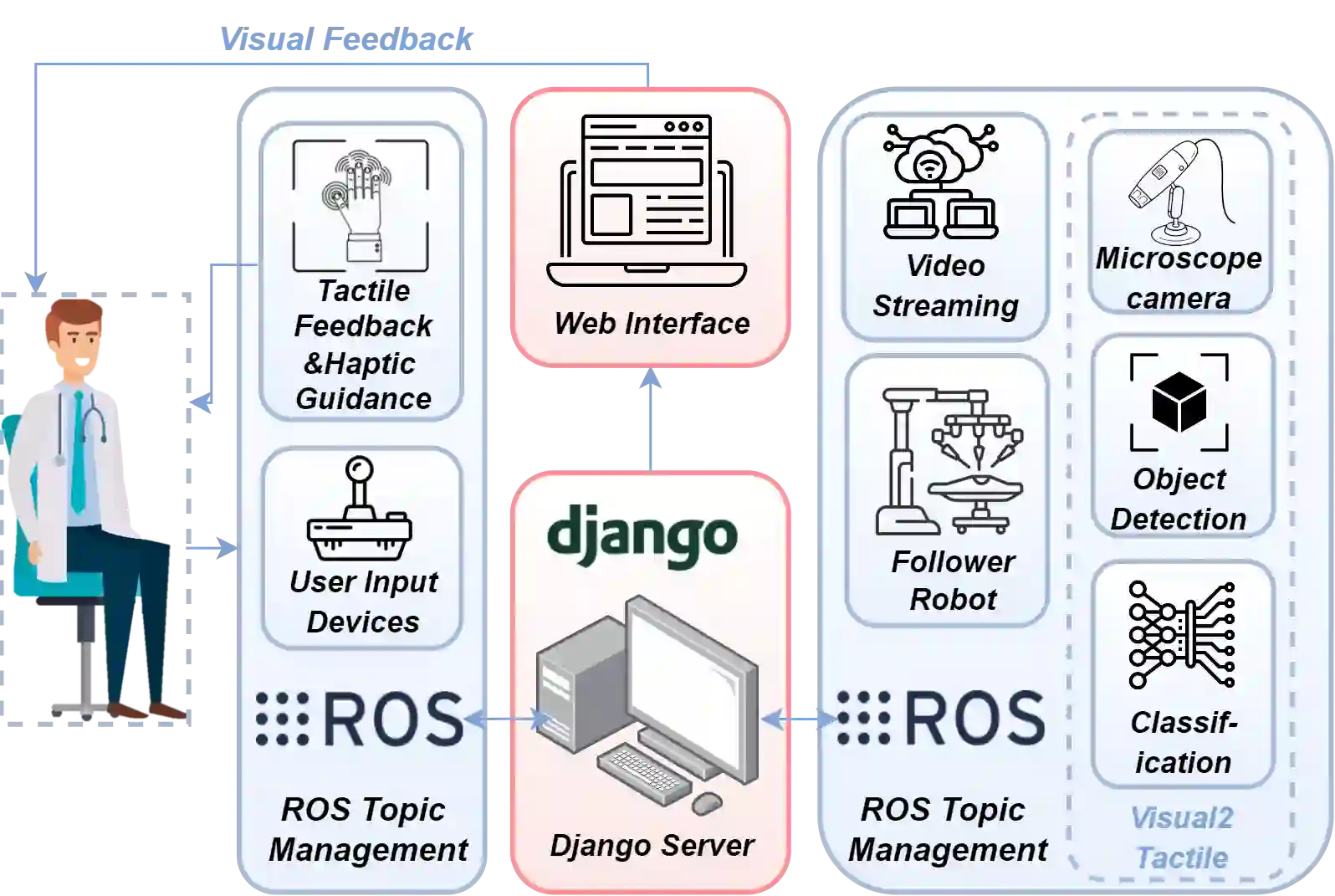
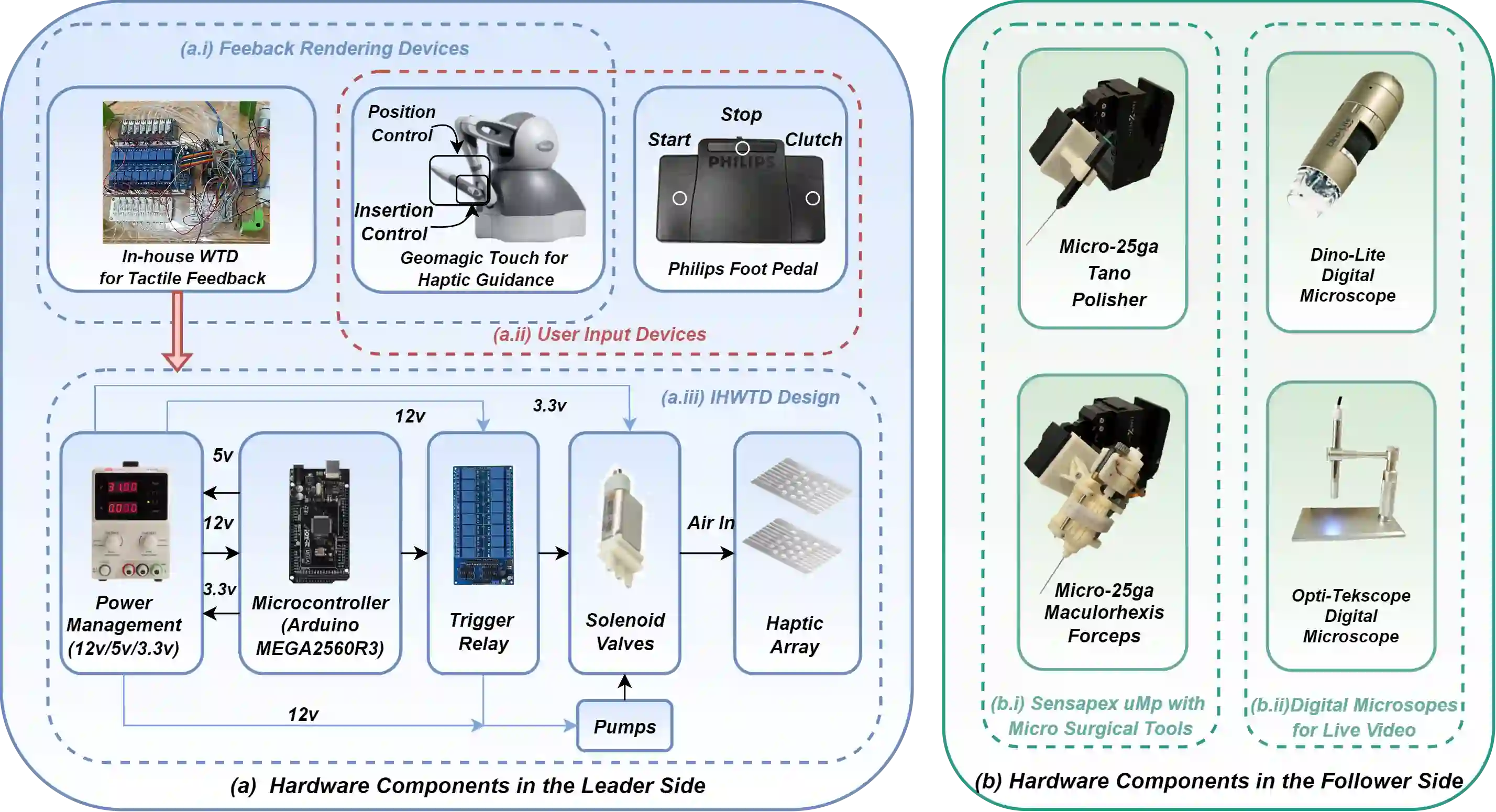
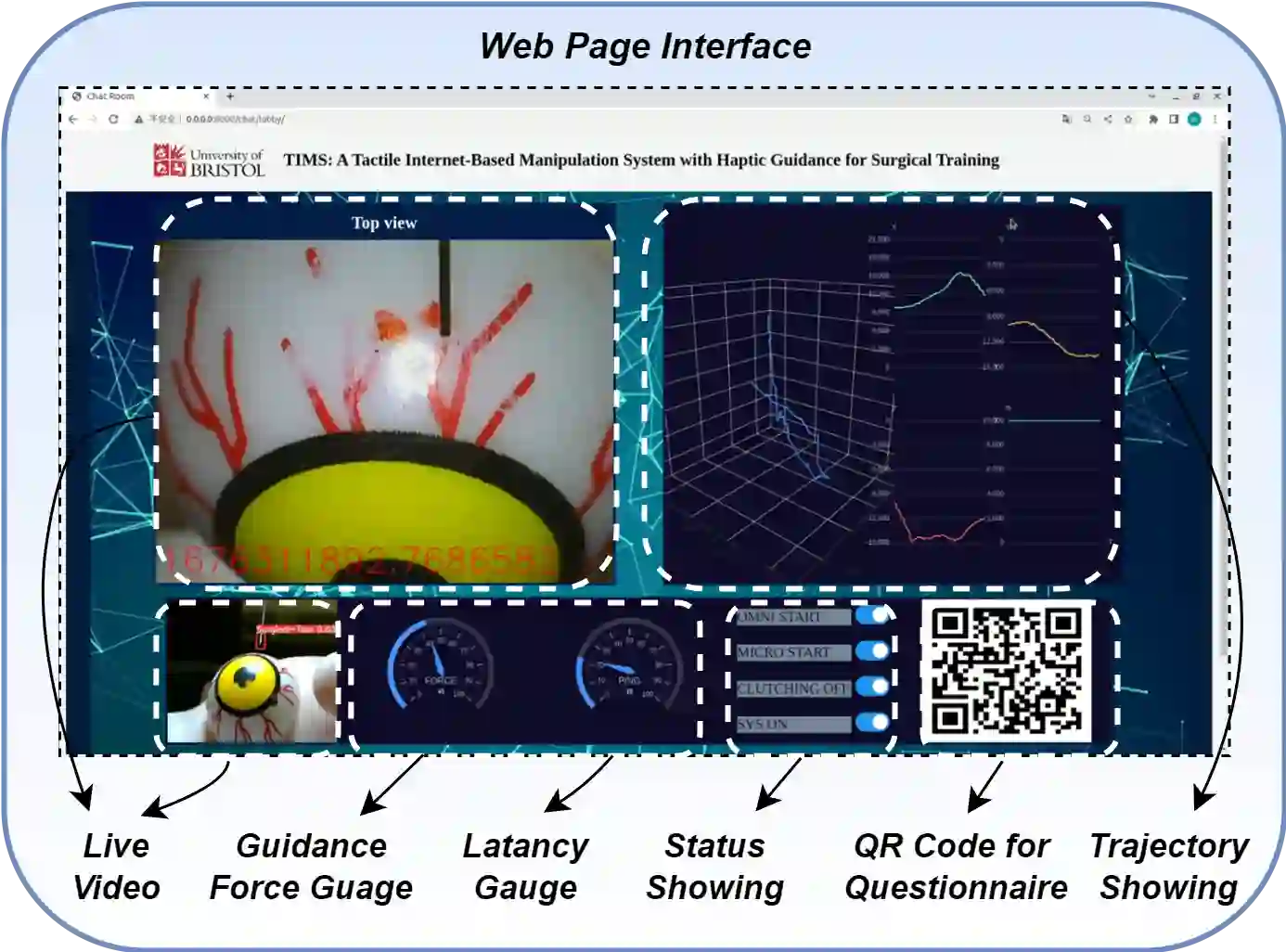
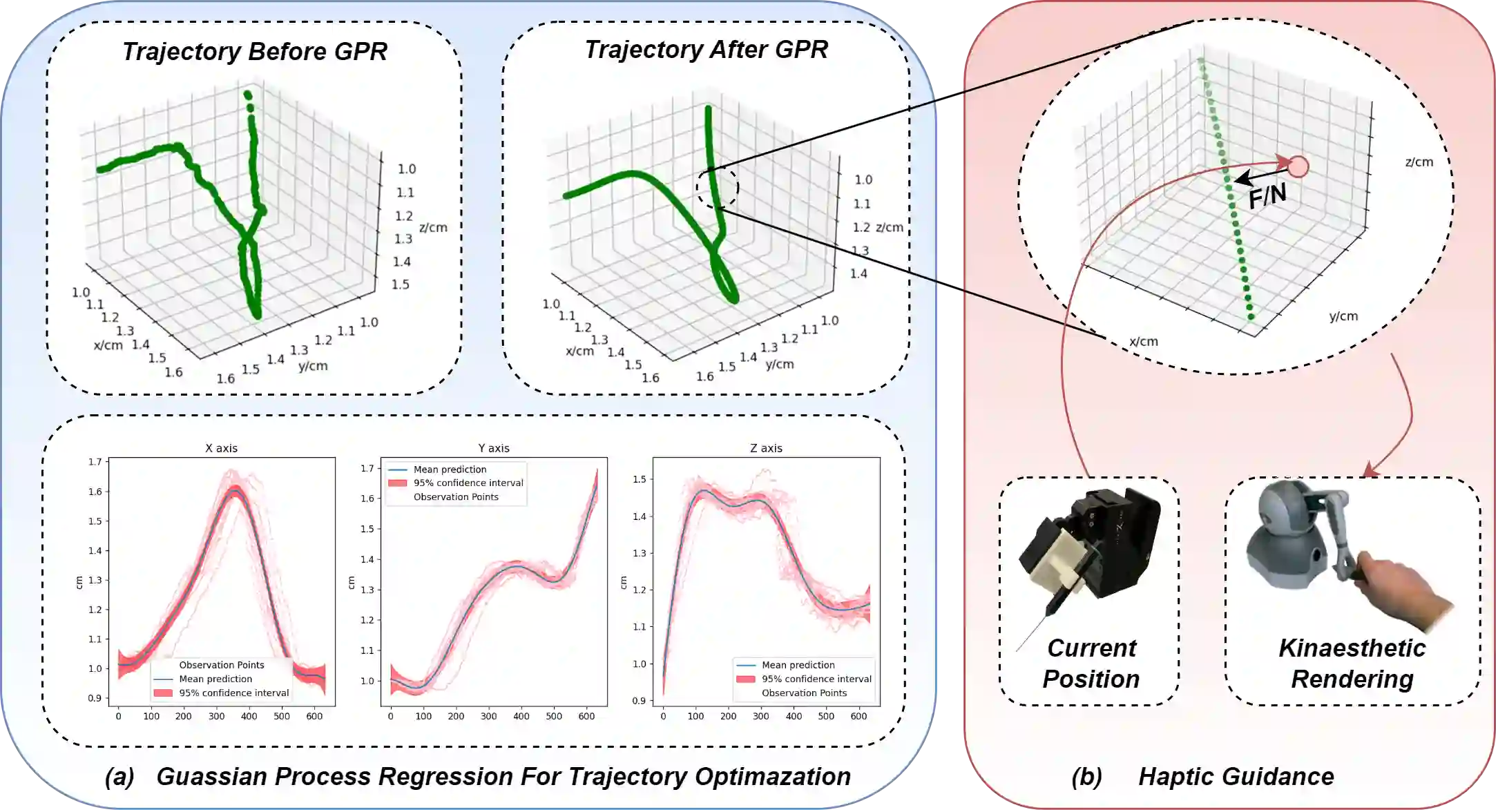
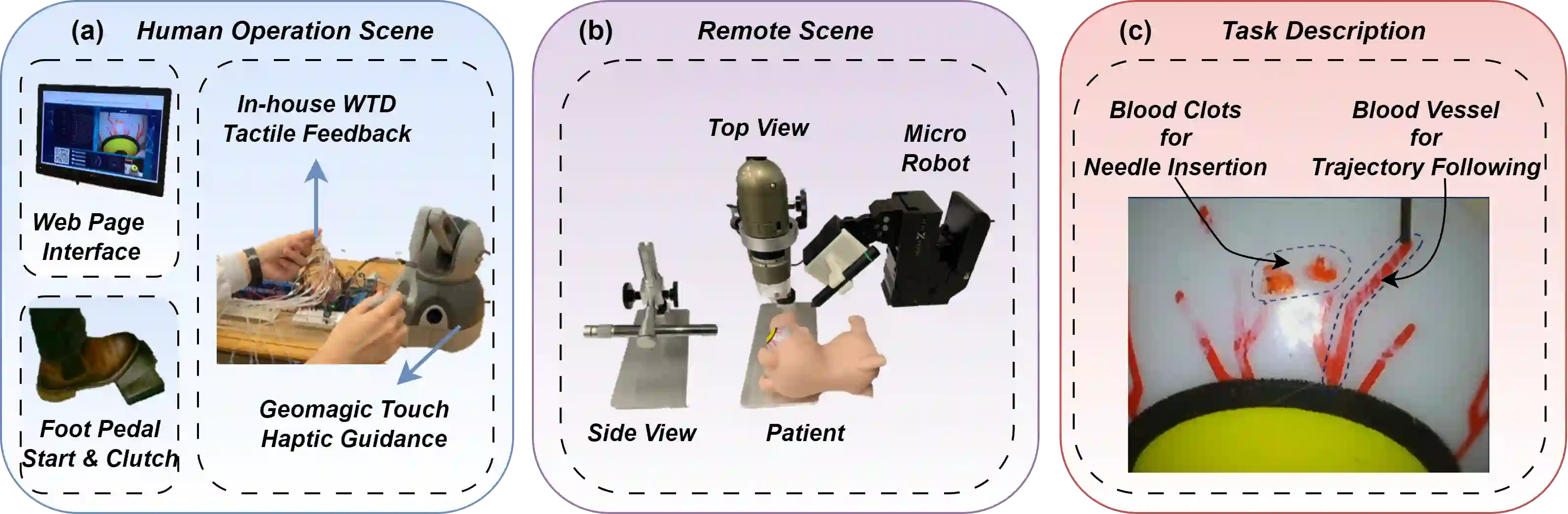
Microsurgery involves the dexterous manipulation of delicate tissue or fragile structures such as small blood vessels, nerves, etc., under a microscope. To address the limitation of imprecise manipulation of human hands, robotic systems have been developed to assist surgeons in performing complex microsurgical tasks with greater precision and safety. However, the steep learning curve for robot-assisted microsurgery (RAMS) and the shortage of well-trained surgeons pose significant challenges to the widespread adoption of RAMS. Therefore, the development of a versatile training system for RAMS is necessary, which can bring tangible benefits to both surgeons and patients. In this paper, we present a Tactile Internet-Based Micromanipulation System (TIMS) based on a ROS-Django web-based architecture for microsurgical training. This system can provide tactile feedback to operators via a wearable tactile display (WTD), while real-time data is transmitted through the internet via a ROS-Django framework. In addition, TIMS integrates haptic guidance to `guide' the trainees to follow a desired trajectory provided by expert surgeons. Learning from demonstration based on Gaussian Process Regression (GPR) was used to generate the desired trajectory. User studies were also conducted to verify the effectiveness of our proposed TIMS, comparing users' performance with and without tactile feedback and/or haptic guidance.
翻译:显微外科手术涉及在显微镜下对细小血管、神经等脆弱组织或结构进行灵巧操作。针对人手操作精度不足的局限性,机器人系统已被开发用于辅助外科医生以更高精度和安全性完成复杂的显微外科任务。然而,机器人辅助显微外科手术(RAMS)陡峭的学习曲线及训练有素外科医生的短缺严重制约了其广泛应用。因此,开发一种通用的RAMS训练系统势在必行,它将为外科医生和患者带来切实益处。本文提出一种基于ROS-Django网络架构的触觉互联网微操作训练系统(TIMS),用于显微外科手术训练。该系统可通过可穿戴触觉显示器(WTD)为操作者提供触觉反馈,同时基于ROS-Django框架实现实时数据的网络传输。此外,TIMS集成了触觉引导功能,可"引导"受训者遵循专家外科医生预设的理想轨迹。基于高斯过程回归(GPR)的示教学习被用于生成理想轨迹。通过对比有无触觉反馈和/或触觉引导条件下操作者的性能表现,开展了用户研究以验证所提出TIMS系统的有效性。




相关内容




 微信扫码咨询专知VIP会员