

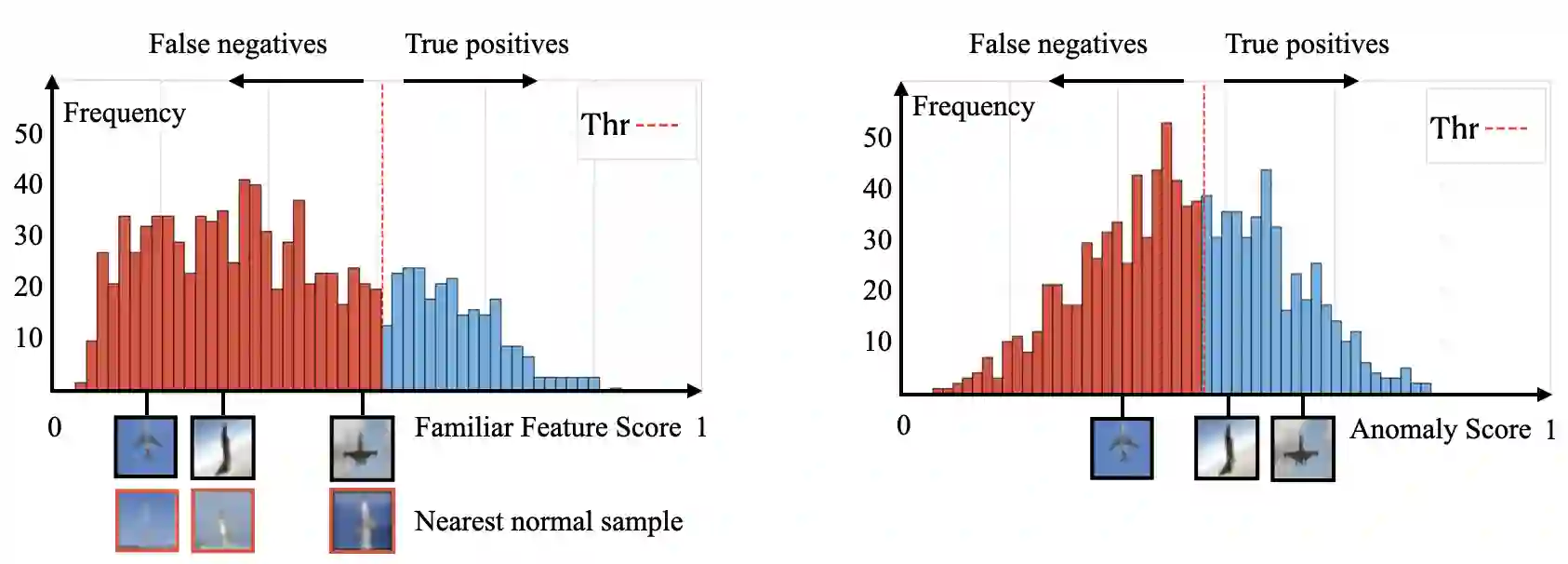
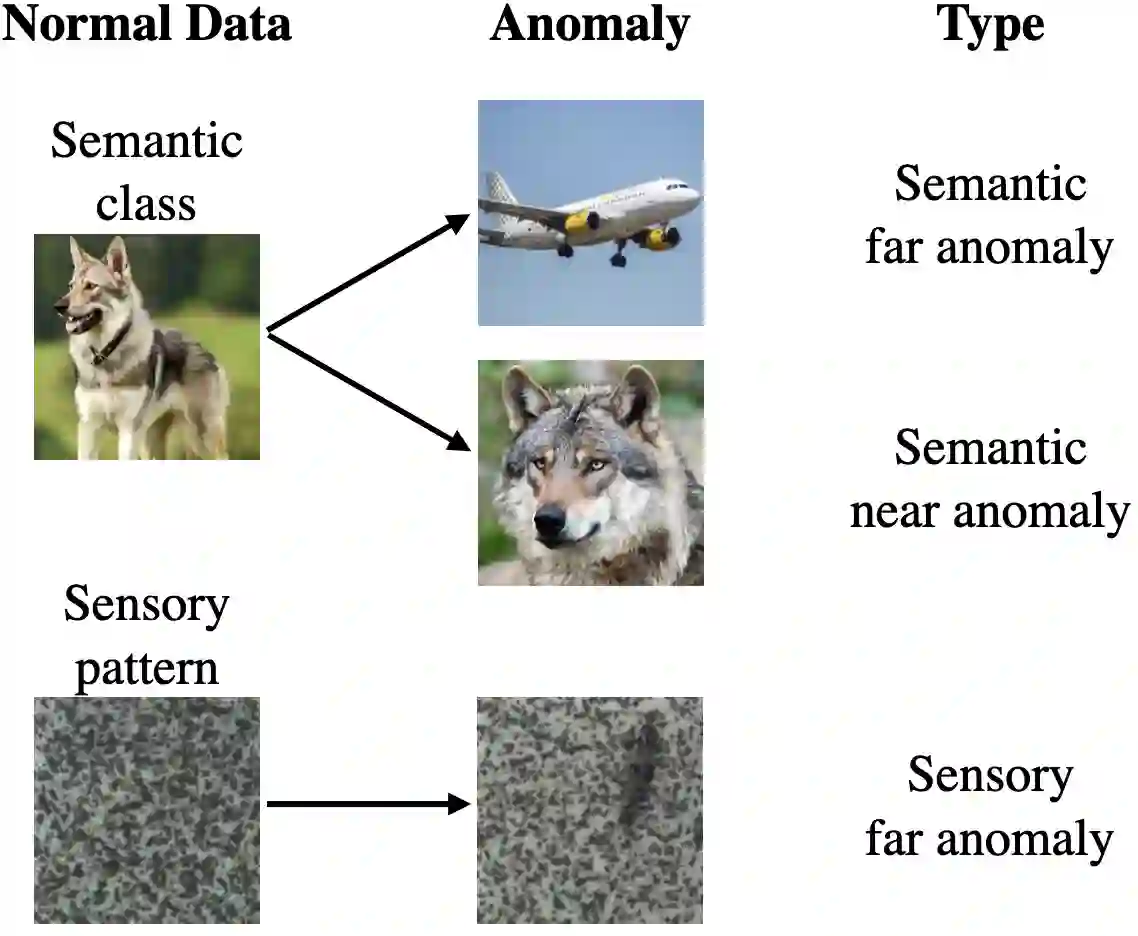
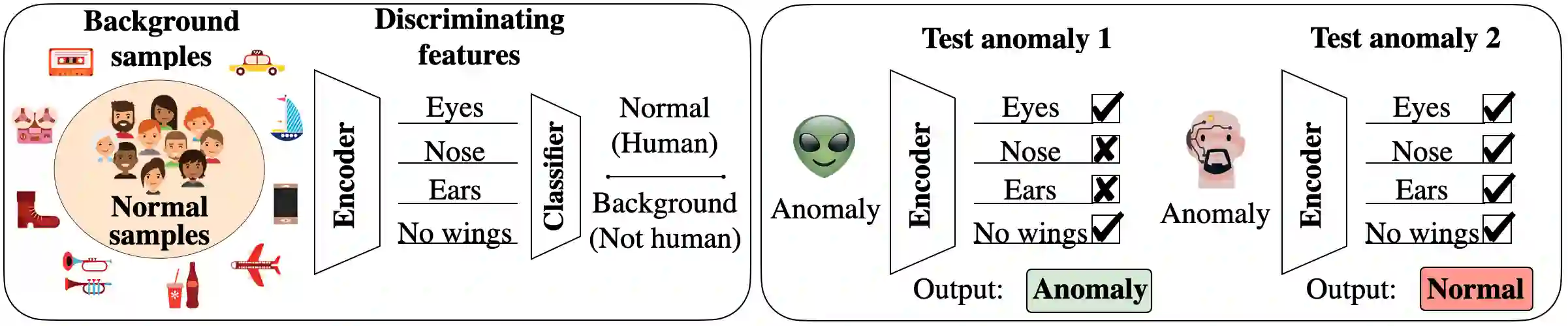
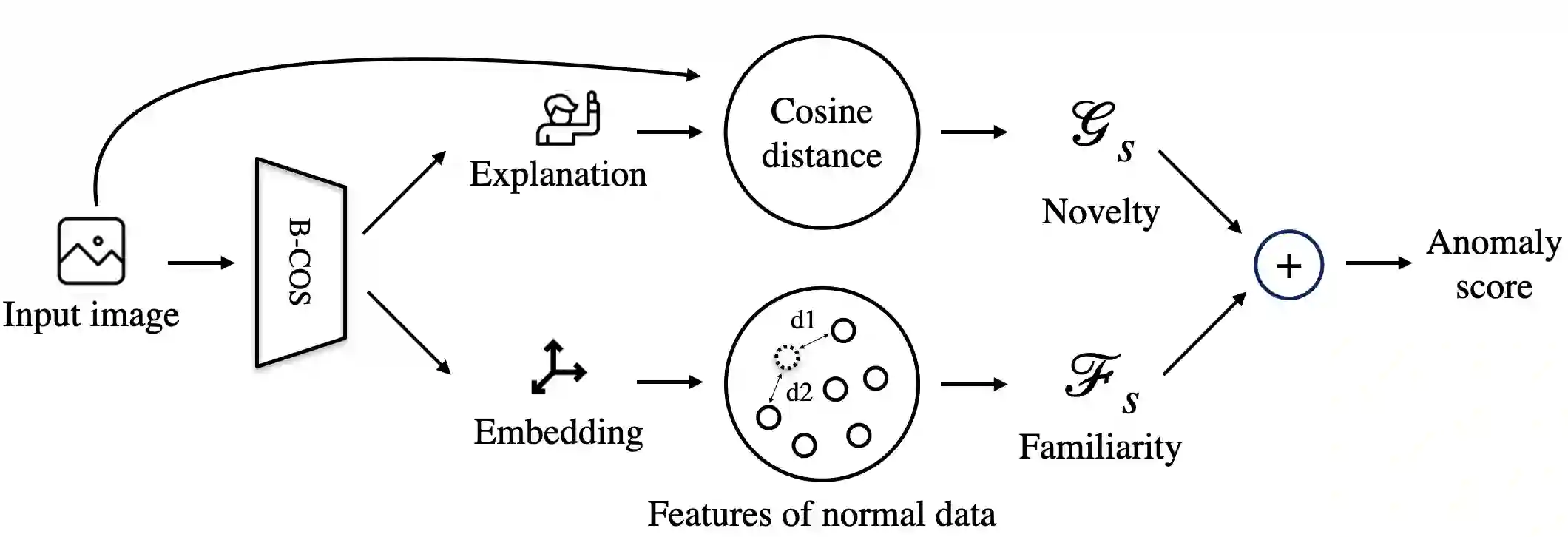
Anomaly Detection (AD) is a critical task that involves identifying observations that do not conform to a learned model of normality. Prior work in deep AD is predominantly based on a familiarity hypothesis, where familiar features serve as the reference in a pre-trained embedding space. While this strategy has proven highly successful, it turns out that it causes consistent false negatives when anomalies consist of truly novel features that are not well captured by the pre-trained encoding. We propose a novel approach to AD using explainability to capture such novel features as unexplained observations in the input space. We achieve strong performance across a wide range of anomaly benchmarks by combining familiarity and novelty in a hybrid approach. Our approach establishes a new state-of-the-art across multiple benchmarks, handling diverse anomaly types while eliminating the need for expensive background models and dense matching. In particular, we show that by taking account of novel features, we reduce false negative anomalies by up to 40% on challenging benchmarks compared to the state-of-the-art. Our method gives visually inspectable explanations for pixel-level anomalies.
翻译:异常检测(AD)是一项关键任务,旨在识别不符合正常学习模型的观测样本。深度异常检测的先前研究主要基于熟悉性假设,即利用预训练嵌入空间中熟悉的特征作为参考。尽管该策略取得了显著成功,但当异常由预训练编码未能充分捕捉的真正新颖特征构成时,会导致持续性的假阴性误判。我们提出了一种基于可解释性的新型异常检测方法,通过将输入空间中无法解释的观测视为新颖特征进行捕获。通过将熟悉性与新颖性相结合的混合策略,我们在广泛的异常检测基准上实现了强劲性能。该方法在多个基准测试中确立了新的最优结果,能够处理多样化的异常类型,同时无需依赖昂贵的背景模型或密集匹配。研究表明,通过考虑新颖特征,我们可在具有挑战性的基准上将假阴性异常减少高达40%,相较于现有最优方法。此外,该方法可为像素级异常提供直观可检视的解释。





相关内容




 微信扫码咨询专知VIP会员