

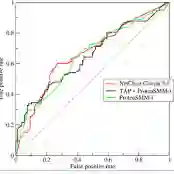
We aim to optimize the binary detection of Chronic Obstructive Pulmonary Disease (COPD) based on emphysema presence in the lung with convolutional neural networks (CNN) by exploring manually adjusted versus automated window-setting optimization (WSO) on computed tomography (CT) images. 7,194 CT images (3,597 with COPD; 3,597 healthy controls) from 78 subjects were selected retrospectively (10.2018-12.2021) and preprocessed. For each image, intensity values were manually clipped to the emphysema window setting and a baseline 'full-range' window setting. Class-balanced train, validation, and test sets contained 3,392, 1,114, and 2,688 images. The network backbone was optimized by comparing various CNN architectures. Furthermore, automated WSO was implemented by adding a customized layer to the model. The image-level area under the Receiver Operating Characteristics curve (AUC) [lower, upper limit 95% confidence] was utilized to compare model variations. Repeated inference (n=7) on the test set showed that the DenseNet was the most efficient backbone and achieved a mean AUC of 0.80 [0.76, 0.85] without WSO. Comparably, with input images manually adjusted to the emphysema window, the DenseNet model predicted COPD with a mean AUC of 0.86 [0.82, 0.89]. By adding a customized WSO layer to the DenseNet, an optimal window in the proximity of the emphysema window setting was learned automatically, and a mean AUC of 0.82 [0.78, 0.86] was achieved. Detection of COPD with DenseNet models was improved by WSO of CT data to the emphysema window setting range.
翻译:本研究旨在通过探索计算机断层扫描(CT)图像上手动调整与自动窗位设置优化(WSO)的对比,优化基于肺部肺气肿存在的慢性阻塞性肺疾病(COPD)二元检测的卷积神经网络(CNN)。回顾性选取(2018年10月至2021年12月)并预处理了来自78名受试者的7,194张CT图像(3,597张为COPD;3,597张为健康对照)。对于每张图像,其强度值被手动裁剪至肺气肿窗位设置和一个基线“全范围”窗位设置。类别平衡的训练集、验证集和测试集分别包含3,392张、1,114张和2,688张图像。通过比较各种CNN架构,对网络主干进行了优化。此外,通过向模型添加一个定制层,实现了自动WSO。利用接收者操作特征曲线下面积(AUC)[下限,上限95%置信区间]来比较模型变体。在测试集上重复推断(n=7)显示,DenseNet是最有效的主干网络,在不使用WSO的情况下实现了0.80 [0.76, 0.85]的平均AUC。相比之下,当输入图像手动调整至肺气肿窗位时,DenseNet模型预测COPD的平均AUC为0.86 [0.82, 0.89]。通过向DenseNet添加定制的WSO层,模型自动学习到接近肺气肿窗位设置的最优窗位,并实现了0.82 [0.78, 0.86]的平均AUC。通过将CT数据的WSO调整至肺气肿窗位设置范围,DenseNet模型对COPD的检测性能得到了提升。




相关内容



 微信扫码咨询专知VIP会员