

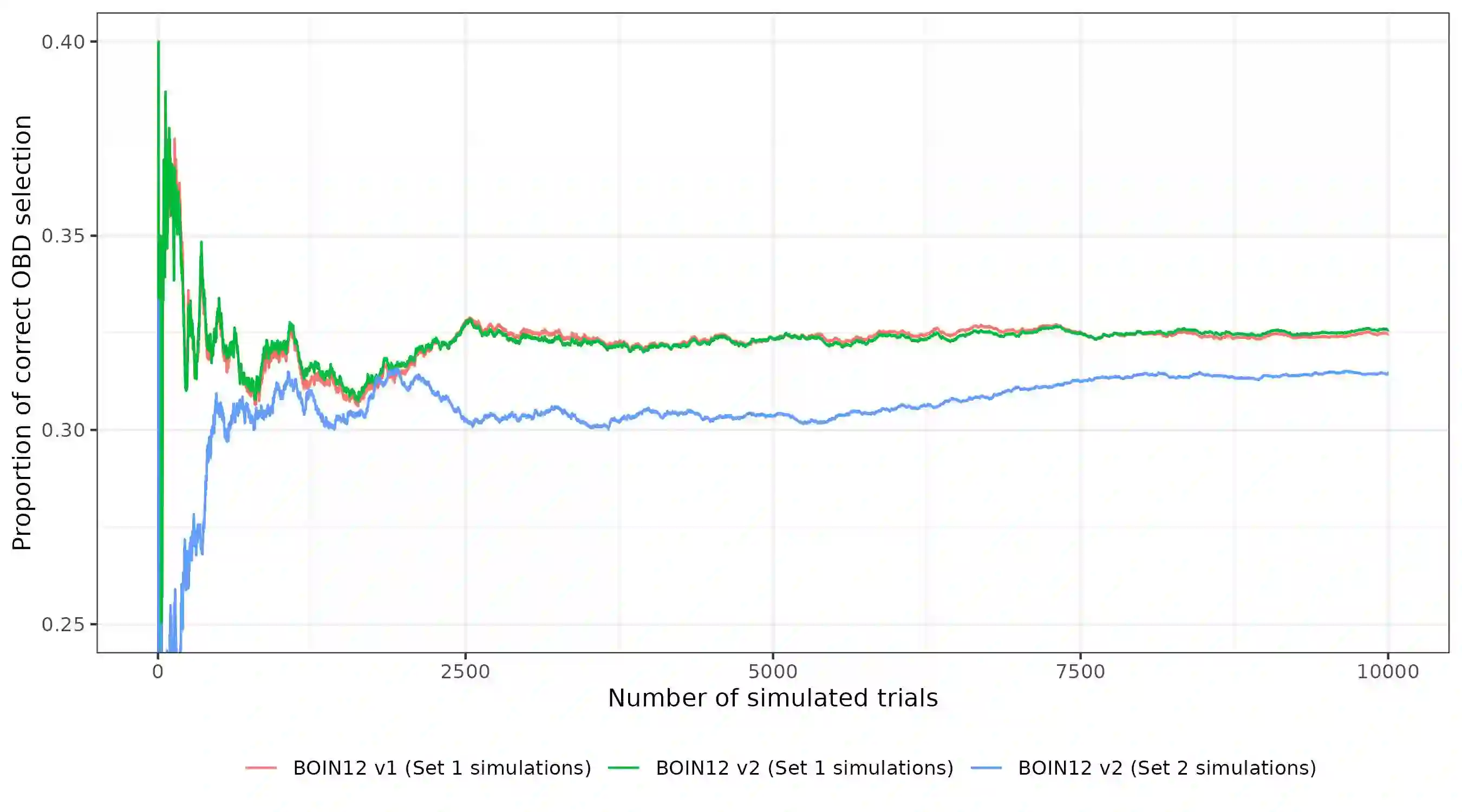
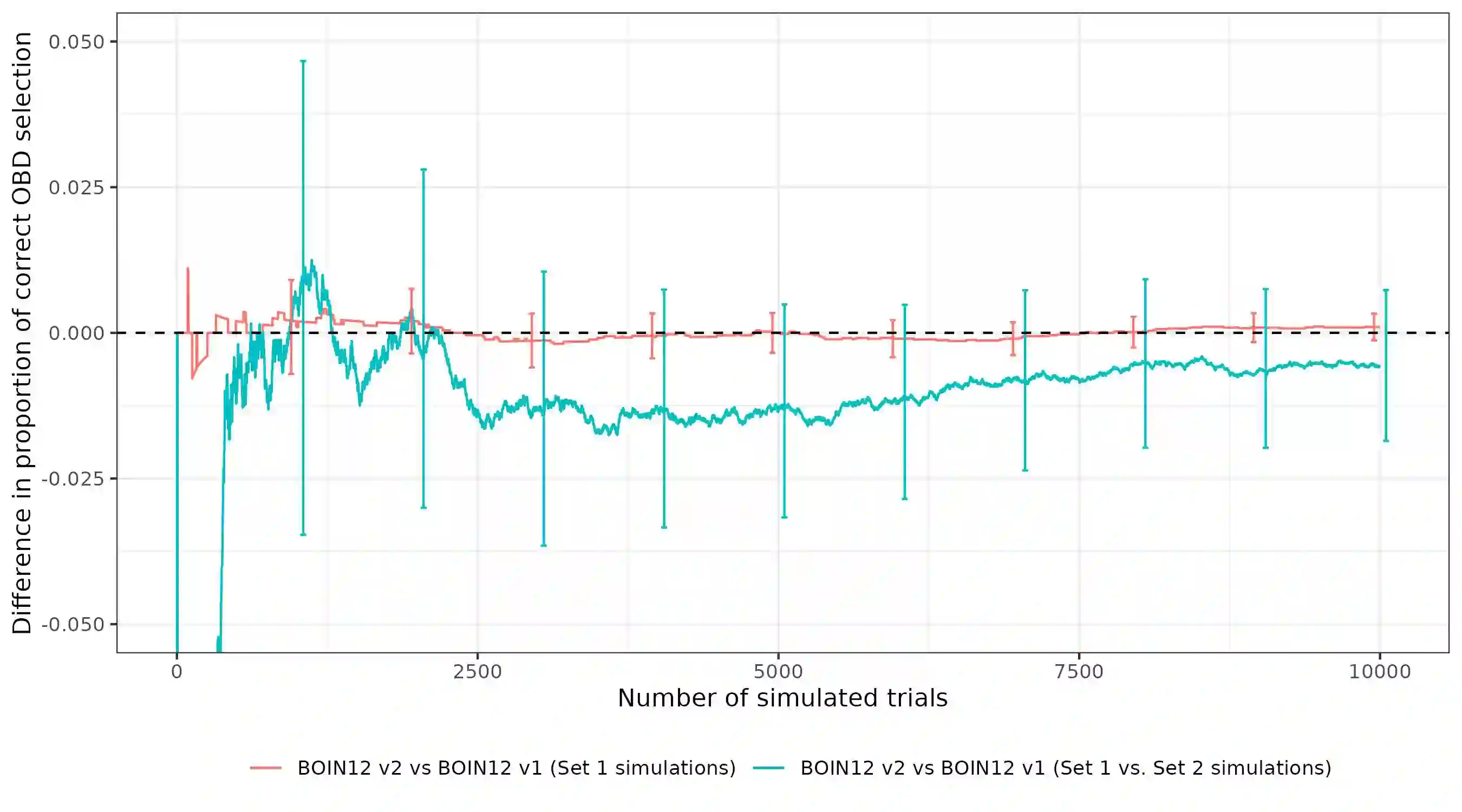
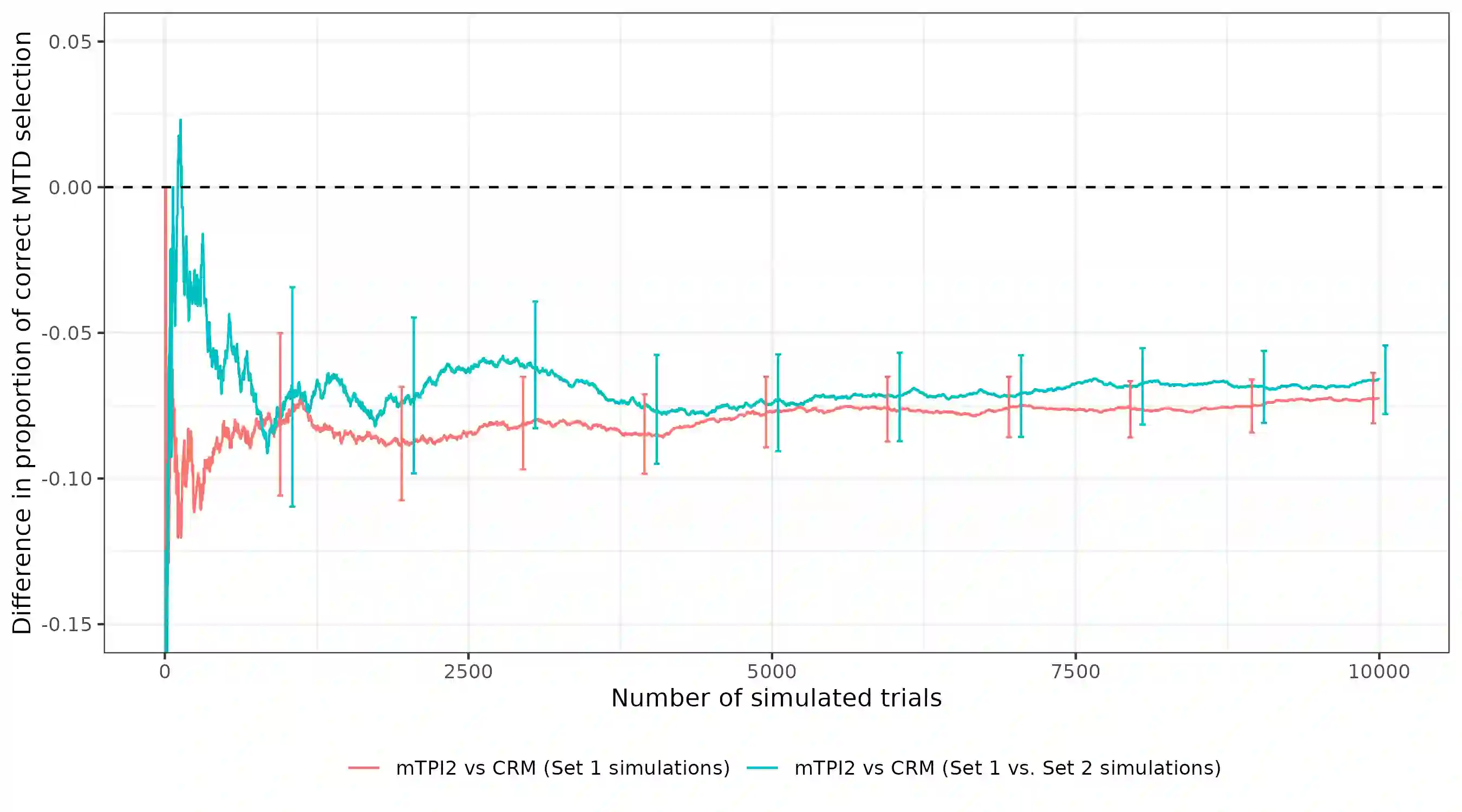
Dose-finding trials are a key component of the drug development process and rely on a statistical design to help inform dosing decisions. Triallists wishing to choose a design require knowledge of operating characteristics of competing methods. This is often assessed using a large-scale simulation study with multiple designs and configurations investigated, which can be time-consuming and therefore limits the scope of the simulation. We introduce a new approach to the design of simulation studies of dose-finding trials. The approach simulates all potential outcomes that individuals could experience at each dose level in the trial. Datasets are simulated in advance and then the same datasets are applied to each of the competing methods to enable a more efficient head-to-head comparison. In two case-studies we show sizeable reductions in Monte Carlo error for comparing a performance metric between two competing designs. Efficiency gains depend on the similarity of the designs. Comparing two Phase I/II design variants, with high correlation of recommending the same optimal biologic dose, we show that the new approach requires a simulation study that is approximately 30 times smaller than the conventional approach. Furthermore, advance-simulated trial datasets can be reused to assess the performance of designs across multiple configurations. We recommend researchers consider this more efficient simulation approach in their dose-finding studies and we have updated the R package escalation to help facilitate implementation.
翻译:剂量探索试验是药物开发过程中的关键组成部分,其依赖统计设计来辅助剂量决策。希望选择设计方案的试验人员需要了解各竞争方法的操作特性。这通常通过大规模模拟研究来评估,需调查多种设计和配置,过程耗时且限制了模拟的范围。我们提出了一种新的剂量探索试验模拟研究方法。该方法模拟了试验中每个剂量水平上个体可能经历的所有潜在结局。数据集预先模拟生成,随后将这些相同的数据集应用于各竞争方法,以实现更高效的头对头比较。在两个案例研究中,我们展示了在比较两种竞争设计的性能指标时,蒙特卡洛误差显著降低。效率增益取决于设计间的相似性。在比较高相关性(即推荐相同最佳生物学剂量)的两种I/II期设计变体时,新方法所需的模拟研究规模约为传统方法的1/30。此外,预先模拟的试验数据集可重复用于评估多种配置下的设计性能。我们建议研究者在其剂量探索研究中考虑这种更高效的模拟方法,并已更新R语言包escalation以辅助实施。




相关内容




 微信扫码咨询专知VIP会员