

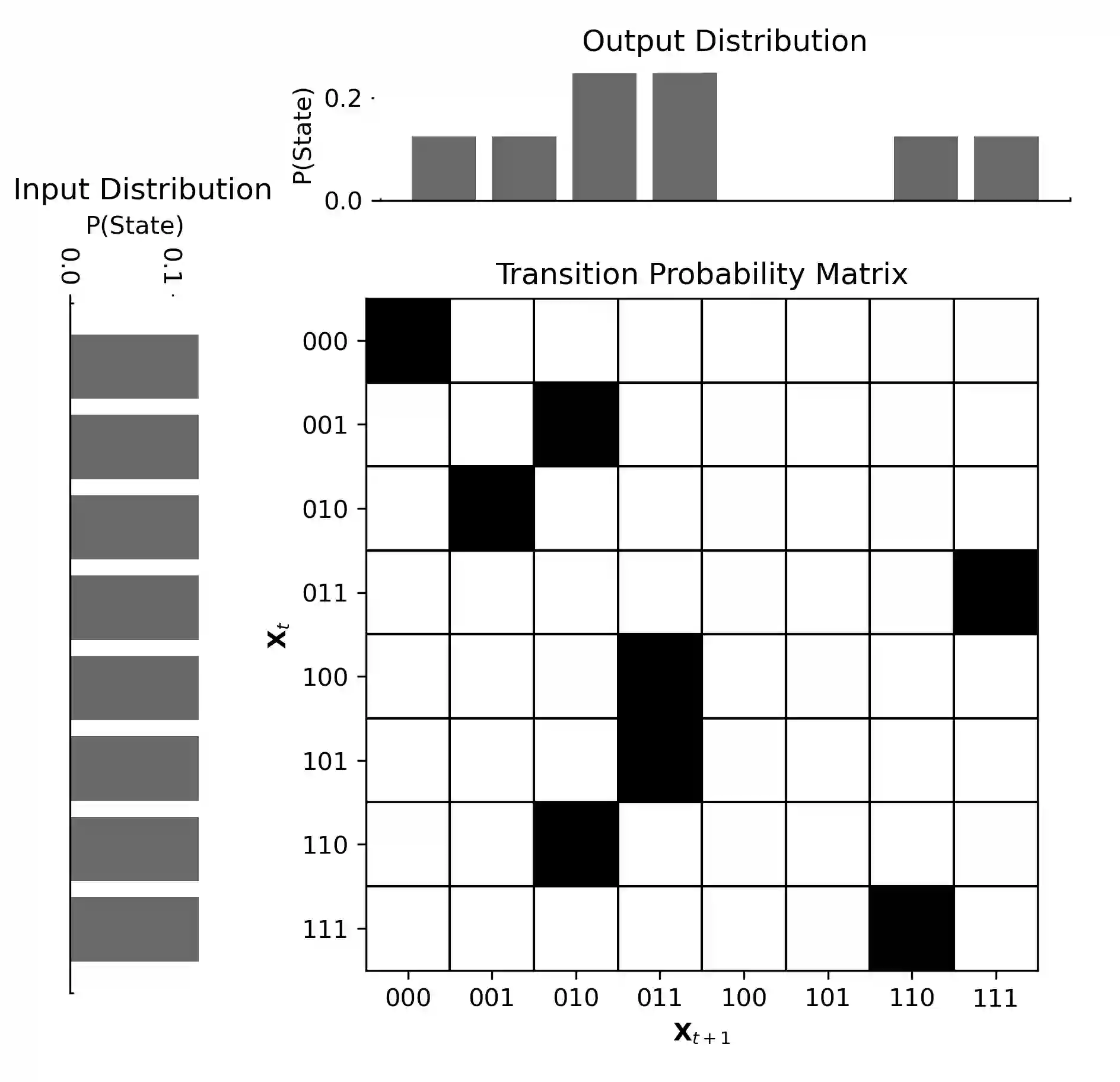
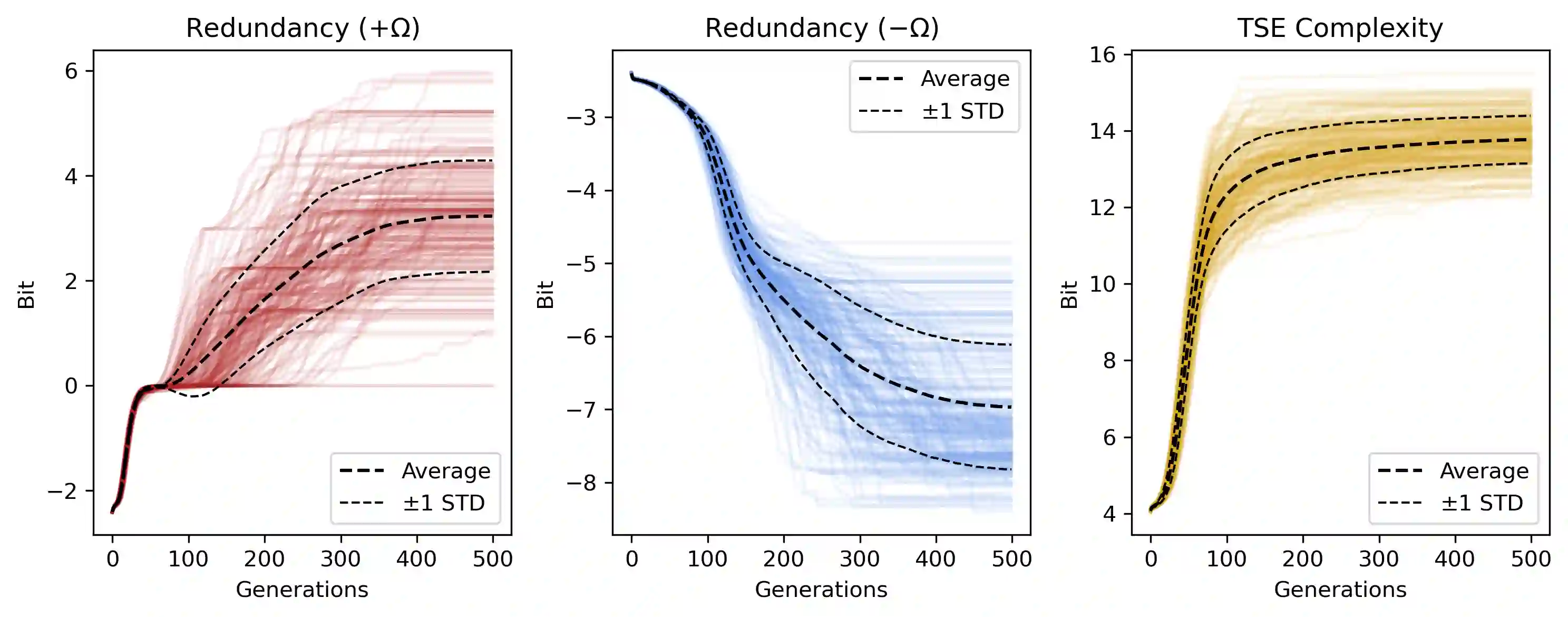
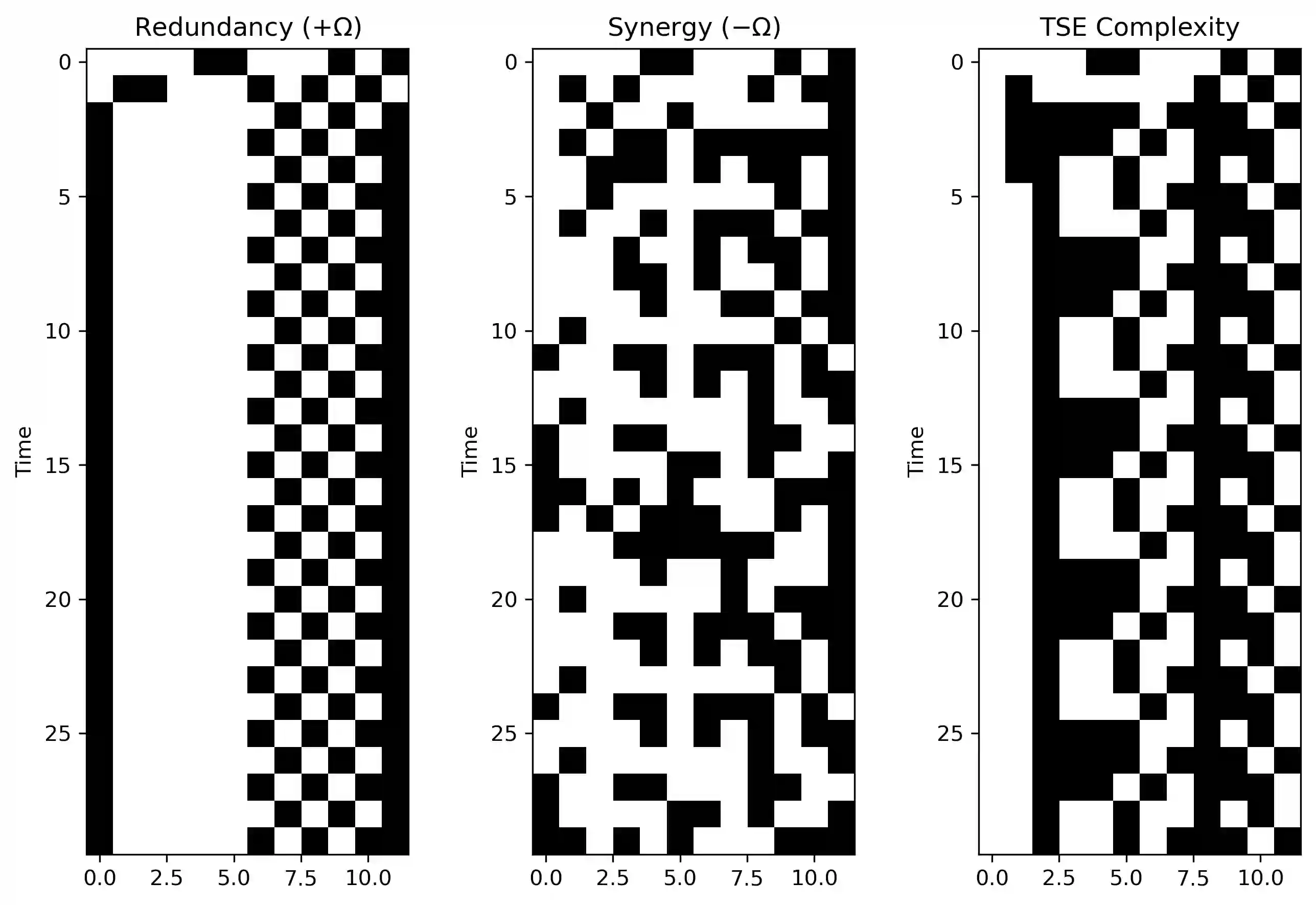
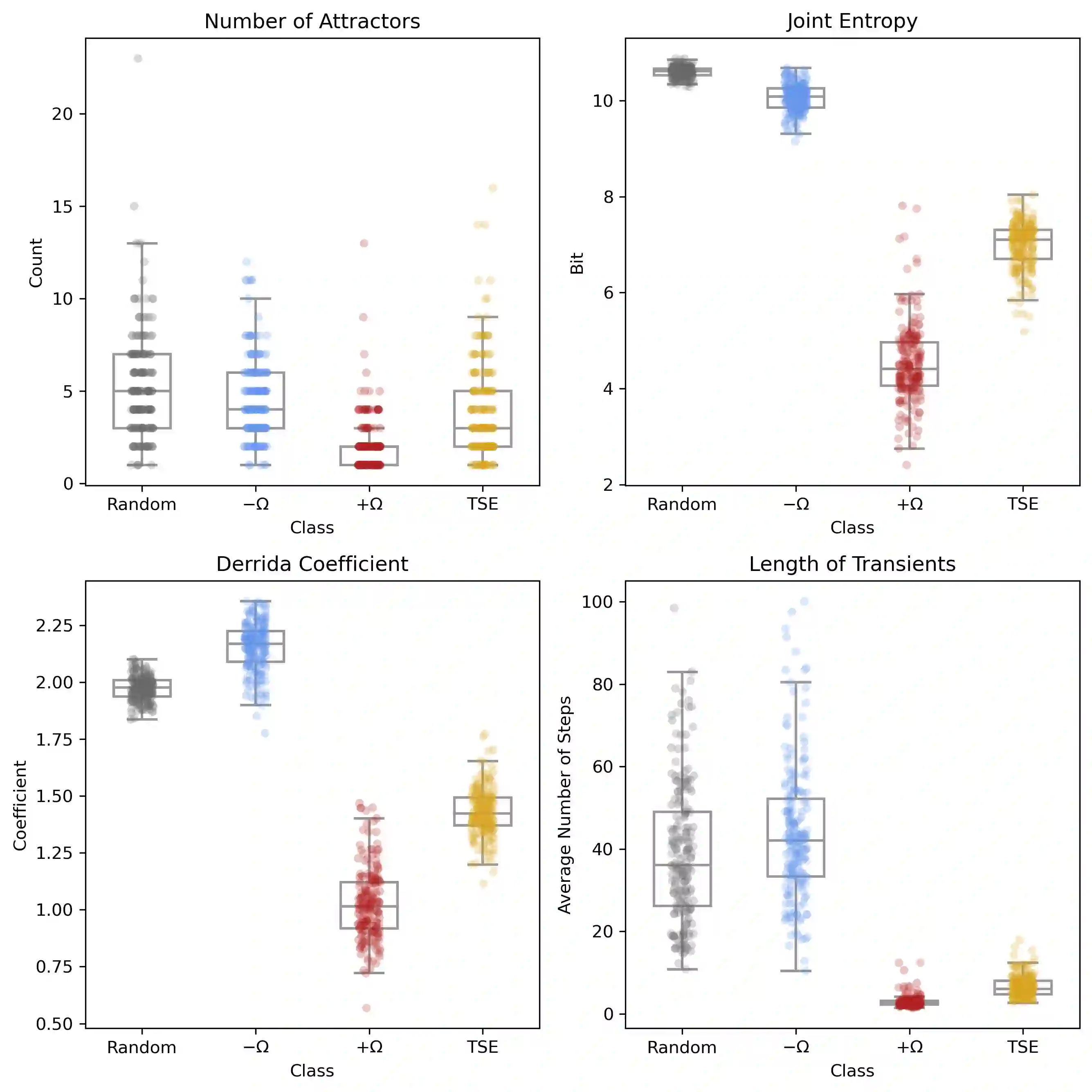
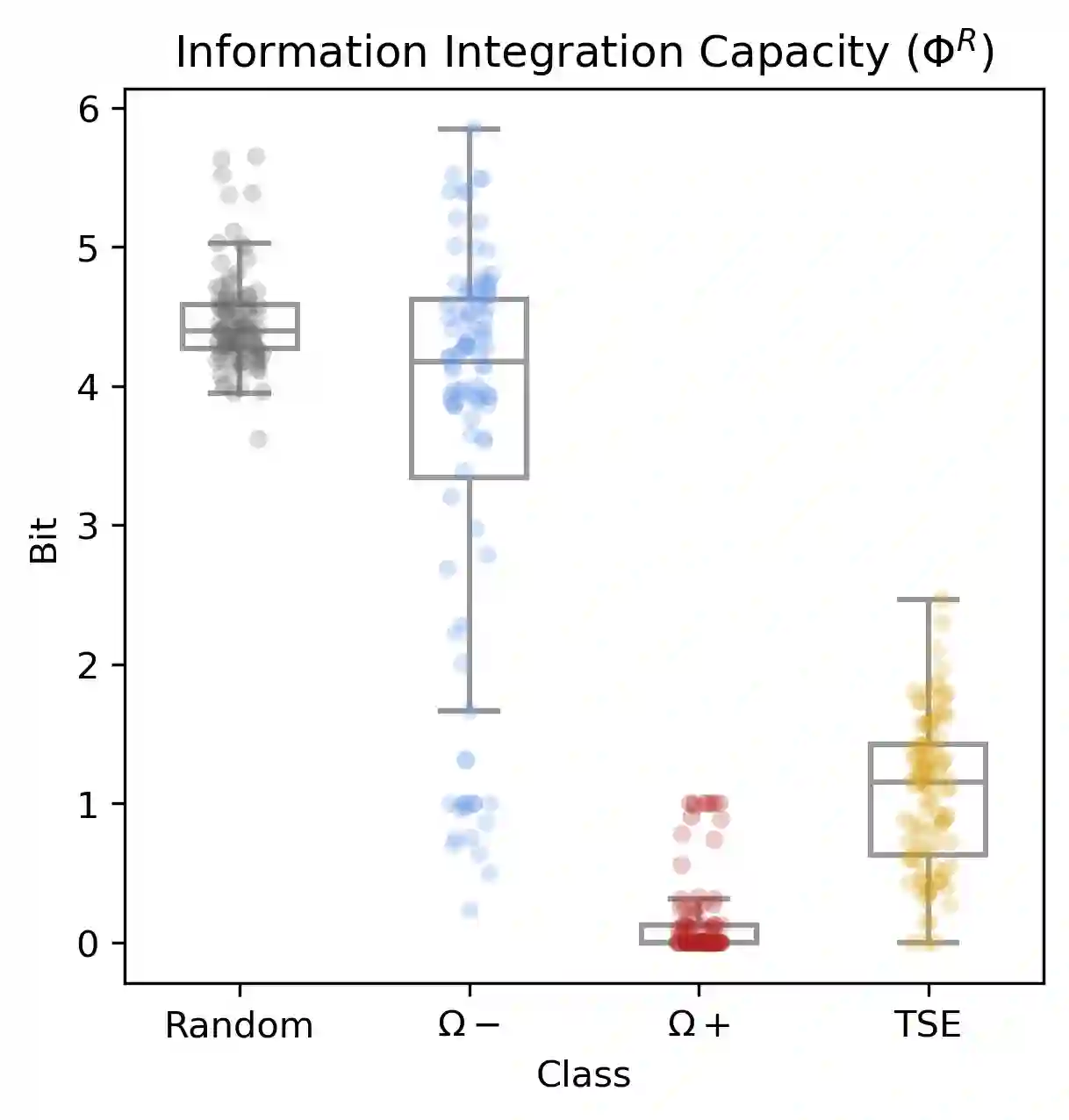
There has recently been an explosion of interest in how "higher-order" structures emerge in complex systems. This "emergent" organization has been found in a variety of natural and artificial systems, although at present the field lacks a unified understanding of what the consequences of higher-order synergies and redundancies are for systems. Typical research treat the presence (or absence) of synergistic information as a dependent variable and report changes in the level of synergy in response to some change in the system. Here, we attempt to flip the script: rather than treating higher-order information as a dependent variable, we use evolutionary optimization to evolve boolean networks with significant higher-order redundancies, synergies, or statistical complexity. We then analyse these evolved populations of networks using established tools for characterizing discrete dynamics: the number of attractors, average transient length, and Derrida coefficient. We also assess the capacity of the systems to integrate information. We find that high-synergy systems are unstable and chaotic, but with a high capacity to integrate information. In contrast, evolved redundant systems are extremely stable, but have negligible capacity to integrate information. Finally, the complex systems that balance integration and segregation (known as Tononi-Sporns-Edelman complexity) show features of both chaosticity and stability, with a greater capacity to integrate information than the redundant systems while being more stable than the random and synergistic systems. We conclude that there may be a fundamental trade-off between the robustness of a systems dynamics and its capacity to integrate information (which inherently requires flexibility and sensitivity), and that certain kinds of complexity naturally balance this trade-off.
翻译:近年来,复杂系统中“高阶”结构的涌现引发了广泛关注。这种“涌现性”组织已在多种自然与人工系统中被发现,但当前领域尚缺乏对高阶协同与冗余对系统后果的统一理解。典型研究将协同信息的存在(或缺失)作为因变量,报告系统变化时协同水平的改变。本文尝试转换视角:不再将高阶信息视为因变量,而是利用进化优化方法演化出具有显著高阶冗余、协同或统计复杂性的布尔网络。随后,我们采用刻画离散动力学的经典工具分析这些演化后的网络种群:吸引子数量、平均暂态长度以及德里达系数。同时,我们还评估系统整合信息的能力。研究发现:高协同系统虽不稳定且呈现混沌特征,却具备强大的信息整合能力;相反,演化出的冗余系统极其稳定,但信息整合能力微乎其微;最后,平衡整合与分离的复杂系统(即Tononi-Sporns-Edelman复杂性)兼具混沌与稳定性特征,其信息整合能力优于冗余系统,同时比随机系统和协同系统更加稳定。我们得出结论:系统动力学的鲁棒性与其信息整合能力(本质上需要灵活性与敏感性)之间可能存在根本性权衡,而特定类型的复杂性能够自然平衡这一权衡。




相关内容




 微信扫码咨询专知VIP会员