

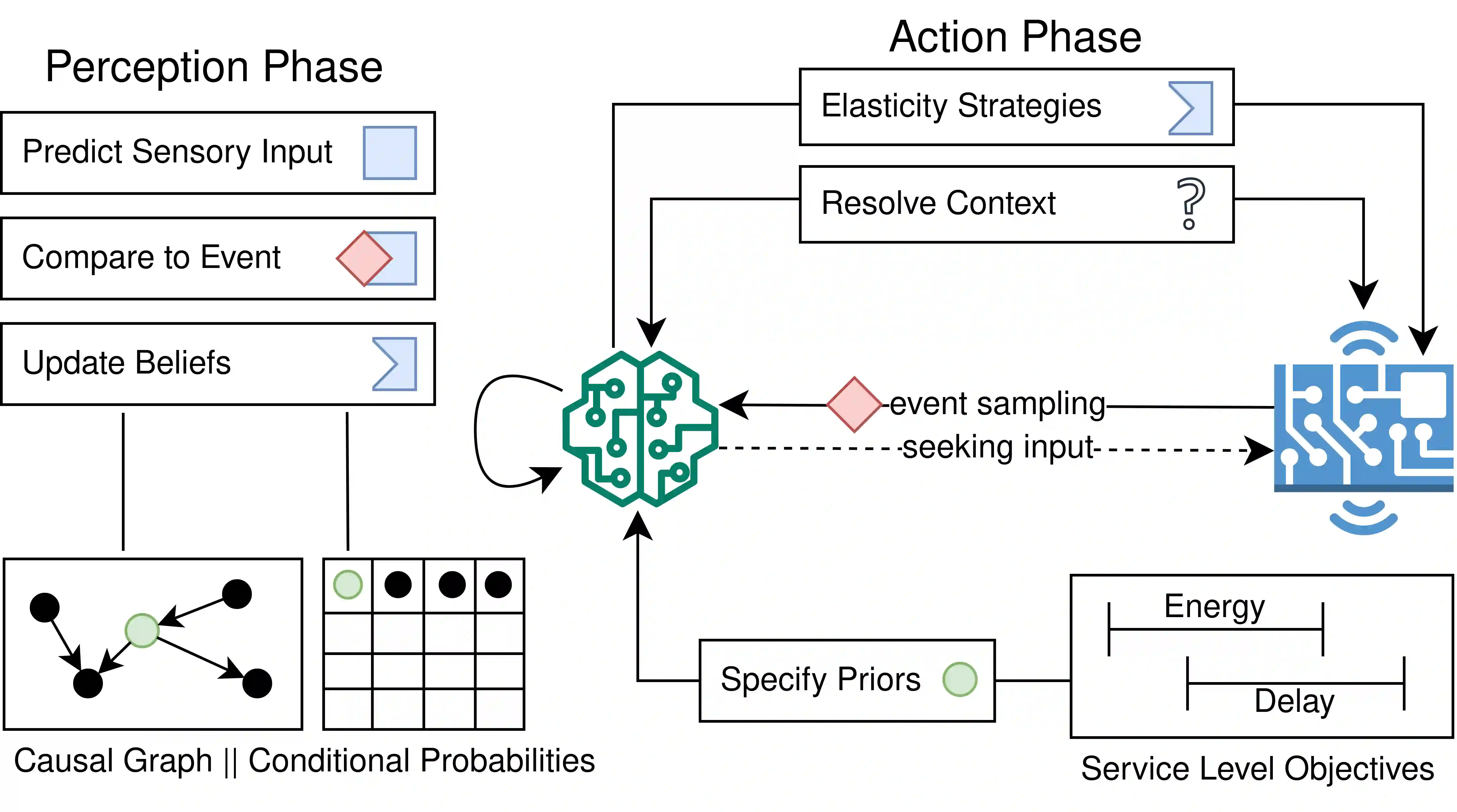
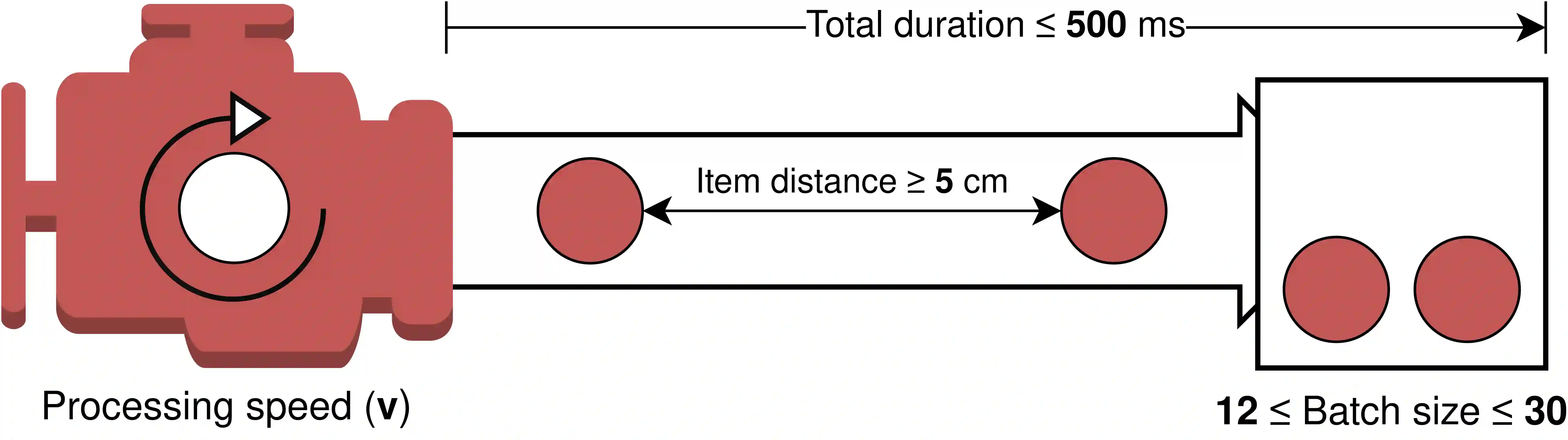
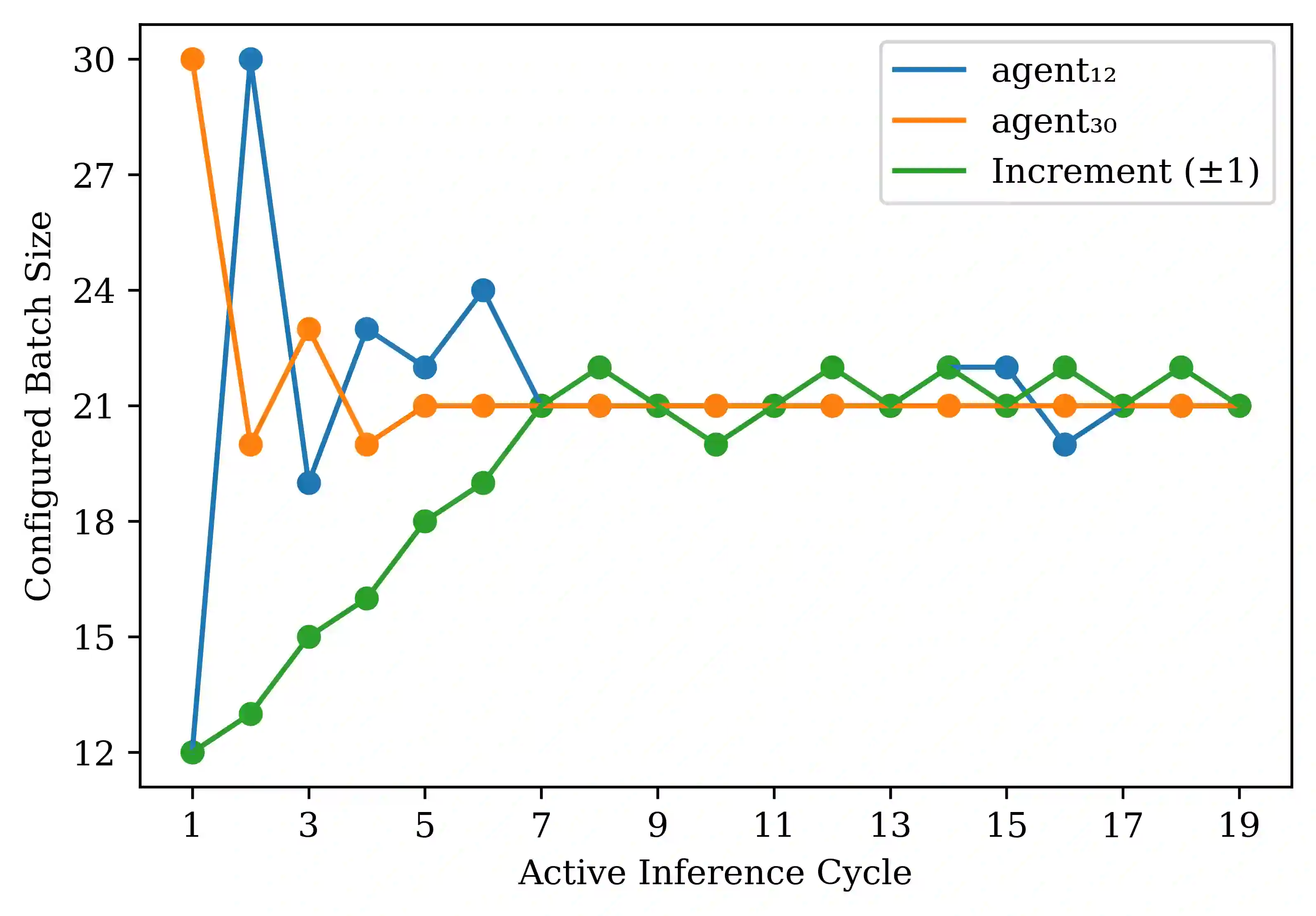
Machine Learning (ML) is a common tool to interpret and predict the behavior of distributed computing systems, e.g., to optimize the task distribution between devices. As more and more data is created by Internet of Things (IoT) devices, data processing and ML training are carried out by edge devices in close proximity. To ensure Quality of Service (QoS) throughout these operations, systems are supervised and dynamically adapted with the help of ML. However, as long as ML models are not retrained, they fail to capture gradual shifts in the variable distribution, leading to an inaccurate view of the system state. Moreover, as the prediction accuracy decreases, the reporting device should actively resolve uncertainties to improve the model's precision. Such a level of self-determination could be provided by Active Inference (ACI) -- a concept from neuroscience that describes how the brain constantly predicts and evaluates sensory information to decrease long-term surprise. We encompassed these concepts in a single action-perception cycle, which we implemented for distributed agents in a smart manufacturing use case. As a result, we showed how our ACI agent was able to quickly and traceably solve an optimization problem while fulfilling QoS requirements.
翻译:机器学习(ML)是解释和预测分布式计算系统行为的常用工具,例如用于优化设备间的任务分配。随着物联网(IoT)设备生成的数据日益增多,数据处理和 ML 训练由邻近的边缘设备执行。为确保这些操作过程中的服务质量(QoS),系统借助 ML 进行监控和动态调整。然而,如果 ML 模型未进行再训练,它们将无法捕捉变量分布中的渐进变化,导致对系统状态的视图不准确。此外,随着预测精度的下降,报告设备应主动解决不确定性以提高模型的精确度。这种程度的自决能力可由主动推理(ACI)提供——这是一种来自神经科学的概念,描述了大脑如何不断预测和评估感官信息以减少长期意外。我们在一个单一的动作-感知周期中囊括了这些概念,并在一个智能制造的用例中为分布式智能体实现了该周期。结果,我们展示了我们的 ACI 智能体如何在满足 QoS 要求的同时,快速且可追溯地解决一个优化问题。




相关内容


 微信扫码咨询专知VIP会员