

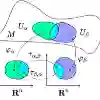
Information geometry is a study of statistical manifolds, that is, spaces of probability distributions from a geometric perspective. Its classical information-theoretic applications relate to statistical concepts such as Fisher information, sufficient statistics, and efficient estimators. Today, information geometry has emerged as an interdisciplinary field that finds applications in diverse areas such as radar sensing, array signal processing, quantum physics, deep learning, and optimal transport. This article presents an overview of essential information geometry to initiate an information theorist, who may be unfamiliar with this exciting area of research. We explain the concepts of divergences on statistical manifolds, generalized notions of distances, orthogonality, and geodesics, thereby paving the way for concrete applications and novel theoretical investigations. We also highlight some recent information-geometric developments, which are of interest to the broader information theory community.
翻译:信息几何是从几何视角研究统计流形(即概率分布空间)的学科。其经典信息论应用涉及费舍尔信息、充分统计量和有效估计量等统计概念。如今,信息几何已成为跨学科领域,在雷达探测、阵列信号处理、量子物理、深度学习及最优传输等领域均有应用。本文为可能不熟悉这一激动人心研究领域的信息论学者提供信息几何基础概述。我们阐释统计流形上的散度、广义距离概念、正交性和测地线,从而为具体应用和新型理论探索铺平道路。同时,本文还突显了近期信息几何领域的发展动向,这些发展对更广泛的信息论社群具有重要参考价值。




相关内容



 微信扫码咨询专知VIP会员