

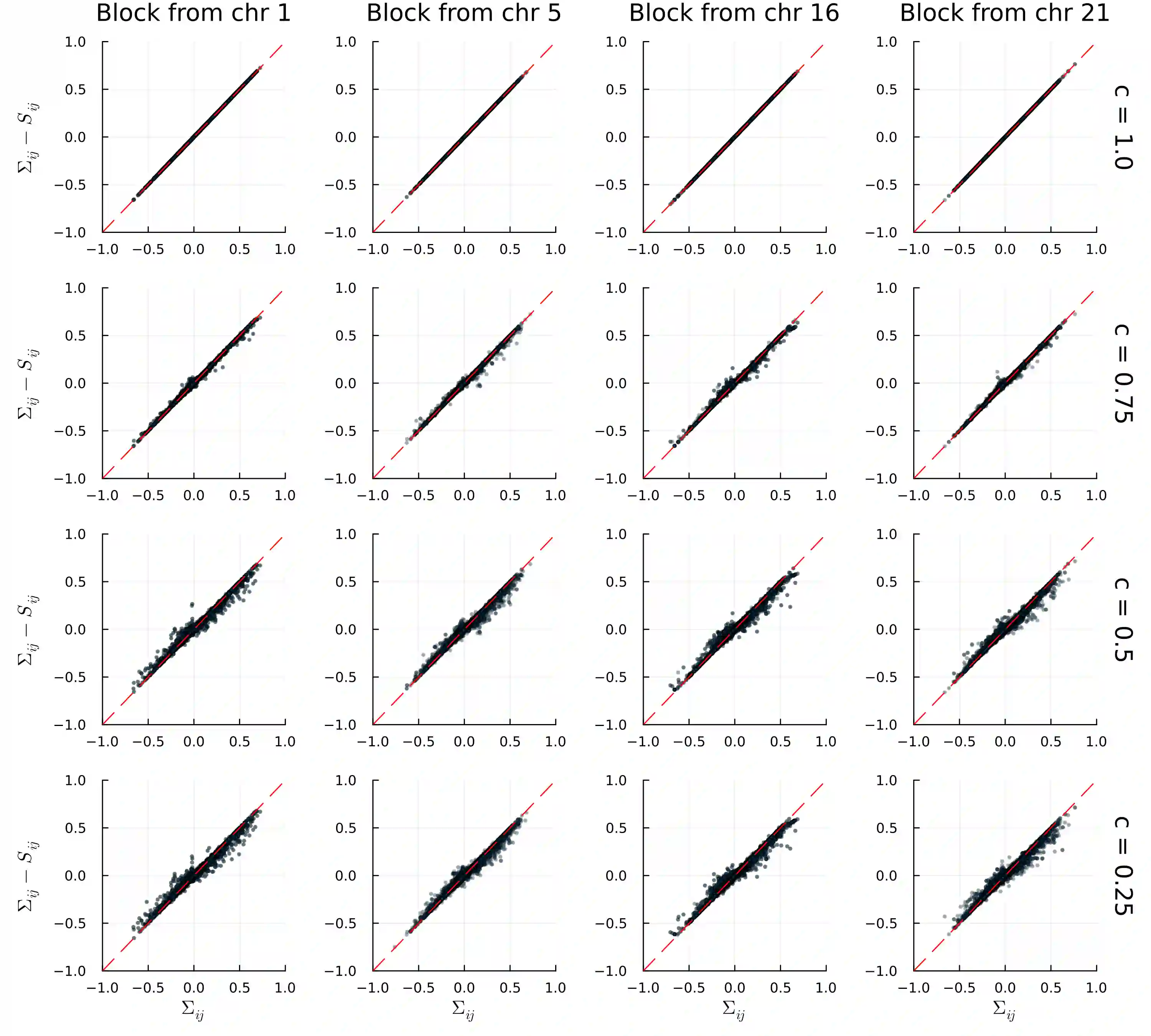
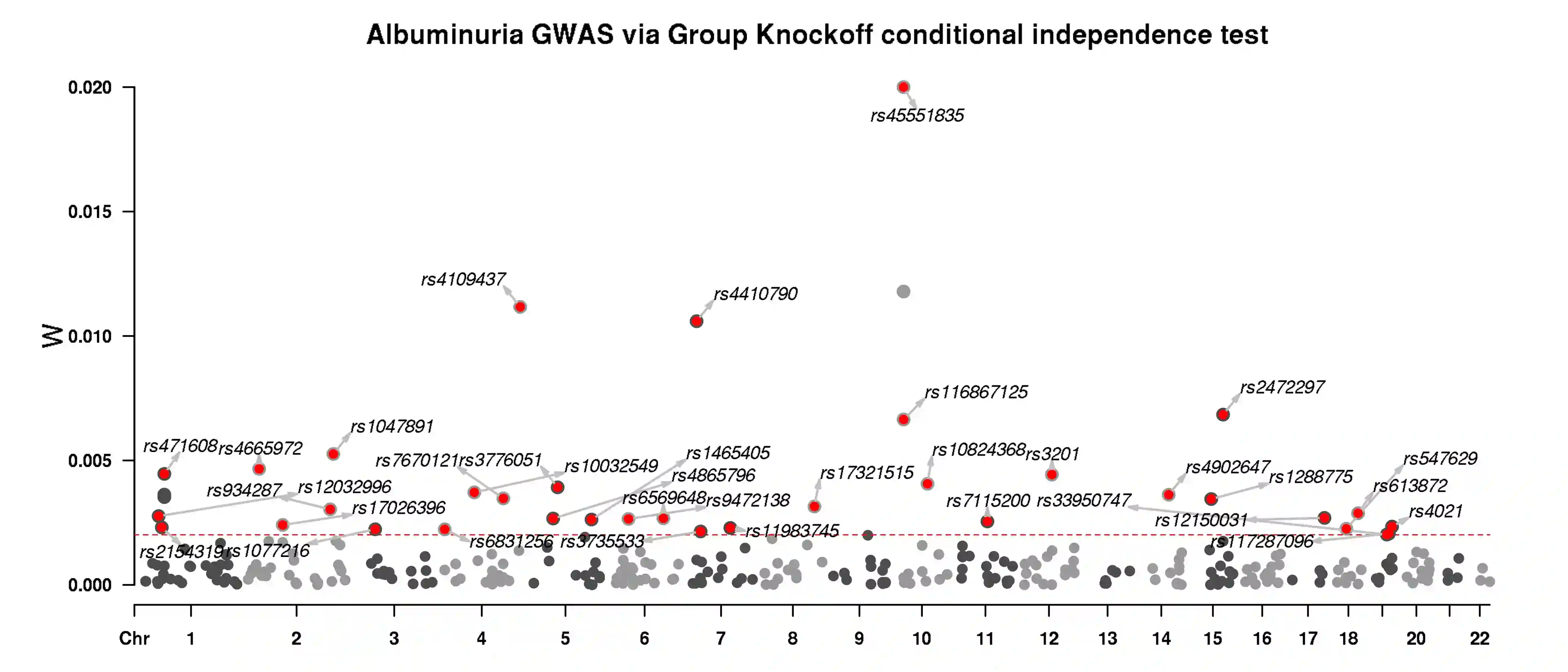
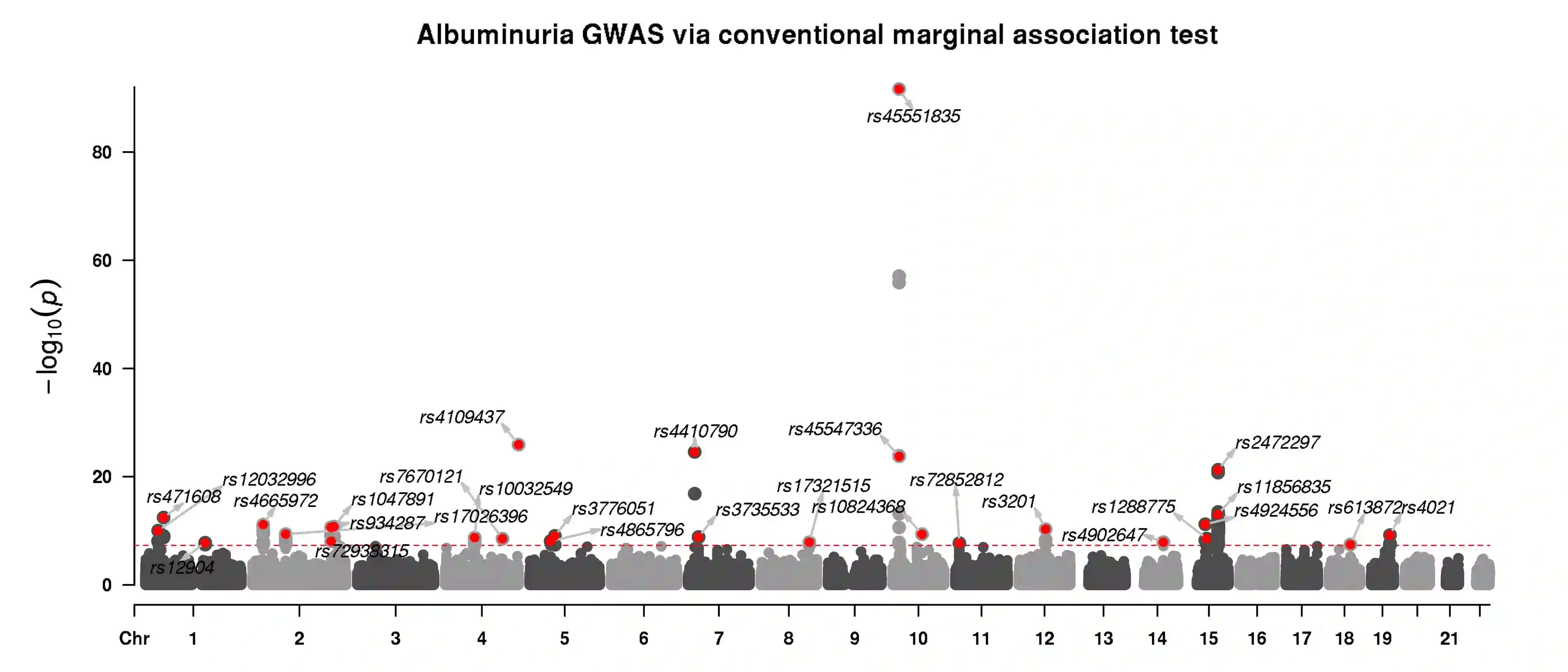
Conditional testing via the knockoff framework allows one to identify -- among large number of possible explanatory variables -- those that carry unique information about an outcome of interest, and also provides a false discovery rate guarantee on the selection. This approach is particularly well suited to the analysis of genome wide association studies (GWAS), which have the goal of identifying genetic variants which influence traits of medical relevance. While conditional testing can be both more powerful and precise than traditional GWAS analysis methods, its vanilla implementation encounters a difficulty common to all multivariate analysis methods: it is challenging to distinguish among multiple, highly correlated regressors. This impasse can be overcome by shifting the object of inference from single variables to groups of correlated variables. To achieve this, it is necessary to construct "group knockoffs." While successful examples are already documented in the literature, this paper substantially expands the set of algorithms and software for group knockoffs. We focus in particular on second-order knockoffs, for which we describe correlation matrix approximations that are appropriate for GWAS data and that result in considerable computational savings. We illustrate the effectiveness of the proposed methods with simulations and with the analysis of albuminuria data from the UK Biobank. The described algorithms are implemented in an open-source Julia package Knockoffs.jl, for which both R and Python wrappers are available.
翻译:基于knockoff框架的条件检验能够在大量解释变量中识别出那些对目标结果携带独特信息的变量,同时为选择过程提供错误发现率保证。该方法特别适用于全基因组关联研究(GWAS)的分析——这类研究旨在识别影响医学相关性状的遗传变异。虽然条件检验比传统GWAS分析方法更强大且更精确,但其标准实现面临所有多变量分析方法共有的难题:难以区分多个高度相关的回归变量。通过将推断目标从单个变量转向相关变量组,可以突破这一困境。要实现这一转变,需要构建"群体knockoff"。尽管文献中已有成功案例,但本文系统性地扩展了群体knockoff的算法与软件工具。我们重点研究二阶knockoff,针对GWAS数据特性描述了适用的相关矩阵近似方法,该方法可显著提升计算效率。通过模拟实验及英国生物样本库白蛋白尿数据的分析,我们验证了所提方法的有效性。所述的算法已在开源Julia包Knockoffs.jl中实现,并提供了R和Python接口。




相关内容




 微信扫码咨询专知VIP会员