

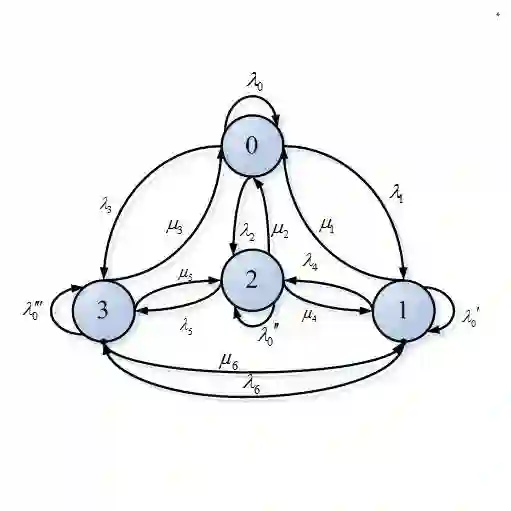
Human-machine interfaces (HMI) facilitate communication between humans and machines, and their importance has increased in modern technology. However, traditional HMIs are often static and do not adapt to individual user preferences or behavior. Adaptive User Interfaces (AUIs) have become increasingly important in providing personalized user experiences. Machine learning techniques have gained traction in User Experience (UX) research to provide smart adaptations that can reduce user cognitive load. This paper presents an ongoing exploration of a method for generating adaptive user interfaces by analyzing user interactions and contextual data. It also provides an illustrative example using Markov chains to predict the next step for users interacting with an app for an industrial mixing machine. Furthermore, the paper conducts an offline evaluation of the approach, focusing on the precision of the recommendations. The study emphasizes the importance of incorporating user interactions and contextual data into the design of adaptive HMIs, while acknowledging the existing challenges and potential benefits.
翻译:人机界面(HMI)实现人与机器之间的通信,其重要性在现代技术中日益凸显。然而,传统HMI通常是静态的,无法适应个体用户的偏好或行为。自适应用户界面(AUI)在提供个性化用户体验方面变得愈发重要。机器学习技术已在用户体验(UX)研究中得到广泛应用,通过提供智能自适应功能来降低用户认知负荷。本文探讨了一种通过分析用户交互与情境数据生成自适应用户界面的方法,并展示了初步探索成果。同时,以工业搅拌机应用程序为例,利用马尔可夫链预测用户下一步操作。此外,本文对该方法进行了离线评估,重点关注推荐的精确度。研究强调了将用户交互与情境数据纳入自适应HMI设计的重要性,同时指出了当前面临的挑战与潜在优势。




相关内容



 微信扫码咨询专知VIP会员