

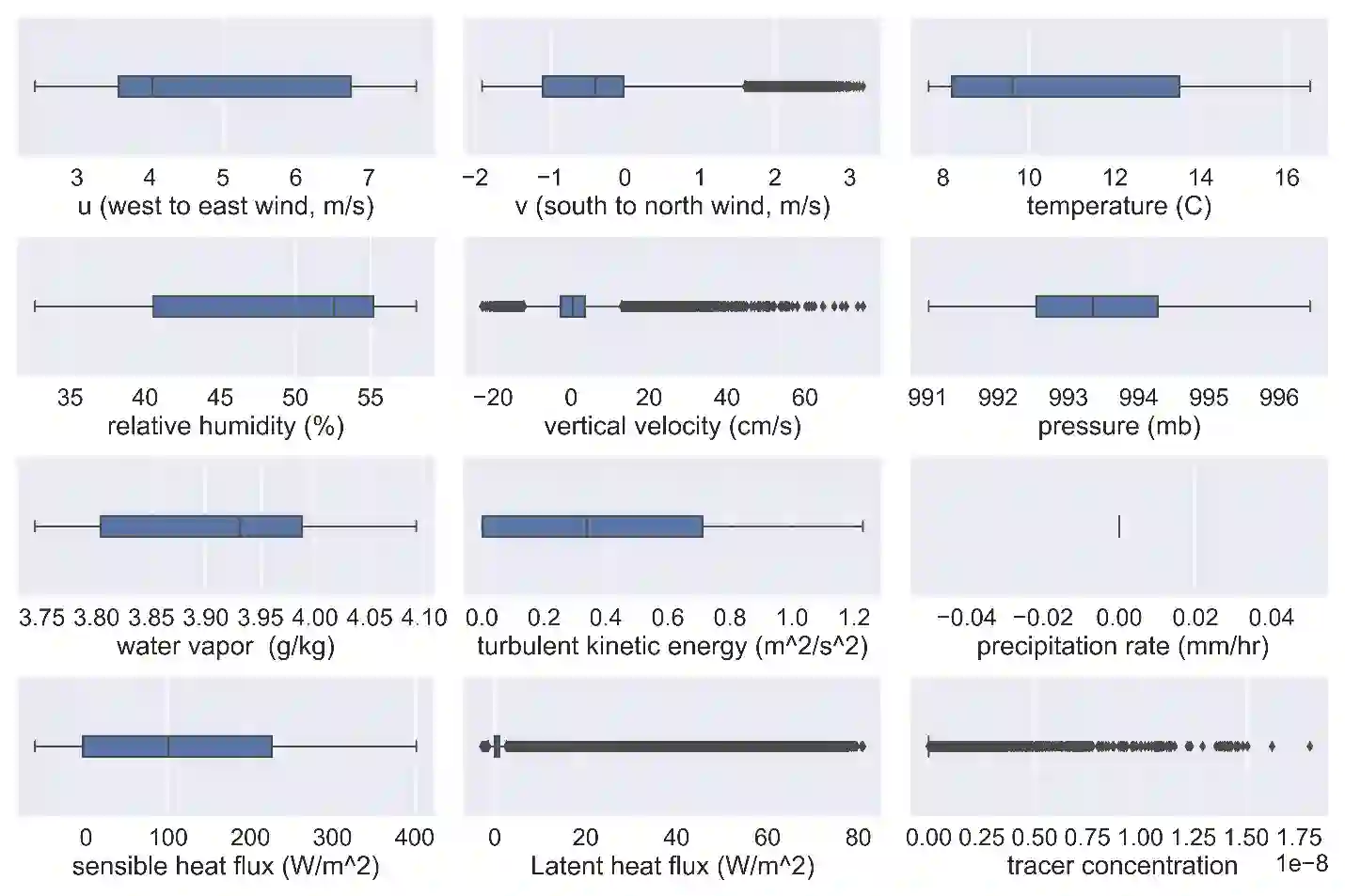
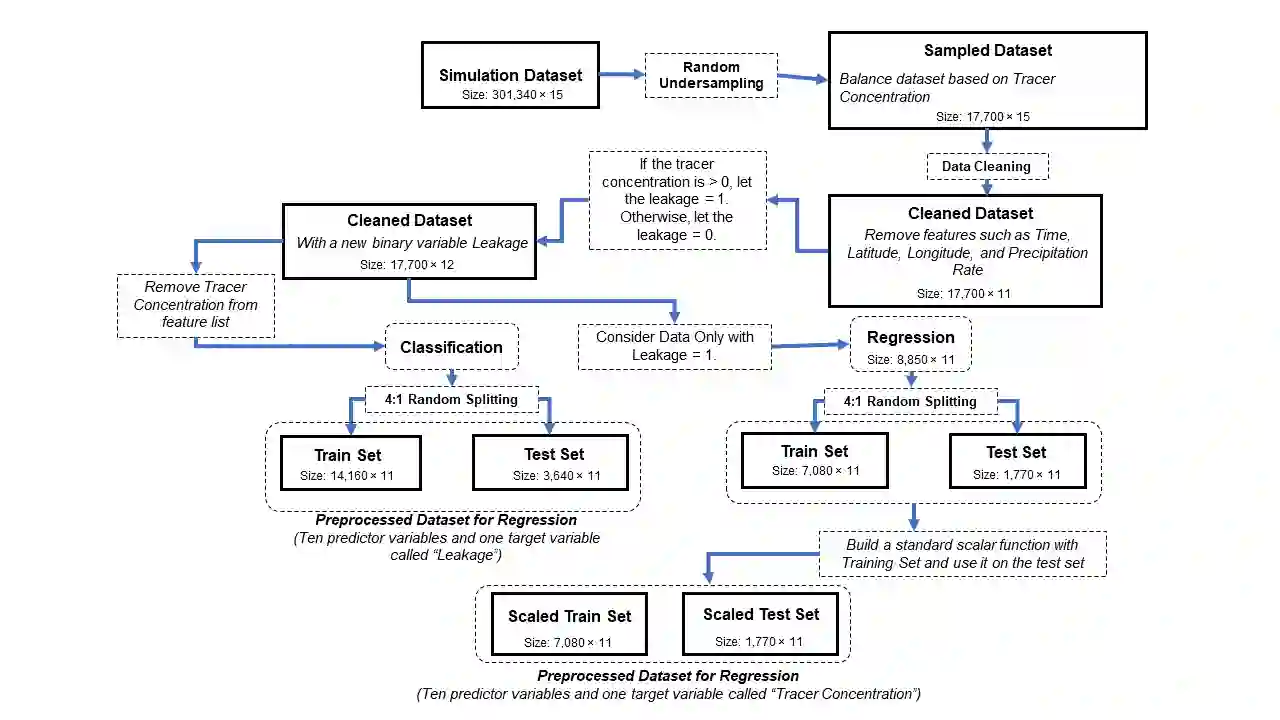
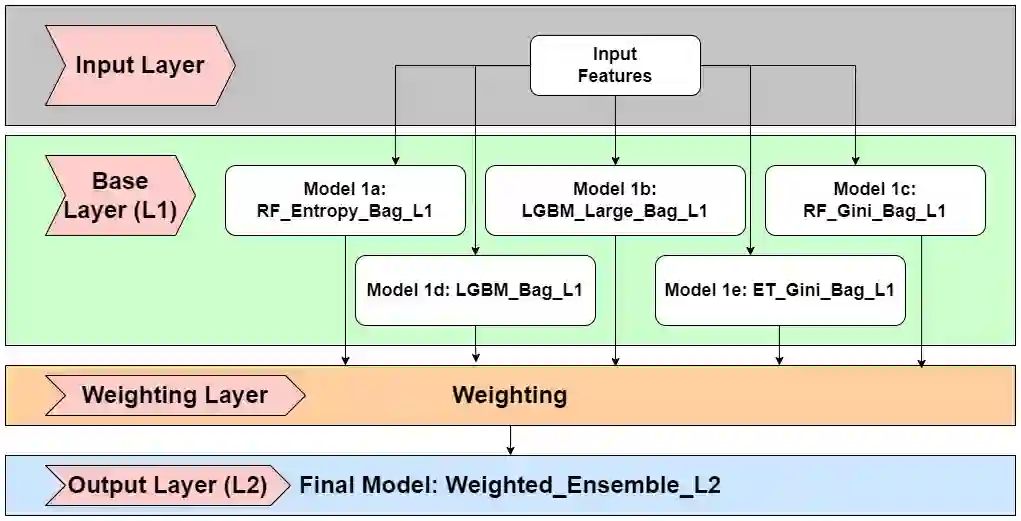
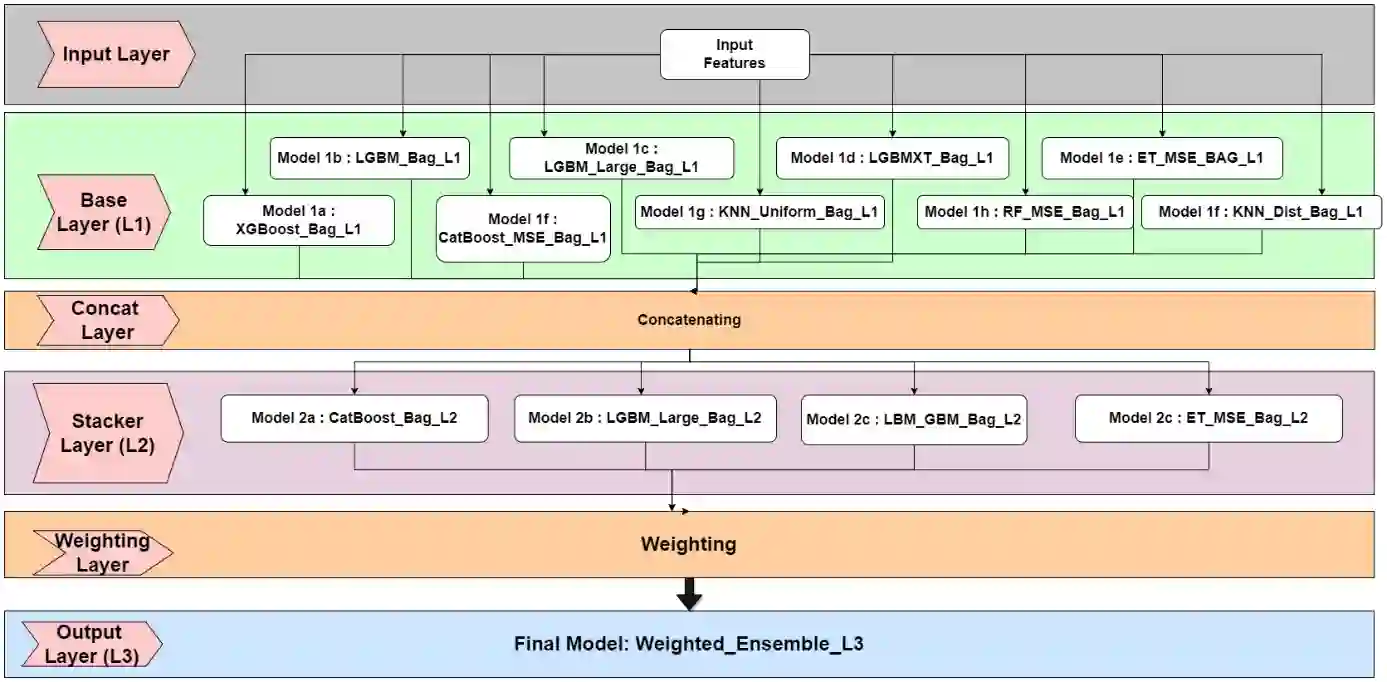
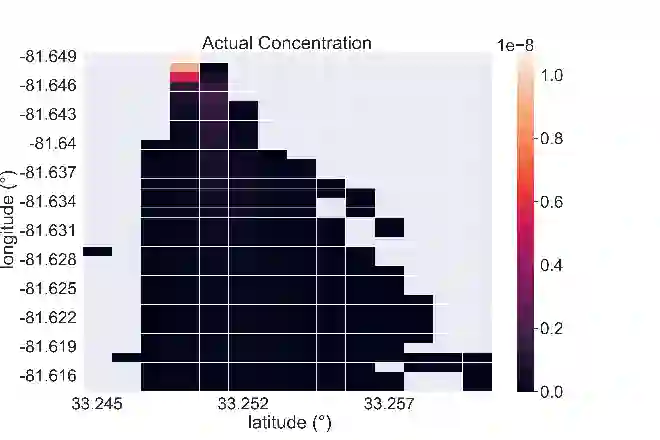
The environmental impacts of global warming driven by methane (CH4) emissions have catalyzed significant research initiatives in developing novel technologies that enable proactive and rapid detection of CH4. Several data-driven machine learning (ML) models were tested to determine how well they identified fugitive CH4 and its related intensity in the affected areas. Various meteorological characteristics, including wind speed, temperature, pressure, relative humidity, water vapor, and heat flux, were included in the simulation. We used the ensemble learning method to determine the best-performing weighted ensemble ML models built upon several weaker lower-layer ML models to (i) detect the presence of CH4 as a classification problem and (ii) predict the intensity of CH4 as a regression problem.
翻译:甲烷(CH4)排放驱动的全球变暖对环境的影响,催生了大量研究举措,致力于开发能够主动快速检测CH4的新型技术。本研究测试了多种数据驱动的机器学习模型,以评估它们识别受影响区域逸散CH4及其相关强度的能力。模拟过程中纳入了多种气象特征,包括风速、温度、气压、相对湿度、水汽和热通量。我们采用集成学习方法,构建了基于多个较弱底层机器学习模型的最佳性能加权集成模型,以实现:(i)将CH4存在检测作为分类问题进行处理;(ii)将CH4强度预测作为回归问题进行预测。




相关内容




 微信扫码咨询专知VIP会员