

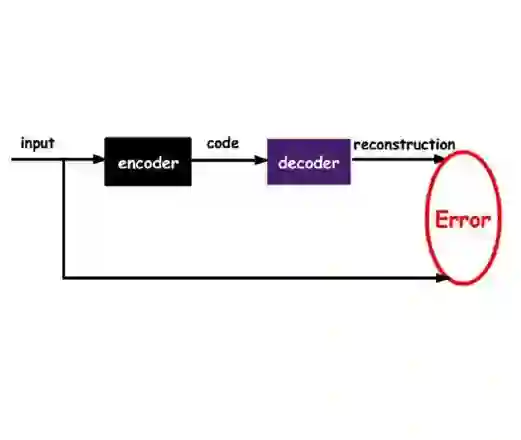
While recent research has made significant progress in speech-driven talking face generation, the quality of the generated video still lags behind that of real recordings. One reason for this is the use of handcrafted intermediate representations like facial landmarks and 3DMM coefficients, which are designed based on human knowledge and are insufficient to precisely describe facial movements. Additionally, these methods require an external pretrained model for extracting these representations, whose performance sets an upper bound on talking face generation. To address these limitations, we propose a novel method called DAE-Talker that leverages data-driven latent representations obtained from a diffusion autoencoder (DAE). DAE contains an image encoder that encodes an image into a latent vector and a DDIM image decoder that reconstructs the image from it. We train our DAE on talking face video frames and then extract their latent representations as the training target for a Conformer-based speech2latent model. This allows DAE-Talker to synthesize full video frames and produce natural head movements that align with the content of speech, rather than relying on a predetermined head pose from a template video. We also introduce pose modelling in speech2latent for pose controllability. Additionally, we propose a novel method for generating continuous video frames with the DDIM image decoder trained on individual frames, eliminating the need for modelling the joint distribution of consecutive frames directly. Our experiments show that DAE-Talker outperforms existing popular methods in lip-sync, video fidelity, and pose naturalness. We also conduct ablation studies to analyze the effectiveness of the proposed techniques and demonstrate the pose controllability of DAE-Talker.
翻译:尽管近期研究在语音驱动说话人脸生成方面取得了显著进展,但生成视频的质量仍落后于真实录制的视频。其中一个原因是现有方法使用基于人类知识设计的手工中间表征(如面部关键点和3DMM系数),这些表征不足以精确描述面部运动。此外,这类方法需要外部预训练模型来提取这些表征,而该模型的性能为说话人脸生成设定了上限。为解决这些局限,我们提出一种名为DAE-Talker的新方法,该方法利用从扩散自编码器(DAE)中获取的数据驱动隐空间表征。DAE包含一个将图像编码为隐向量的图像编码器,以及一个从隐向量重建图像的DDIM图像解码器。我们在说话人脸视频帧上训练DAE,然后提取其隐表征作为基于Conformer的语音转隐模型(speech2latent)的训练目标。这使得DAE-Talker能够合成完整视频帧,并生成与语音内容一致的自然头部运动,而非依赖模板视频预设的头部姿态。我们还在语音转隐模型中引入姿态建模以实现姿态可控性。此外,我们提出一种新方法——利用在单帧上训练的DDIM图像解码器生成连续视频帧,从而避免直接建模连续帧的联合分布。实验表明,DAE-Talker在唇形同步、视频保真度和姿态自然度方面均优于现有主流方法。我们还通过消融实验分析所提技术的有效性,并展示了DAE-Talker的姿态可控性。




相关内容


 微信扫码咨询专知VIP会员