

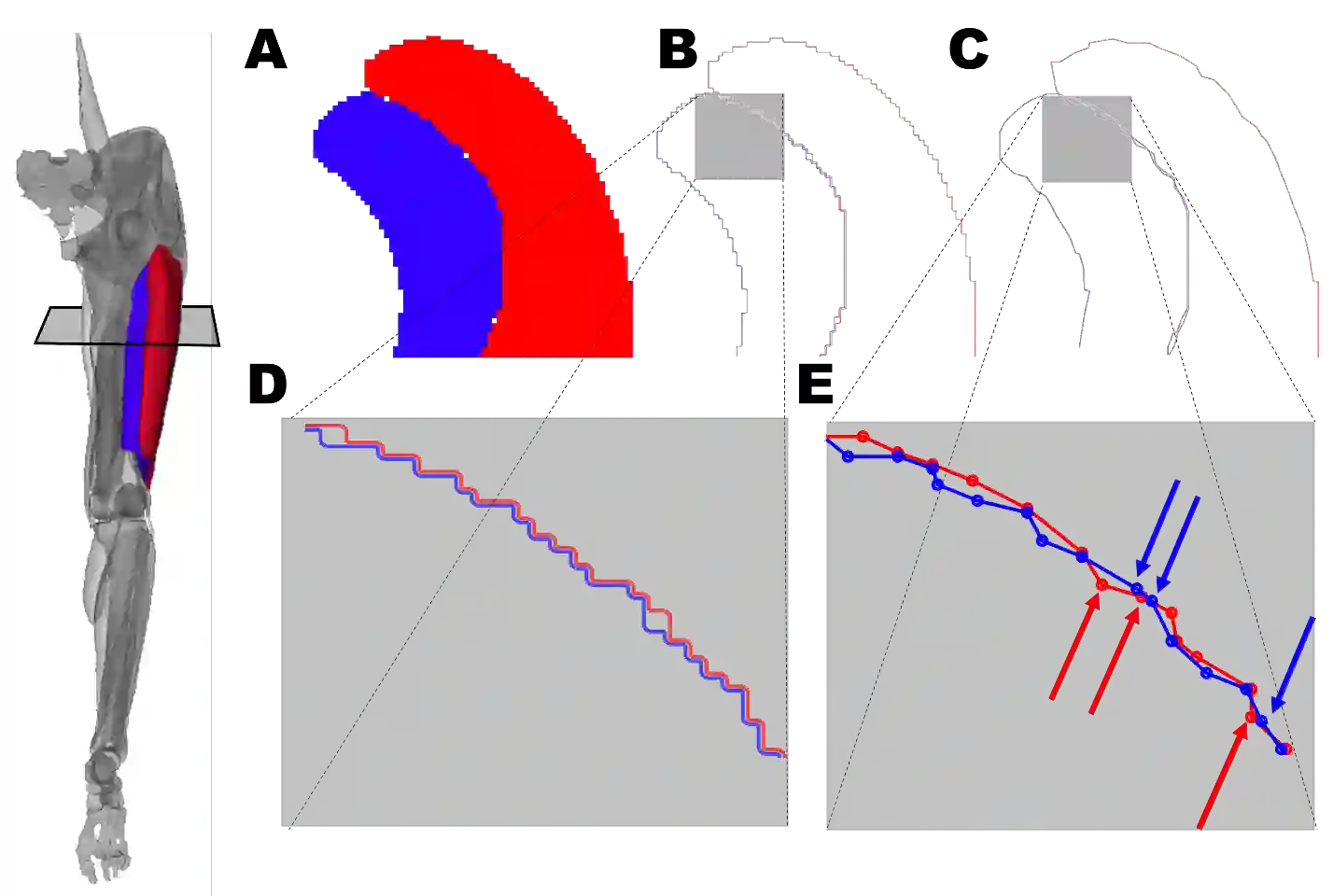
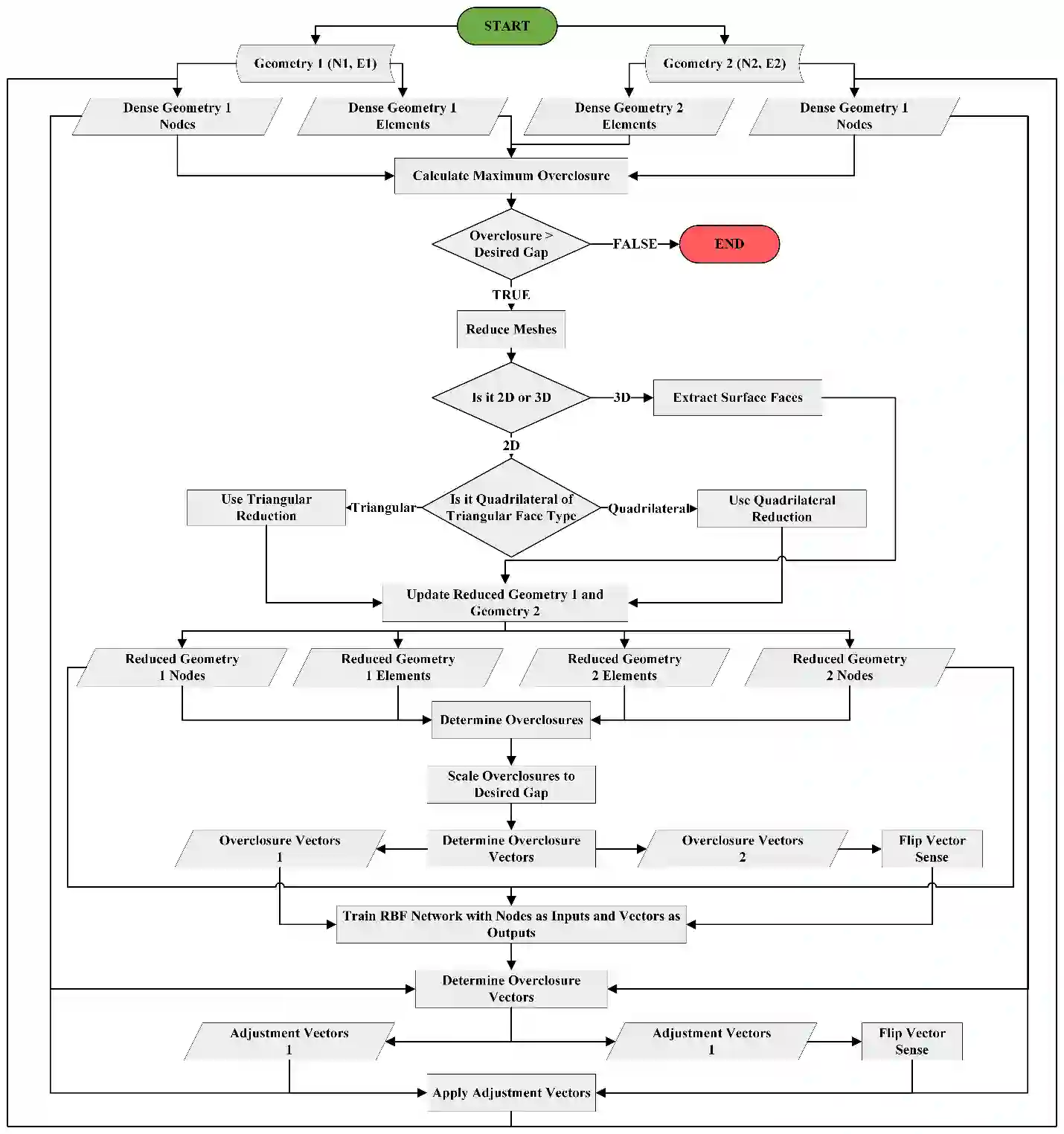
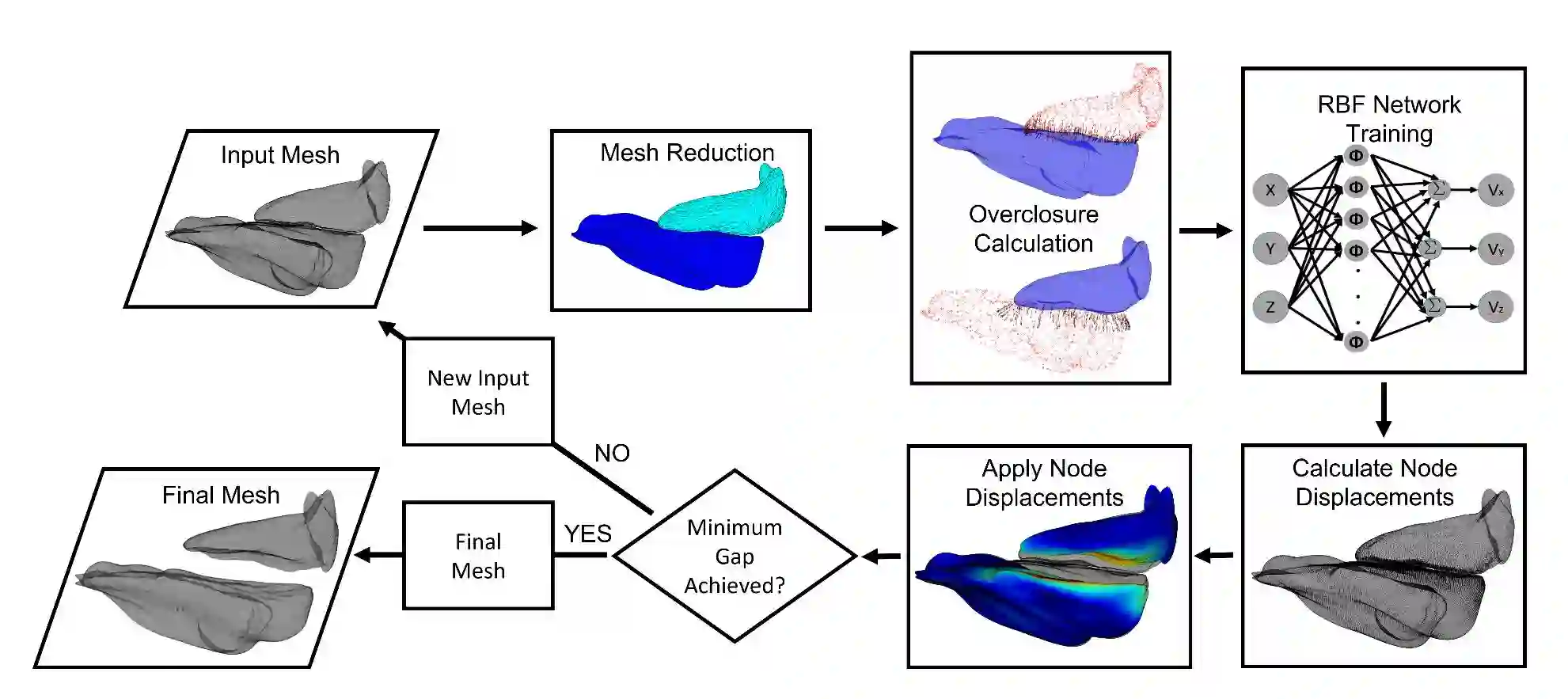
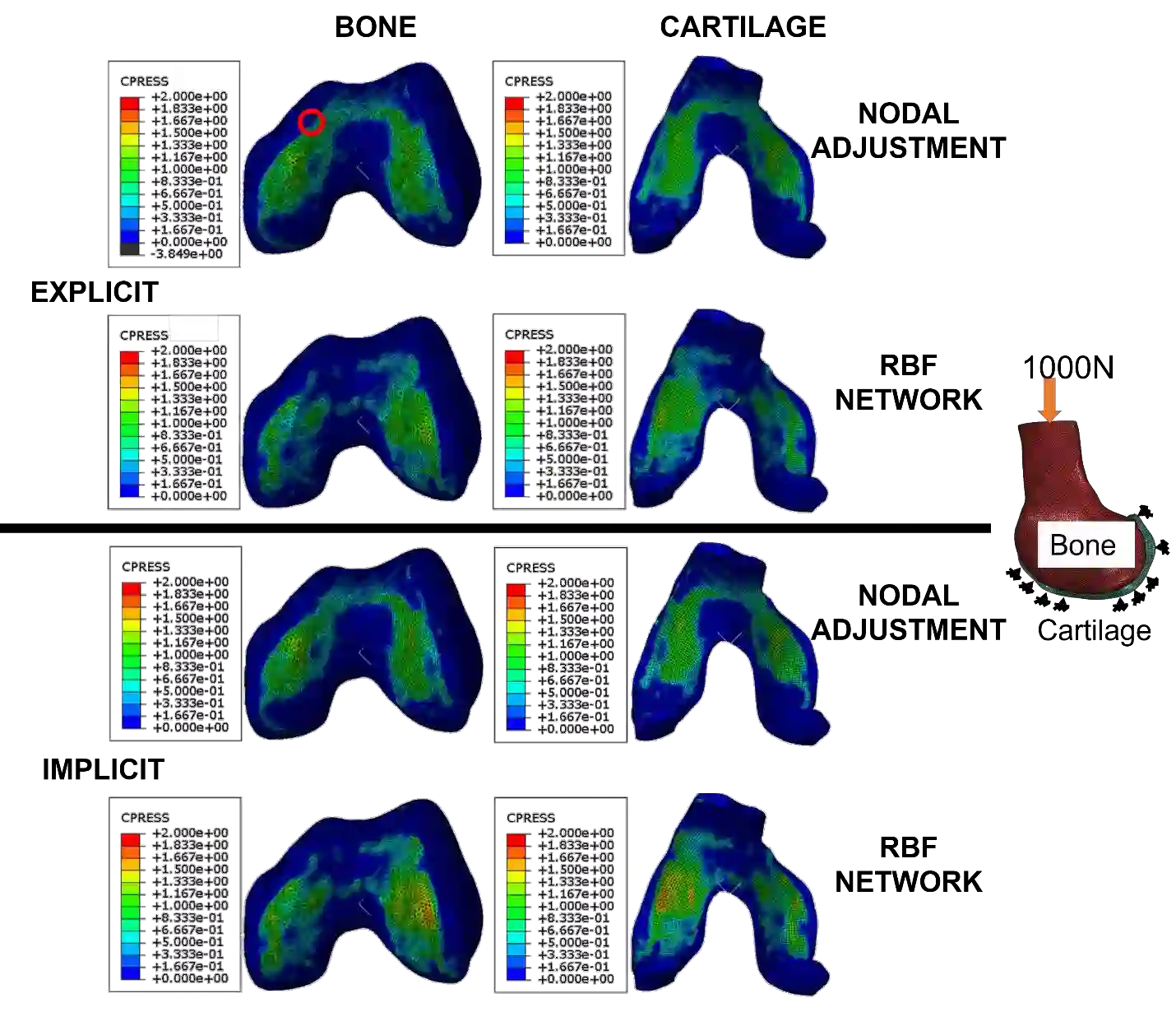
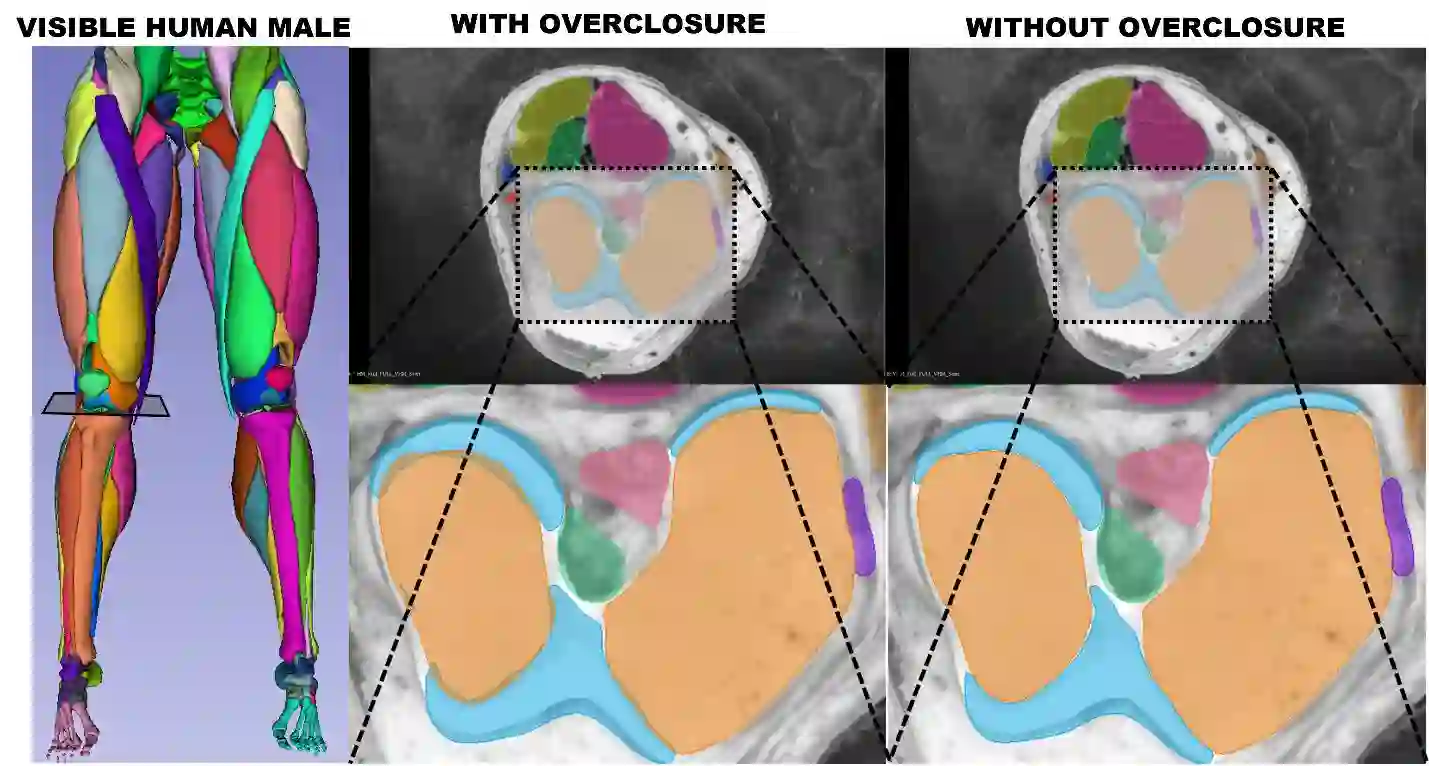
In biomechanics, geometries representing complicated organic structures are consistently segmented from sparse volumetric data or morphed from template geometries resulting in initial overclosure between adjacent geometries. In FEA, these overclosures result in numerical instability and inaccuracy as part of contact analysis. Several techniques exist to fix overclosures, but most suffer from several drawbacks. This work introduces a novel automated algorithm in an iterative process to remove overclosure and create a desired minimum gap for 2D and 3D finite element models. The RBF Network algorithm was introduced by its four major steps to remove the initial overclosure. Additionally, the algorithm was validated using two test cases against conventional nodal adjustment. The first case compared the ability of each algorithm to remove differing levels of overclosure between two deformable muscles and the effects on mesh quality. The second case used a non-deformable femur and deformable distal femoral cartilage geometry with initial overclosure to test both algorithms and observe the effects on the resulting contact FEA. The RBF Network in the first case study was successfully able to remove all overclosures. In the second case, the nodal adjustment method failed to create a usable FEA model, while the RBF Network had no such issue. This work proposed an algorithm to remove initial overclosures prior to FEA that has improved performance over conventional nodal adjustment, especially in complicated situations and those involving 3D elements. The work can be included in existing FEA modeling workflows to improve FEA results in situations involving sparse volumetric segmentation and mesh morphing. This algorithm has been implemented in MATLAB, and the source code is publicly available to download at the following GitHub repository: https://github.com/thor-andreassen/femors
翻译:在生物力学中,表示复杂有机结构的几何模型通常从稀疏体数据中分割或从模板几何形变得来,导致相邻几何体之间存在初始过盈。在有限元分析中,这些过盈会导致接触分析时的数值不稳定性与不准确性。目前存在多种修复过盈的技术,但多数存在若干缺陷。本研究提出一种新型自动化迭代算法,用于消除二维与三维有限元模型中的过盈并创建所需的最小间隙。通过四大主要步骤介绍了径向基函数网络算法以消除初始过盈。此外,该算法通过两个测试案例与传统节点调整方法进行了验证:第一个案例比较了两种算法在消除两个可变形肌肉间不同过盈程度及对网格质量的影响;第二个案例采用非可变形股骨与可变形股骨远端软骨几何间的初始过盈,测试两种算法并观察其对接触有限元分析结果的影响。在第一个案例中,径向基函数网络成功消除了所有过盈;在第二个案例中,节点调整方法未能生成可用的有限元模型,而径向基函数网络未出现此类问题。本研究提出的算法能在有限元分析前消除初始过盈,其性能优于传统节点调整方法,尤其在复杂情况及涉及三维单元的场景中。该算法可集成至现有有限元建模流程中,改善稀疏体分割与网格形变场景下的有限元分析结果。算法已基于MATLAB实现,源代码可通过以下GitHub仓库公开下载:https://github.com/thor-andreassen/femors




相关内容


 微信扫码咨询专知VIP会员