

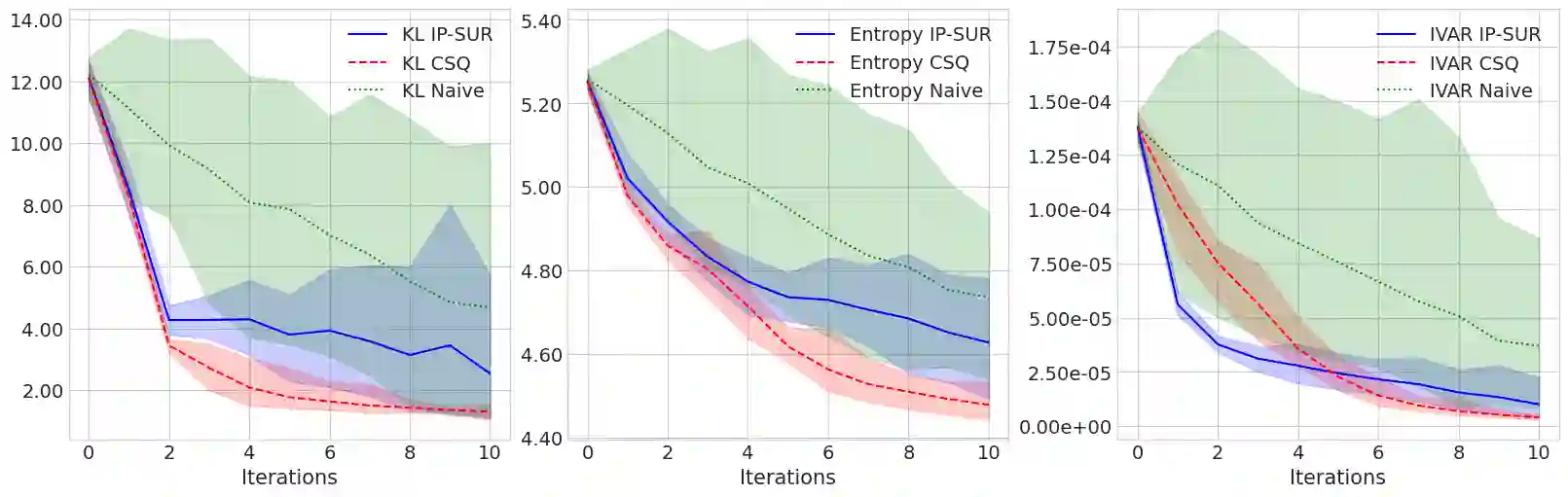
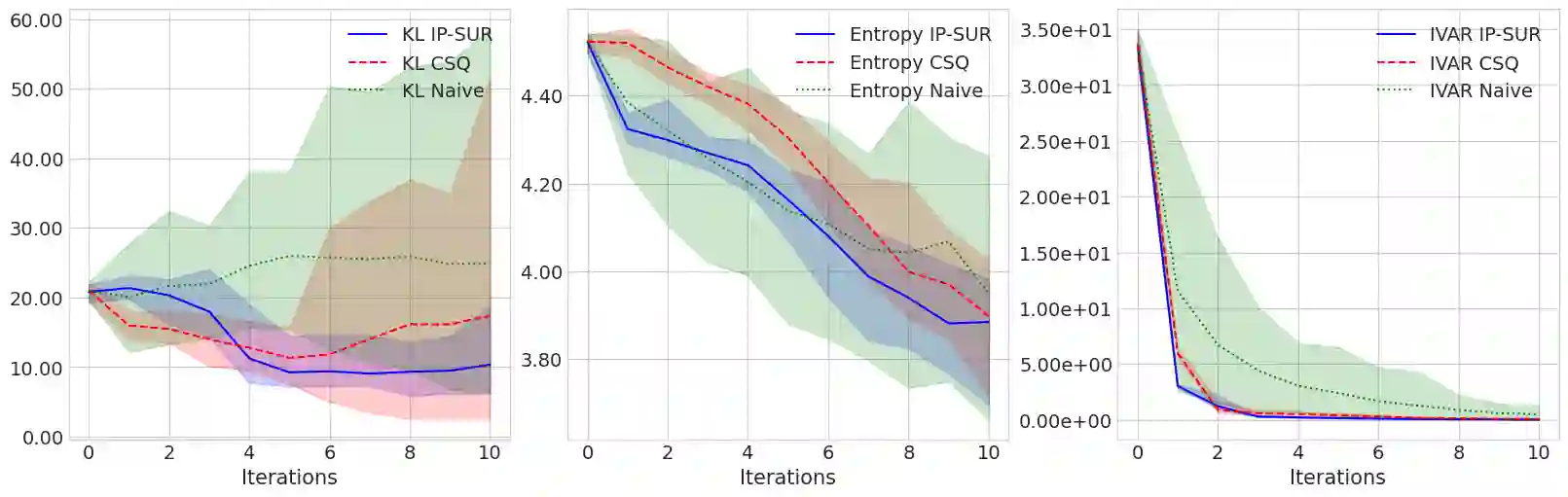
Sequential design is a highly active field of research in active learning which provides a general framework for the design of computer experiments to make the most of a low computational budget. It has been widely used to generate efficient surrogate models able to replace complex computer codes, most notably for uncertainty quantification, Bayesian optimization, reliability analysis or model calibration tasks. In this work, a sequential design strategy is developed for Bayesian inverse problems, in which a Gaussian process surrogate model serves as an emulator for a costly computer code. The proposed strategy is based on a goal-oriented I-optimal criterion adapted to the Stepwise Uncertainty Reduction (SUR) paradigm. In SUR strategies, a new design point is chosen by minimizing the expectation of an uncertainty metric with respect to the yet unknown new data point. These methods have attracted increasing interest as they provide an accessible framework for the sequential design of experiments while including almost-sure convergence for the most-widely used metrics. In this paper, a weighted integrated mean square prediction error is introduced and serves as a metric of uncertainty for the newly proposed IP-SUR (Inverse Problem Stepwise Uncertainty Reduction) sequential design strategy derived from SUR methods. This strategy is shown to be tractable for both scalar and multi-output Gaussian process surrogate models with continuous sample paths, and comes with theoretical guarantee for the almost-sure convergence of the metric of uncertainty. The premises of this work are highlighted on various test cases in which the newly derived strategy is compared to other naive and sequential designs (D-optimal designs, Bayes risk minimization).
翻译:序贯设计是主动学习中一个高度活跃的研究领域,它为计算机实验设计提供了通用框架,以最大化利用有限计算预算。该方法已被广泛用于生成能够替代复杂计算机代码的高效替代模型,尤其是在不确定性量化、贝叶斯优化、可靠性分析或模型校准任务中。本文针对贝叶斯逆问题提出了一种序贯设计策略,其中高斯过程替代模型作为高成本计算机代码的仿真器。该策略基于面向目标的I-最优准则,并适应逐步不确定性降低(SUR)范式。在SUR策略中,通过最小化关于未知新数据点的不确定性度量的期望来选择新的设计点。这些方法因其为序贯实验设计提供了可访问框架,同时包含最广泛使用度量的几乎必然收敛性而日益受到关注。本文引入加权积分均方预测误差作为不确定性度量,并基于SUR方法推导出新型IP-SUR(逆问题逐步不确定性降低)序贯设计策略。该策略对于具有连续样本路径的标量和多输出高斯过程替代模型均具有可处理性,并附带不确定性度量几乎必然收敛的理论保证。本文通过多个测试案例验证了该方法的优势,并将新推导策略与其他朴素序贯设计(D-最优设计、贝叶斯风险最小化)进行了比较。




相关内容





 微信扫码咨询专知VIP会员