

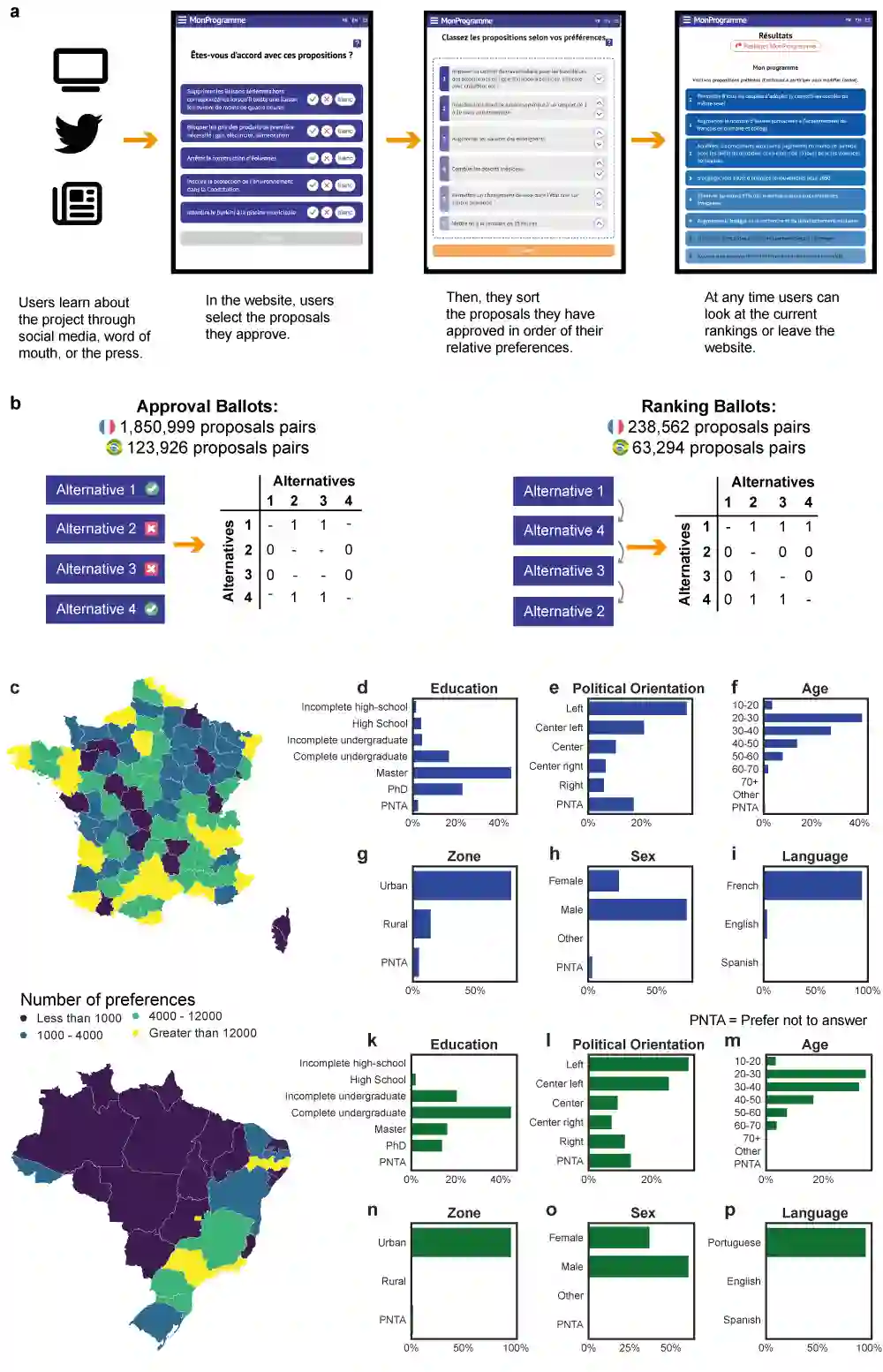
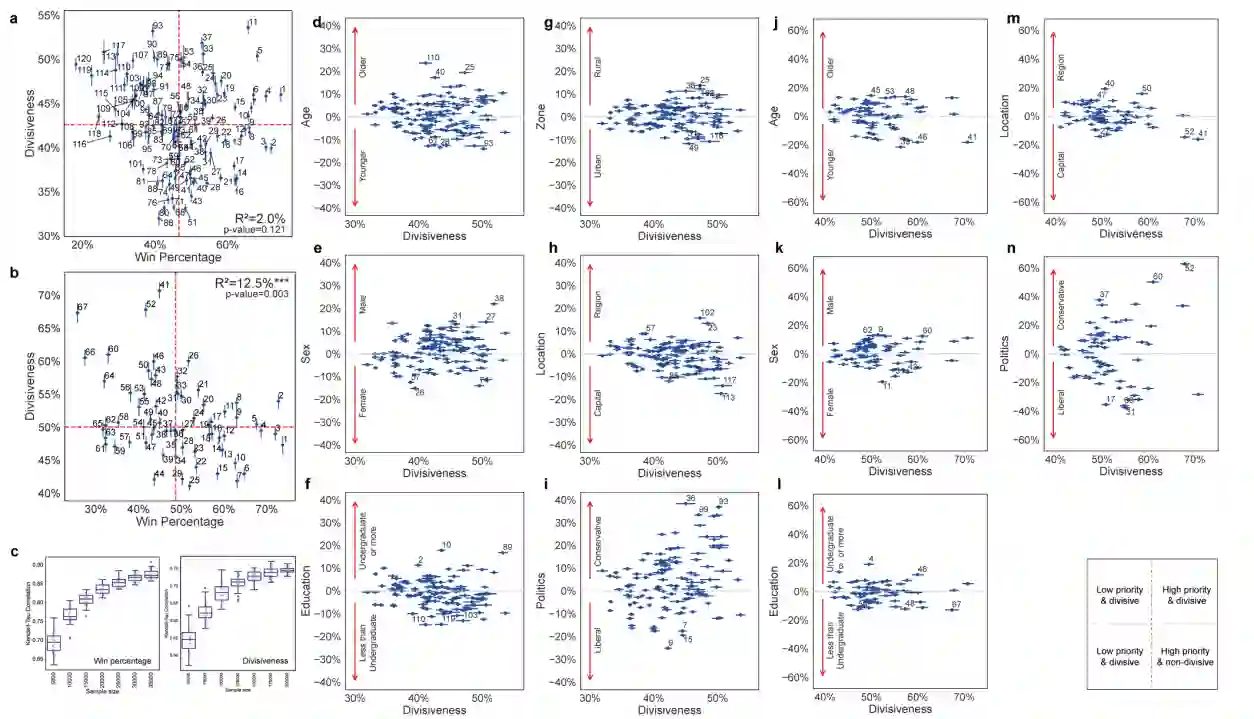
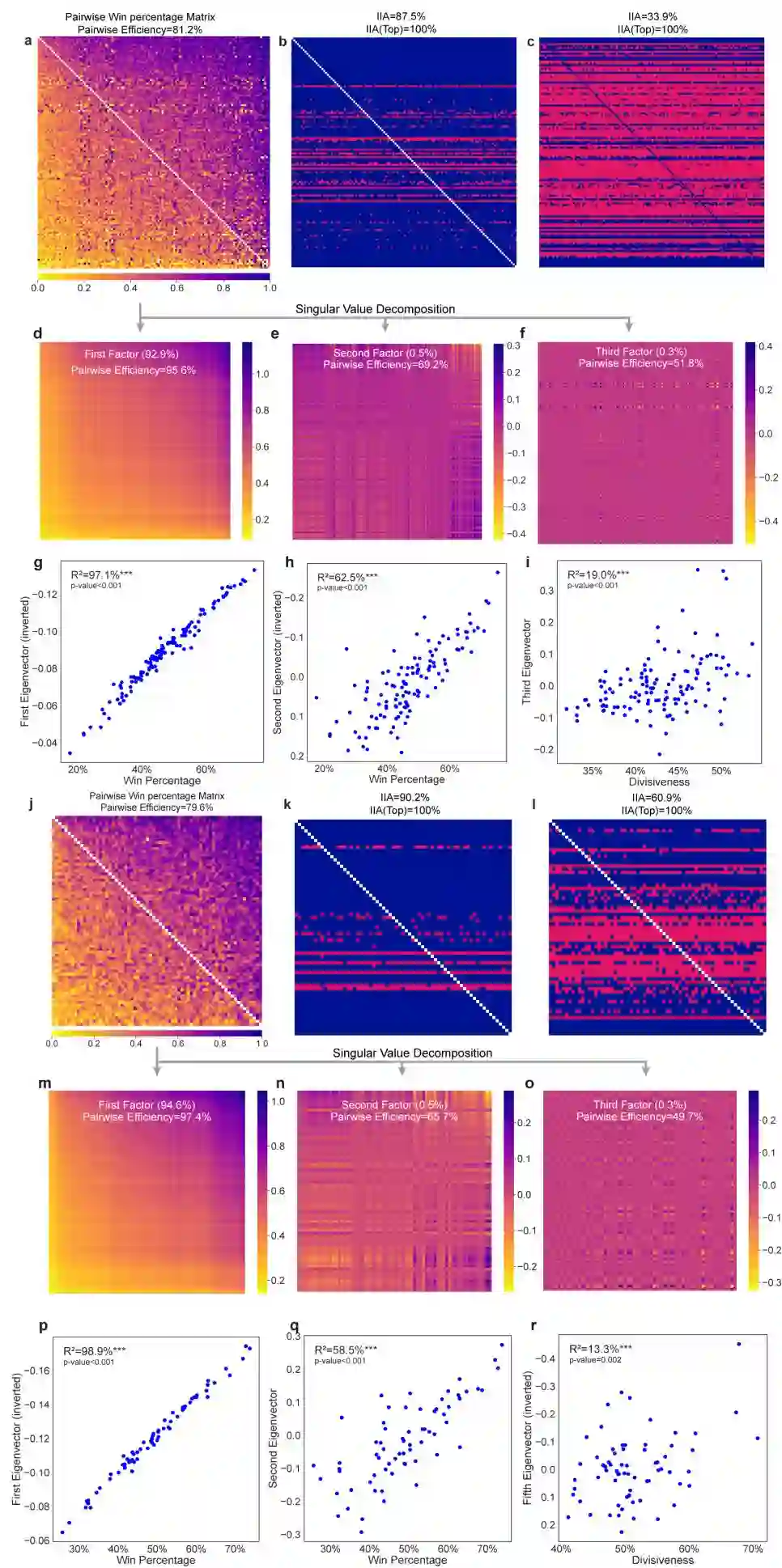
Digital technologies can augment civic participation by facilitating the expression of detailed political preferences. Yet, digital participation efforts often rely on methods optimized for elections involving a few candidates. Here we present data collected in an online experiment where participants built personalized government programs by combining policies proposed by the candidates of the 2022 French and Brazilian presidential elections. We use this data to explore aggregates complementing those used in social choice theory, finding that a metric of divisiveness, which is uncorrelated with traditional aggregation functions, can identify polarizing proposals. These metrics provide a score for the divisiveness of each proposal that can be estimated in the absence of data on the demographic characteristics of participants and that explains the issues that divide a population. These findings suggest divisiveness metrics can be useful complements to traditional aggregation functions in direct forms of digital participation.
翻译:数字技术能够通过促进详细政治偏好的表达来增强公民参与。然而,数字参与实践往往依赖于针对少数候选人选举场景优化的方法。本文展示了一项在线实验收集的数据——参与者通过组合2022年法国与巴西总统选举候选人提出的政策,构建个性化施政纲领。我们利用这些数据探索了社会选择理论中传统聚合函数的补充性聚合指标,发现一种与传统聚合函数无相关性的政治分化度量指标能够识别引发对立的提案。这些指标可为每项提案提供可估算的分化评分,其估算无需依赖参与者人口统计学特征数据,并能解释导致社会分裂的议题。研究结果表明,在数字参与的直选形式中,分化度量指标可作为传统聚合函数的重要补充工具。






相关内容


 微信扫码咨询专知VIP会员