

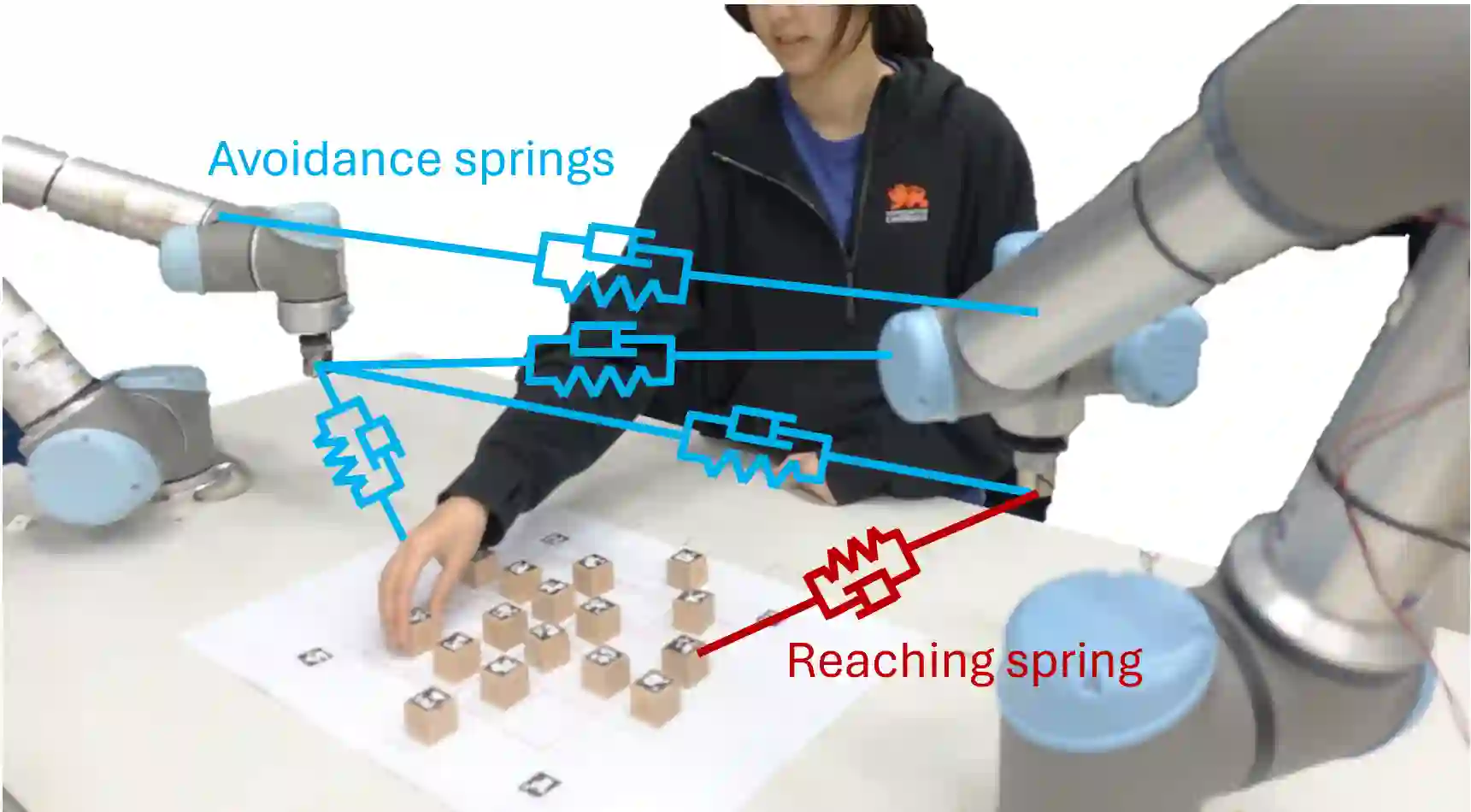
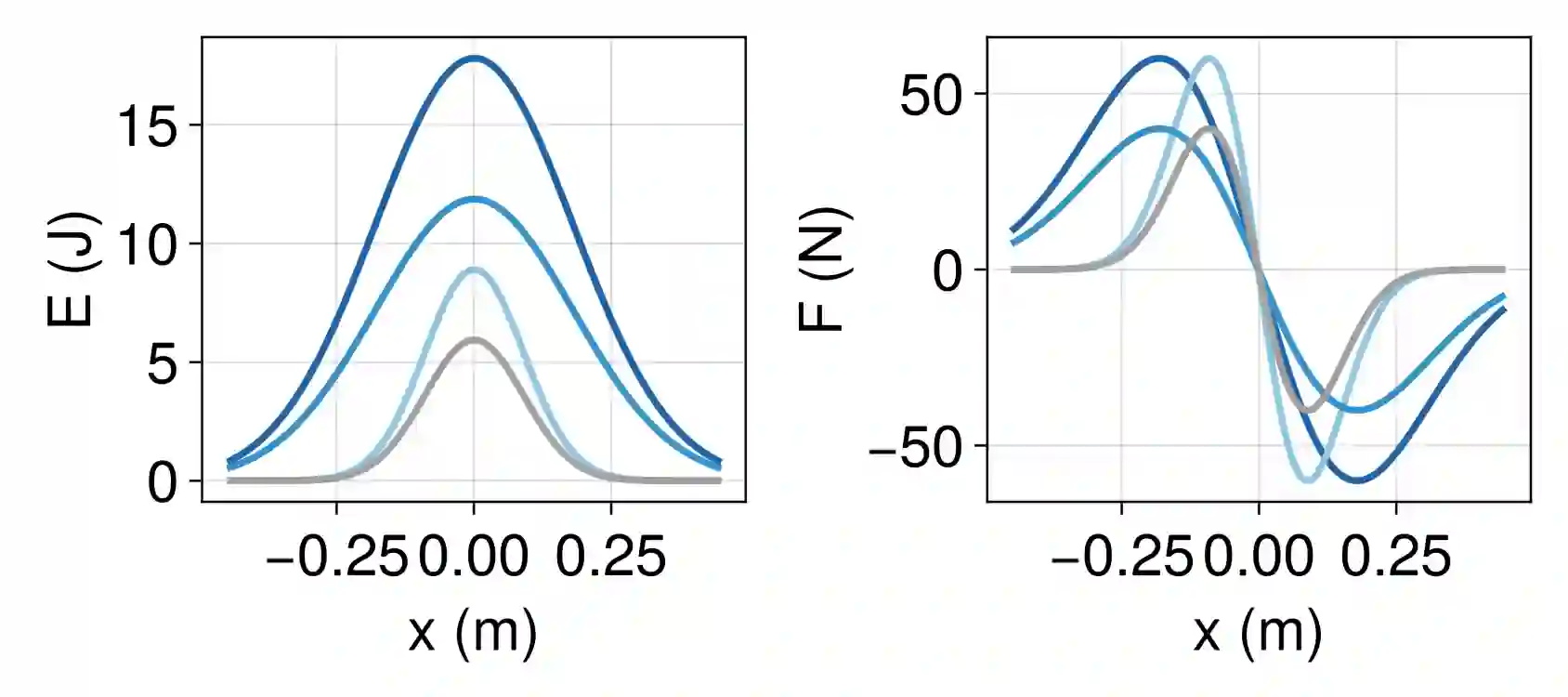
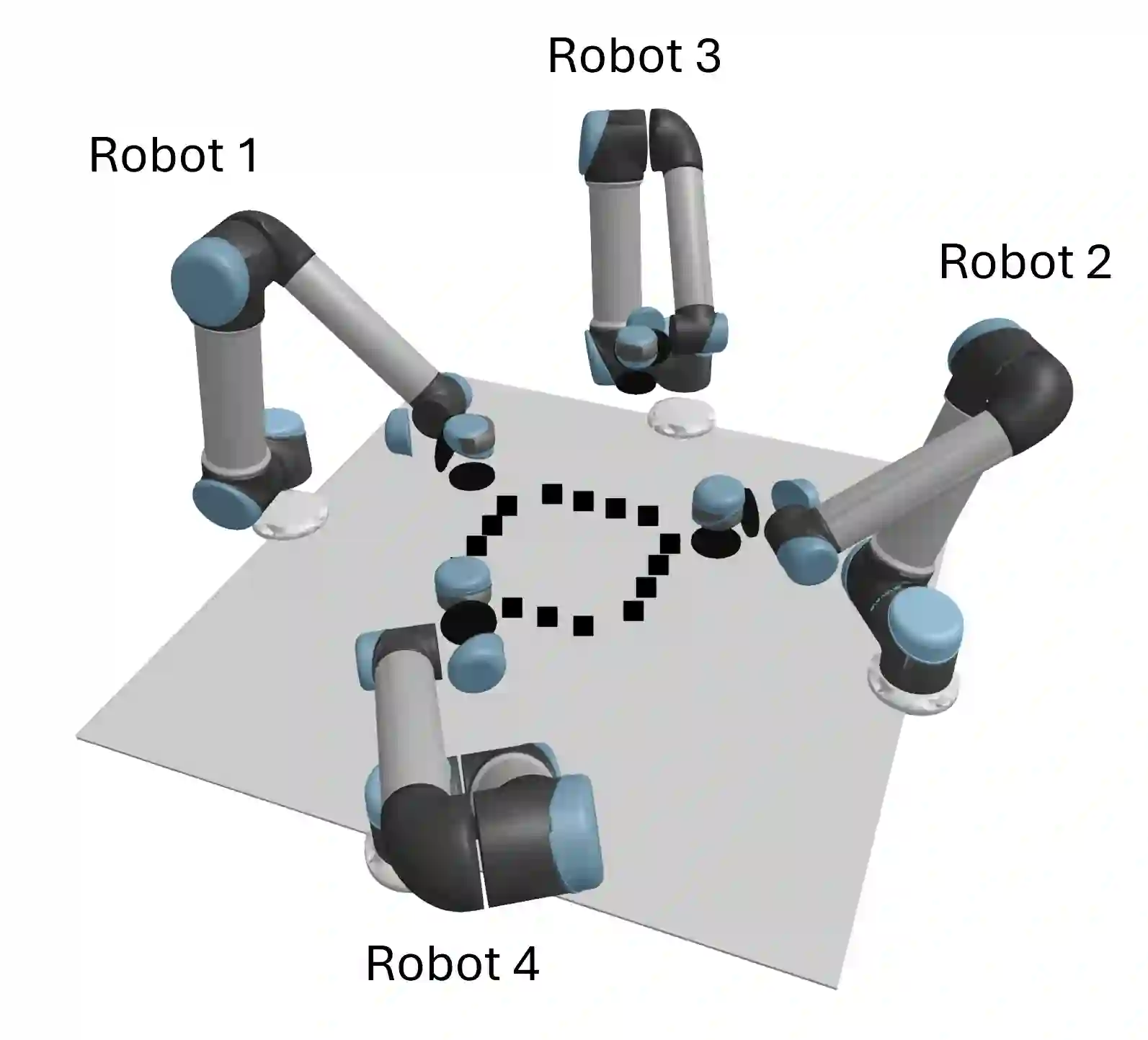
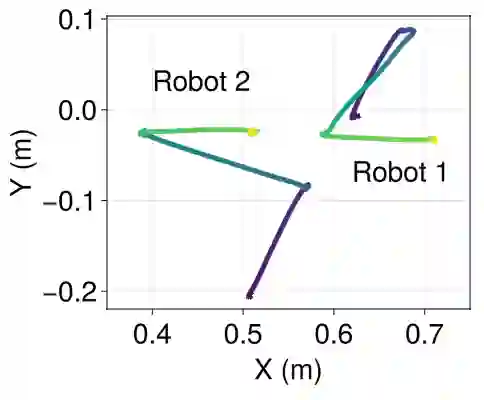
We present a decentralized, agent agnostic, and safety-aware control framework for human-robot collaboration based on Virtual Model Control (VMC). In our approach, both humans and robots are embedded in the same virtual-component-shaped workspace, where motion is the result of the interaction with virtual springs and dampers rather than explicit trajectory planning. A decentralized, force-based stall detector identifies deadlocks, which are resolved through negotiation. This reduces the probability of robots getting stuck in the block placement task from up to 61.2% to zero in our experiments. The framework scales without structural changes thanks to the distributed implementation: in experiments we demonstrate safe collaboration with up to two robots and two humans, and in simulation up to four robots, maintaining inter-agent separation at around 20 cm. Results show that the method shapes robot behavior intuitively by adjusting control parameters and achieves deadlock-free operation across team sizes in all tested scenarios.
翻译:本文提出一种基于虚拟模型控制(VMC)的去中心化、智能体无关且具备安全感知的人机协作控制框架。在该方法中,人类与机器人被嵌入同一虚拟组件构成的工作空间,其运动产生于与虚拟弹簧和阻尼器的交互作用,而非显式轨迹规划。通过去中心化的基于力的停滞检测器识别死锁状态,并借助协商机制予以化解。实验表明,该方法将机器人在积木摆放任务中的卡死概率从最高61.2%降至零。得益于分布式实现,该框架无需结构调整即可实现扩展:实验中我们演示了两个机器人与两个人类的安全协作,在仿真中更扩展至四个机器人,同时保持智能体间约20厘米的间隔距离。结果表明,通过调整控制参数可直观地塑造机器人行为,并在所有测试场景中实现不同团队规模下的无死锁运行。




相关内容



 微信扫码咨询专知VIP会员