

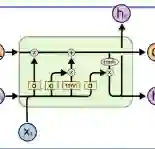
This paper introduces an innovative intrusion detection system that harnesses Generative Adversarial Networks (GANs), Multi-Scale Convolutional Neural Networks (MSCNNs), and Bidirectional Long Short-Term Memory (BiLSTM) networks, supplemented by Local Interpretable Model-Agnostic Explanations (LIME) for interpretability. Employing a GAN, the system generates realistic network traffic data, encompassing both normal and attack patterns. This synthesized data is then fed into an MSCNN-BiLSTM architecture for intrusion detection. The MSCNN layer extracts features from the network traffic data at different scales, while the BiLSTM layer captures temporal dependencies within the traffic sequences. Integration of LIME allows for explaining the model's decisions. Evaluation on the Hogzilla dataset, a standard benchmark, showcases an impressive accuracy of 99.16\% for multi-class classification and 99.10\% for binary classification, while ensuring interpretability through LIME. This fusion of deep learning and interpretability presents a promising avenue for enhancing intrusion detection systems by improving transparency and decision support in network security.
翻译:本文提出了一种创新的入侵检测系统,该系统融合了生成对抗网络(GAN)、多尺度卷积神经网络(MSCNN)和双向长短期记忆网络(BiLSTM),并辅以局部可解释模型无关解释(LIME)增强可解释性。系统利用GAN生成包含正常流量与攻击模式的逼真网络流量数据,随后将该合成数据输入MSCNN-BiLSTM架构进行入侵检测。其中,MSCNN层从网络流量数据中提取多尺度特征,BiLSTM层则捕获流量序列中的时间依赖关系。通过集成LIME技术,模型决策过程得以解释。在标准基准数据集Hogzilla上的评估表明,该模型在多分类任务中达到99.16%的准确率,二分类任务中达到99.10%的准确率,同时通过LIME保证了可解释性。这种深度学习与可解释性的融合,为提升网络安全的透明度和决策支持能力,进而改进入侵检测系统提供了具有前景的研究方向。




相关内容




 微信扫码咨询专知VIP会员